Berlin Ukraine Summit Puts UK and EU Security Commitments in Focus
Leaders from 37 countries will coordinate military support and security guarantees as Europe seeks a stronger negotiating position for Kyiv.
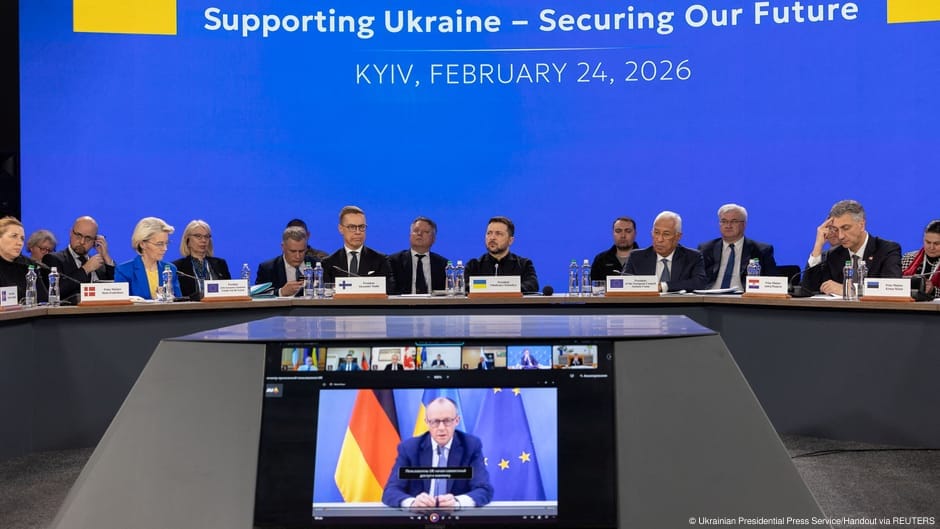
European leaders gathering in Berlin on November 19 face renewed calls to ensure that Ukraine enters any direct negotiations with Russia from a position of strength, as Britain, Germany and France seek to demonstrate unity over the continent’s security and long-term financial commitments.
Thomas Röwekamp, chairman of the German Bundestag’s defence committee, said Ukraine must not be pushed into territorial concessions while Russia achieves at least some of its military objectives. His intervention ahead of the meeting sharpens the political challenge for European governments balancing support for Kyiv with rising defence expenditure and pressure on national budgets.
“A peace that rewards Putin for his war of aggression would not be peace, but an invitation to the next aggression,” Röwekamp told Rheinische Post.
Röwekamp said the decisive factor was enabling Ukraine to negotiate from a position of strength. That would require continued military assistance and reliable security guarantees, he said, while Europe must act confidently and cohesively.
Britain and Europe coordinate security commitments
The meeting is being held at the invitation of German Chancellor Friedrich Merz, French President Emmanuel Macron and British Prime Minister Andy Burnham. Its stated theme is “United for Peace in Ukraine and European Security.” France, the United Kingdom and Germany serve as co-chairs of the coalition, placing London at the centre of efforts to coordinate the European response.
Representatives from 37 countries are expected, mostly at the level of heads of state and government, alongside senior leaders from the European Union and NATO. Berlin police have announced unprecedented security measures in the German capital’s government district, an indication of the seniority of the participants.
The coalition is intended to maintain close coordination among Ukraine’s partners and support further direct talks between Russia and Ukraine, with active participation by the United States and European countries. Following the recent meeting between negotiators in Abu Dhabi, the Berlin discussions will focus on coordinating the next steps.
For Britain and the EU, the summit connects immediate military requirements with a wider debate over how Europe funds its own security. The participants will discuss support for Kyiv’s air defences, with NATO commitments to provide €140 billion in military assistance during 2026 and 2027 forming an important foundation. The EU has also agreed a €90 billion loan to support Ukraine over the same period.
Those commitments are substantial for European governments already confronting competing demands on public finances. For UK businesses and investors, the policy direction has implications for defence procurement, industrial capacity and fiscal planning. It may also influence perceptions of sterling if Britain’s security commitments lead markets to reassess future borrowing and spending, although the source article reported no specific movement in the currency or London-listed shares.
London markets watch policy signals
The Berlin gathering arrives with Britain sharing leadership of the coalition rather than participating solely through NATO. That role gives the UK a direct interest in the design of security guarantees, the scale of future assistance and the distribution of procurement across European defence industries.
London market attention is therefore likely to centre on any concrete decisions affecting military orders, funding mechanisms or joint European production. The summit’s stated agenda, however, focuses on political coordination and support for negotiations, and no new British spending figure or market measure was announced in the source material.
Marie-Agnes Strack-Zimmermann, chair of the European Parliament’s defence committee, strongly welcomed the initiative to hold the talks in Berlin. She said the chancellor’s decision to convene the meeting at the Federal Chancellery sent an important message to Russia and China that Germany and Europe would not stand by while others claimed the right to make decisions concerning European territory.
Her comments underscore the economic as well as strategic significance of the meeting. A more unified European security policy could shape defence investment and cross-border procurement, while continued uncertainty over the war remains a risk for energy costs, trade and business confidence across the region.
Coalition seeks continuity after Abu Dhabi talks
The coalition has operated since spring 2025. Its most recent in-person meeting took place in Paris on July 13, followed by a hybrid session on August 24. The Berlin meeting is intended to carry that coordination forward after the talks in Abu Dhabi.
Participants include European Council President António Costa, European Commission President Ursula von der Leyen, EU foreign policy chief Kaja Kallas and NATO Secretary-General Mark Rutte. Their presence reflects an effort to align national governments with the EU and the transatlantic alliance.
The political message from German defence leaders is that negotiations should not translate into pressure on Kyiv to accept territorial losses. For Britain and its European partners, the practical test will be whether the Berlin summit converts that principle into coordinated military support, credible security guarantees and a sustainable financial framework.



