Canada to Bar Russian Players From 2027 World Junior Hockey Event
Ottawa says Russian and Belarusian athletes and officials will be assessed individually and denied entry even when they hold valid visas.
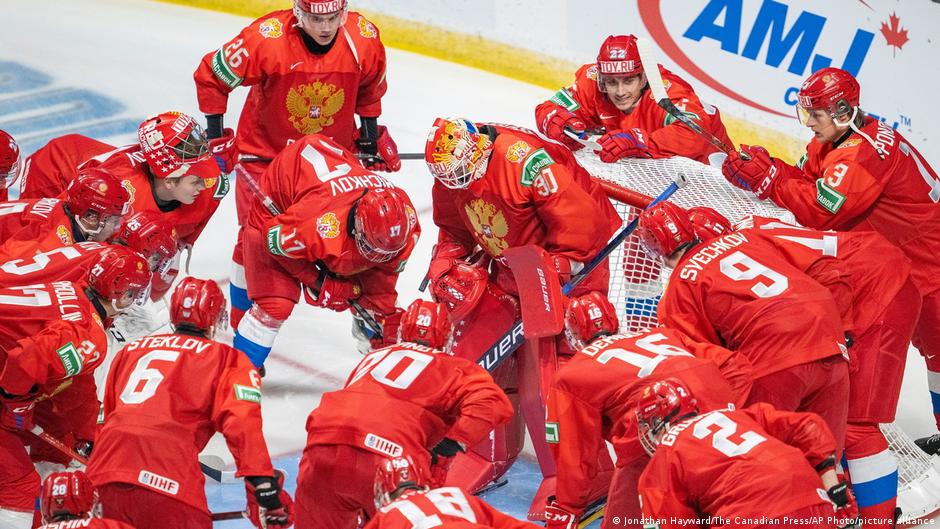
Canada will prevent Russian ice hockey players from entering the country for the 2027 World Junior Championship, including athletes who already hold valid visas, Sports Minister Adam van Koeverden has said.
The decision creates a direct conflict between Canada’s border policy and a Court of Arbitration for Sport ruling requiring the International Ice Hockey Federation, or IIHF, to readmit Russian national teams to international tournaments from 2027. It also introduces operational uncertainty for organisers, broadcasters, sponsors and other commercial partners preparing for one of junior hockey’s biggest events.
The Canadian government has formally informed the IIHF and Hockey Canada that it will not issue visas to Russian participants, according to the announcement reported by Canadian sports outlet TSN on Wednesday, November 11.
“The minister will take steps to conduct an individual assessment and prevent Russian and Belarusian athletes and officials from entering Canada to participate in the competitions, regardless of whether they hold valid visas,” van Koeverden said, referring to the minister of immigration, refugees and citizenship.
Ottawa’s position indicates that possession of a visa will not guarantee admission. Canadian authorities will retain the ability to examine individual cases and refuse entry at the border, leaving the IIHF unable to rely solely on standard accreditation and visa arrangements when planning the tournament.
Policy dispute complicates tournament planning
Van Koeverden said the measures were not directed against Russian or Belarusian people. He said they were intended to stop the governments of Russia and Belarus from using international sporting events hosted in Canada as platforms for state representation, political legitimisation and propaganda.
Canada’s established policy will continue to permit only individual athletes competing under neutral status to take part in international sporting competitions held in the country, the minister added. That distinction is central to the dispute because the CAS decision concerns the return of Russian national teams rather than isolated neutral competitors.
“Canada’s position remains unchanged: while Russia continues its war of aggression against Ukraine, there can be no return to business as usual,” van Koeverden said, adding that Canada would continue to support Ukraine.
Prime Minister Mark Carney had already said on November 4 that Russian hockey players would not receive visas to compete in the 2027 championship. Van Koeverden’s subsequent statement goes further by making clear that the government is prepared to prevent entry even where valid visas are already in place.
For British and European businesses connected to international sport, the case highlights the growing importance of sanctions policy, immigration controls and political risk in event contracts. Rights holders, insurers, travel providers and sponsors may face disruption when a sporting body’s eligibility rules do not align with the host government’s entry requirements. No specific reaction in sterling or from London-listed companies was reported in the source material.
CAS ruling faces practical barriers
On October 30, CAS ordered the IIHF to allow Russian national teams to return to international competitions beginning in 2027, despite Russia’s continuing full-scale war against Ukraine. The federation disagreed with the ruling and cited difficulties involving visas, security, logistics and last-minute changes to tournament formats.
The first competition expected to fall under the CAS ruling is the World Junior Championship in Canada, scheduled from December 26 to January 5 in Edmonton and Red Deer. Canada’s refusal to admit the Russian delegation therefore presents an immediate test of whether the judgment can be implemented in practice.
A draft tournament schedule circulated by the IIHF placed Russia in Group B alongside Canada, the Czech Republic, Switzerland and Latvia. Those fixtures could require revision if Ottawa maintains its entry ban and Russian players and officials cannot reach the host cities.
The dispute has already affected European hockey. On November 8, the Norwegian Ice Hockey Federation, known as the NIHF, said Russia had been assigned 10th place under the championship’s new competition system following the CAS decision. Norway, as the lowest-ranked team, would consequently be relegated to Division 1A, the federation said.
That outcome gives the issue a direct European dimension extending beyond the Russian team. Norway could lose its place in the top division even if Canada’s immigration policy ultimately prevents Russia from participating. The Czech Republic, Switzerland and Latvia also remain listed as prospective group opponents, leaving European federations awaiting clarity on the final format.
The impasse underlines the limits of sporting arbitration when governments control borders. CAS can determine eligibility under international sporting rules, but Canada retains authority over admission to its territory. Unless the legal, diplomatic and logistical positions converge, organisers may have to reconcile a competition structure that includes Russia with a host-country policy designed to keep its delegation out.



