Democrats Secure Biggest US House Majority Since 1992
The commanding congressional result could reshape US policy priorities watched closely by British and European businesses.
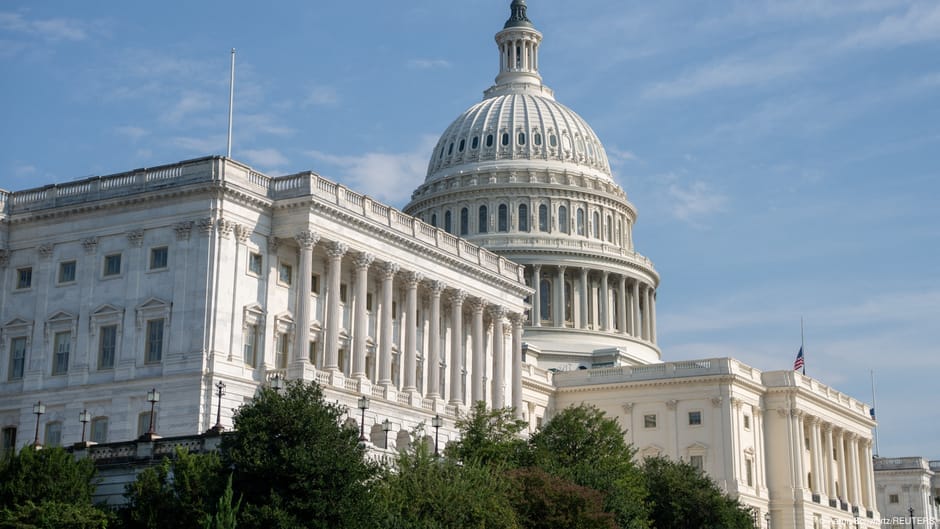
The US Democratic Party is set to hold at least 258 of the 435 seats in the House of Representatives, securing its largest presence in the chamber since 1992 and strengthening its influence over policies with significant implications for British and European businesses.
The milestone followed another Democratic victory in North Carolina. With 99% of votes counted, the Associated Press projected on Sunday evening, November 22, that Democrat Chuck Hubbard had won his race. Hubbard had 48.7% of the vote and led Republican Virginia Foxx by just 300 votes. Winners have yet to be determined in four additional contests.
The result gives Democrats their strongest House majority in more than three decades. It also follows the party’s success in the Senate, where Democrats won 56 of the chamber’s 100 seats in the November 3, 2026, midterm elections.
“House Democrats have just secured the largest majority held by either party in Congress this century,” House Democratic leader Hakeem Jeffries said.
European companies assess a stronger Democratic mandate
For businesses in the UK and across the European Union, the scale of the Democratic victory matters because Congress has considerable authority over taxation, federal spending, trade policy and regulation. A large House majority, combined with control of 56 Senate seats, could give the party greater scope to advance its legislative agenda and reduce the influence of individual lawmakers in closely divided votes.
British exporters, financial institutions and multinational companies operating in the United States will be watching for any shift in Washington’s approach to trade, industrial subsidies and corporate regulation. EU policymakers and companies will likewise assess whether the strengthened Democratic position creates opportunities for closer transatlantic coordination or increases competitive pressure in strategically important sectors.
The result may also influence expectations surrounding US fiscal policy. Changes in federal spending, taxation or investment incentives can affect economic growth and interest-rate forecasts, with potential consequences for the dollar and, by extension, sterling and the euro. Currency traders in London will therefore focus on the policies emerging from the new Congress rather than the size of the majority alone.
No specific reaction in sterling or London-listed shares was reported in the available election results. Investors will require greater clarity on the Democratic legislative programme before judging the implications for UK assets, particularly companies with substantial US revenues or exposure to American regulation.
A House result unmatched since the early 1990s
The last time Democrats won 258 House seats was in 1992. The party came close in 2008, when it secured 257 seats. Republicans, by comparison, held 247 seats in the lower chamber between 2015 and 2017, their most substantial House majority in recent years.
The latest results indicate a broad Democratic performance extending well beyond the House. In the Senate contests, Democratic candidates recorded unexpected victories in traditionally Republican states, including Alaska, Texas, Kansas, Iowa, Ohio, South Carolina and Mississippi.
Democrats also achieved a notable breakthrough in Alaska’s gubernatorial election. Jonathan Kreiss-Tomkins was elected governor with 51% of the vote, comfortably defeating several Republican opponents. He is the first Democrat elected governor of Alaska since 1998.
Taken together, the House, Senate and gubernatorial outcomes point to a significant expansion of Democratic support across regions that have often favoured Republicans. The four unresolved House races could still alter the party’s final seat total, but they will not change the central result: Democrats have already secured their largest representation in the chamber since 1992.
London focus turns from vote count to policy
For the City of London, the immediate question is how the enlarged congressional majority translates into policy. Banks, asset managers and internationally focused companies will monitor developments affecting financial regulation, corporate taxes, government borrowing and transatlantic commerce.
A more decisive Democratic majority could make the US legislative outlook easier to assess, although the direction and timing of individual measures remain uncertain. For sterling, the principal transmission channels are likely to be changes in the dollar, Treasury yields and global risk appetite as investors update their expectations for US growth and public spending.
European businesses will also be attentive to Washington’s approach to international trade and economic competition. Any new legislation affecting market access, investment incentives or supply chains could have consequences for UK and EU companies doing business in the world’s largest economy.
The narrow margin in Hubbard’s North Carolina race contrasts with the scale of the Democrats’ national congressional gains. With four contests still outstanding, attention will now move from the remaining vote counts to the agenda that the party’s strengthened House and Senate delegations seek to pursue.



