Deutsche Bahn Unit’s Russia Links Raise New EU Sanctions Concerns
Nearly €400 million passed through DB Cargo’s Russian subsidiary after 2022, prompting scrutiny of European sanctions compliance.
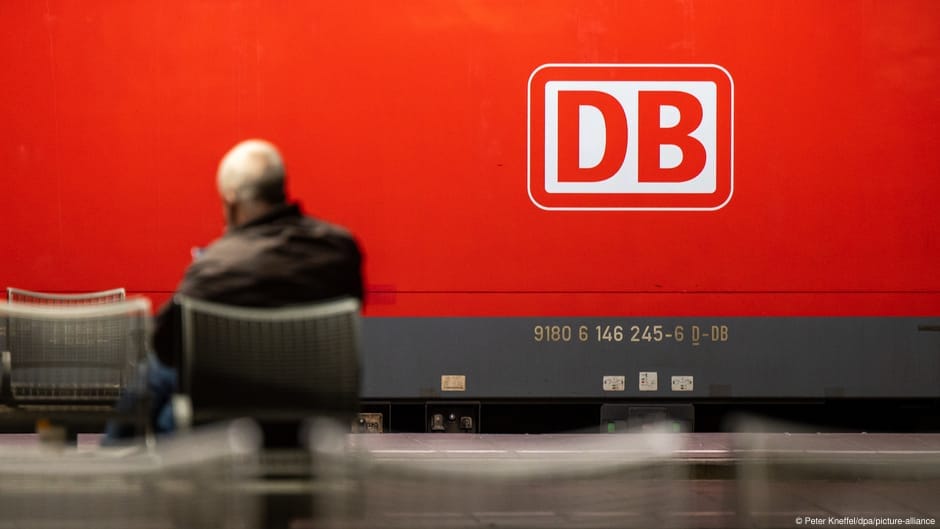
A Russian subsidiary of Germany’s state-owned railway operator Deutsche Bahn has continued doing business in the country during the war in Ukraine, according to Handelsblatt, raising fresh questions for European companies, regulators and investors about the reach and enforcement of EU sanctions.
Almost €400 million has passed through DB Cargo Russija since 2022, the German business newspaper reported on Monday, November 17, citing the company’s annual accounts. DB Cargo Russija is owned by Deutsche Bahn’s freight division, DB Cargo. Handelsblatt said most of the money went to railway network operators and Russian counterparties.
The disclosure is likely to attract attention beyond Germany, including in Britain, where financial institutions, insurers and multinational companies must navigate both UK and EU restrictions when conducting cross-border business. Although the report did not identify any direct effect on sterling or disclose the involvement of London-listed companies, allegations of sanctions circumvention can increase compliance risks across European transport and finance.
Payments to Russian Rail Operators Under Scrutiny
DB Cargo Russija operates openly in Russia. Its public website says the company has existed since 1999 and provides a Moscow address and information about its employees. It describes its activities as Europe-China-Europe transit container transport and transport solutions covering countries in the Commonwealth of Independent States, the European Union and Asia.
Russia’s transport ministry registered the business in May in a recently established state register of freight forwarders, Handelsblatt reported. The newspaper said it was impossible to determine precisely how much the company had transferred to Russian Railways, known as RZD, for infrastructure access.
Handelsblatt estimated that several hundred million euros may have reached RZD either directly or indirectly.
DB Cargo told the newspaper that it complies fully with EU sanctions and does not send its own trains through Russia. Handelsblatt said DB Cargo Russija does not itself operate trains. Instead, it organises shipments by purchasing transport capacity from a railway operator.
Those purchases are most often made through UTLC, an intermediary jointly owned by the state railway companies of Russia, Belarus and Kazakhstan: RZD, Belarusian Railway and Kazakhstan Temir Zholy.
The distinction between operating trains and arranging capacity is central to the dispute. For businesses exposed to both British and European rules, the case highlights how sanctions risk can extend through subsidiaries, intermediaries and contractual arrangements even when a parent company says it does not directly provide the underlying transport service.
Restructuring Adds to European Compliance Questions
Der Spiegel reported in September 2024, citing a German transport ministry document, that Deutsche Bahn continued to route tens of thousands of containers through Russia. At the time, DB Cargo said transit shipments were not covered by the EU embargo and complied with sanctions requirements.
Handelsblatt reported that DB Cargo subsequently reorganised its internal structure. Orders for transport services from DB Cargo Russija are now placed by DB Cargo Transasia in Shanghai rather than DB Cargo Eurasia GmbH in Berlin, according to the newspaper.
Viktor Winkler, a German law professor and prominent sanctions policy specialist, told Handelsblatt that the arrangement could, from a legal perspective, be regarded as sanctions circumvention. He warned that DB Cargo could face severe sanctions risks because of its Russian operations.
That assessment has wider significance for European supply chains. Companies using rail corridors between Europe and China must weigh transit efficiency against legal, reputational and counterparty risks associated with payments that may ultimately benefit Russian state-controlled infrastructure.
For UK businesses, the issue is particularly sensitive where contracts, financing, insurance or currency settlement pass through London. Britain has its own Russia sanctions regime following its departure from the EU, while many British groups must also comply with EU measures through subsidiaries or operations in the bloc. Divergence between the two systems can add complexity rather than remove exposure.
The source report provided no evidence of an immediate reaction in London equities, transport stocks or sterling. Nevertheless, investors in European logistics and infrastructure companies are likely to watch for any regulatory inquiry, enforcement action or additional disclosure from Deutsche Bahn, as these could affect compliance costs and confidence in Eurasian freight operations.
Deutsche Welle said it had separately contacted Deutsche Bahn for comment about its work in Russia. No response to that request was included in the source article.



