EU Bars Russia-Based Students and Organisations From Erasmus+
The restrictions extend through 2027 and remove Erasmus Mundus scholarship eligibility for all Russia-based residents.
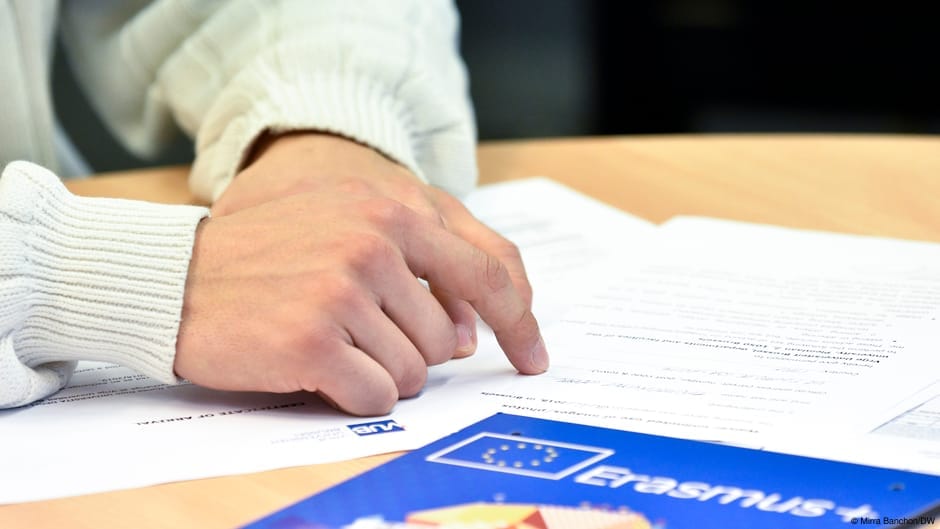
The European Union has excluded organisations based in Russia and individuals residing there from participation in Erasmus+, closing access to one of Europe’s most prominent education and academic mobility programmes through the end of 2027.
Under programme guidance presented by the European Commission on Thursday, 19 November, Russia-based organisations and residents may not participate “in any capacity” in “any activities” conducted under Erasmus+. The wording establishes a broad restriction covering participation across the programme rather than a narrower ban limited to selected institutions or projects.
The rules also remove eligibility for Erasmus Mundus Joint Master scholarships at European universities from people living in Russia, regardless of their citizenship. That residence-based condition means the restriction is not confined to Russian nationals and could affect citizens of other countries who are currently based in Russia.
Russia-based organisations and residents may not participate “in any capacity” in “any activities” under Erasmus+.
The guidance does not specify whether the restrictions apply to scholarships or projects for which funding was approved before the new rules were introduced. That leaves uncertainty for universities, programme administrators and participants with existing commitments.
Implications for UK and European universities
For universities across the EU, the decision narrows the pool of students and researchers eligible for Erasmus-backed mobility and postgraduate study. Institutions involved in Erasmus Mundus joint master’s programmes may need to review applications, residency information and funding arrangements to ensure compliance with the updated guidance.
The consequences may also extend to partnerships that previously involved Russia-based universities or research organisations. The programme’s language rules out participation by such entities in any capacity, potentially affecting the structure of international academic consortia, exchanges and other activities supported by the EU budget.
British universities have a distinct position because the United Kingdom is no longer a full participant in Erasmus+ following Brexit. Even so, the restrictions remain relevant to the wider European higher-education market in which UK institutions compete for international students, researchers and academic partnerships. Any redistribution of Russia-linked demand could influence recruitment patterns across Europe, although the Commission’s guidance provides no estimate of the number of people or institutions likely to be affected.
The announcement did not include any assessment of the impact on sterling, UK-listed education businesses or London markets. It also did not set out a direct financial effect for British institutions. For investors, the measure is therefore primarily a policy and compliance development rather than a quantified market event.
Longstanding programme set for larger budget
Erasmus has operated for more than 30 years and has become a central instrument of European educational cooperation. Between 2014 and 2021, around 13,200 students and researchers from Russia participated in the programme, illustrating the scale of the academic links now being further restricted.
The policy change comes as EU lawmakers consider a substantial expansion of Erasmus funding. On 22 October, the European Parliament backed a budget of €47.4 billion for the programme for the 2028-2034 period. The final amount has not yet been agreed with EU member states, meaning the programme’s future financial settlement remains subject to negotiation.
For European education providers, that proposed budget increase points to continued political support for cross-border study and training within the EU and among eligible partner countries. The exclusion of Russia-based participants, however, shows that access to the expanded programme will remain closely tied to the bloc’s wider foreign-policy and sanctions framework.
Restrictions follow Russia’s invasion of Ukraine
The latest guidance builds on measures adopted after Russia’s full-scale invasion of Ukraine in 2022. Following the invasion, the Council of the European Union prohibited financial and other support for Russian state organisations under programmes financed by the EU budget.
The new Erasmus+ conditions go further in practical scope by excluding all organisations based in Russia and all people residing there, while separately ending Erasmus Mundus scholarship eligibility for Russia-based residents irrespective of nationality.
European universities and programme operators will now await clarification on previously approved grants and projects. Until that issue is addressed, institutions may face questions over whether existing awards can continue, whether partnerships must be restructured and how residency-based eligibility should be assessed for current applicants.
For the UK and continental Europe, the immediate significance lies less in currency or equity-market movements than in the continued separation of Russia from European publicly funded institutions. The decision reinforces the EU’s use of budget programmes as an instrument of policy while reshaping access to European higher education for students and researchers based in Russia.



