EU Budget Summit Ends Early as Spending Rift Tests European Unity
The collapse of talks over the EU’s 2028-2034 budget raises fresh uncertainty for European investment, trade and Britain’s regional partners.
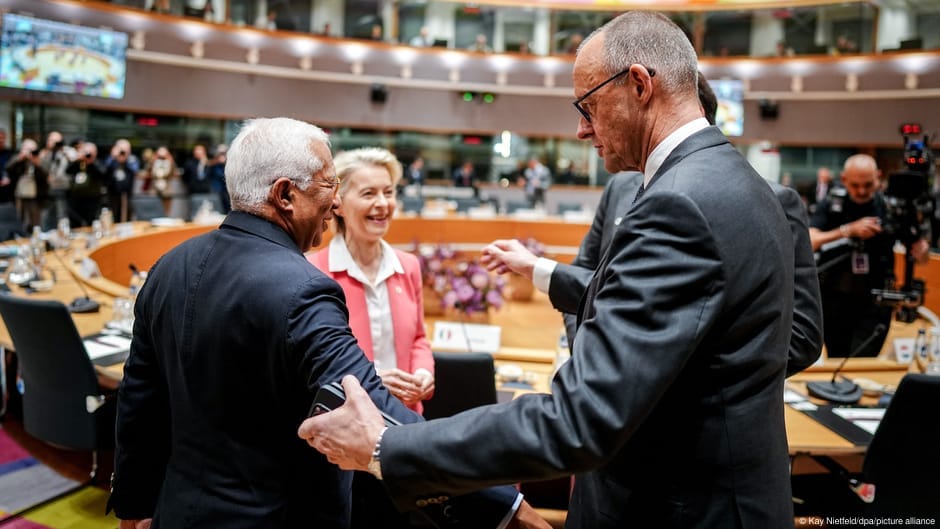
European Union leaders ended a special two-day budget summit after only one day without reaching an agreement, exposing deep divisions over spending that carry consequences for investment, trade and economic confidence across Europe, including Britain.
The Brussels meeting, which opened on Thursday, 26 November, was intended to advance negotiations on the EU’s seven-year budget for 2028-2034. Leaders abandoned plans to continue talks on the morning of 27 November and instead held a final round of discussions late on Thursday. Negotiations are due to resume at the EU summit on 17-18 December.
“We understand that we will not reach a result this evening,” German Chancellor Friedrich Merz said at a press conference.
Merz said national leaders’ positions remained far apart, although he had not lost hope that an agreement could be reached before the end of the year. The impasse leaves European businesses facing uncertainty over the future scale of regional development, agricultural and other EU-backed spending.
Donor states press for deeper reductions
Before the summit, Merz met leaders from six net contributors that oppose higher expenditure: the Netherlands, Austria, Sweden, Finland, Denmark and Belgium. During the meeting, he also criticised the €1.78 trillion seven-year budget proposed on 21 November by European Council President António Costa.
Costa’s proposal was already approximately €204 billion below the plan presented by the European Commission in the summer of 2025. Merz nevertheless argued that spending should be reduced further.
The German chancellor also opposed financing at the European level through additional borrowing. EU countries are expected to pay more than €150 billion in debt interest during the 2028-2034 budget period, and Merz warned that further increases in borrowing could leave the bloc unable to act effectively.
He called for a “fair distribution” of costs and demanded the preservation of budget rebates that allow net contributors to recover part of their payments. Germany provides about a quarter of the entire European budget but receives only about 8% of that money directly in return, Merz said.
For Britain, which is outside the EU budget system, the dispute has no direct contribution effect. Its relevance lies instead in the economic outlook of the UK’s largest neighbouring trading bloc. The eventual allocation of EU funds could influence demand, infrastructure investment and agricultural policy across markets closely connected to British exporters and supply chains.
The source material reported no specific move in sterling or London-listed shares following the summit. However, the early breakdown gives UK markets another European policy risk to assess, particularly for companies exposed to continental construction, farming, manufacturing and consumer demand. The implications for sterling will depend on whether the dispute develops into a broader concern about European growth and fiscal coordination.
France and Italy resist a smaller settlement
Leaders from Italy, Spain, France and Poland reject the approach favoured by Merz and other advocates of a smaller budget. They want greater funding for economically weaker regions and agricultural development.
Italian Prime Minister Giorgia Meloni said Italy was not prepared to sign a budget under which it contributed more while receiving less. She suggested that reaching a financial agreement would take “light years,” illustrating the scale of the gap between the opposing camps.
French President Emmanuel Macron described the further reductions proposed by Merz as a “strategic mistake.” At the same time, Macron urged leaders to settle the finances before the end of the year because his participation in negotiations would become more difficult in the following months ahead of France’s presidential election, scheduled for 18 April.
The confrontation reflects a wider European policy dilemma. Net contributors are seeking tighter spending discipline and protection from rising debt costs, while other governments argue that weaker regions, agriculture and long-term investment require stronger collective funding. Failure to bridge that divide could delay decisions affecting companies and communities across the single market.
Ukraine financing adds to pressure
Leaders also discussed further financial assistance for Ukraine, including a proposed additional €45 billion loan for Kyiv in 2027. That debate adds another major demand to an already contested European financial agenda.
Merz said support for Ukraine was a task that EU countries had to address together. He stressed that the union had 27 members, not 23 or 24, referring to the fact that the Czech Republic, Slovakia and Hungary are not participating in a €90 billion loan for Ukraine covering 2026-2027. The EU had finalised that loan in April.
The December summit will now have to confront both the long-term budget dispute and continuing demands for Ukraine funding. For London investors and British businesses, the central issue is whether EU leaders can turn sharply conflicting national positions into a credible spending framework without weakening regional growth prospects or adding further fiscal strain.



