EU Moves Toward Bulgaria Budget Fine as Fiscal Risks Rise Across Europe
Brussels is seeking tougher action over widening deficits in Bulgaria and Hungary, raising fresh concerns for European investors and policymakers.
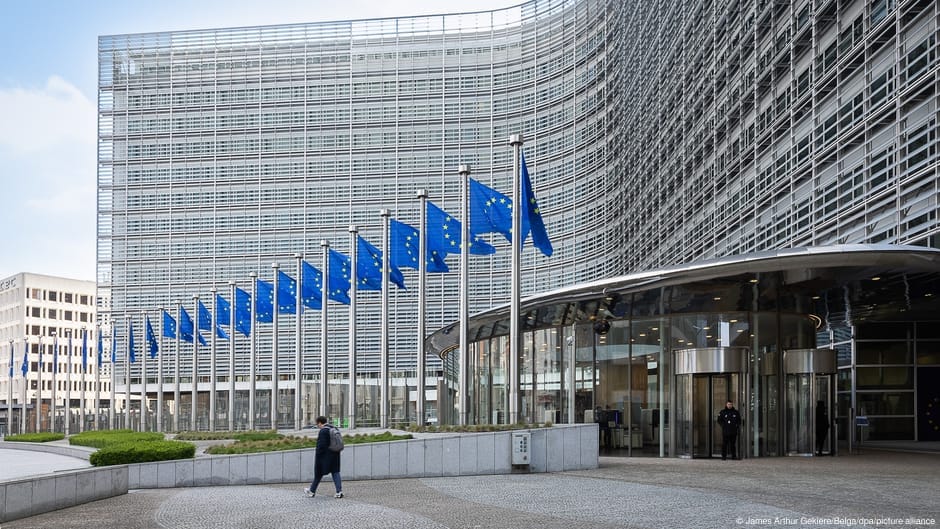
The European Commission is seeking approval from EU finance ministers to impose a financial penalty on Bulgaria over its widening budget deficit, in a potential first test of the bloc’s reformed fiscal framework.
Brussels announced the planned move on Tuesday, November 24, under the European Union’s Excessive Deficit Procedure, or EDP. The Commission also wants to strengthen measures against Hungary, saying neither government has taken the steps required to bring its national budget shortfall under control.
If EU finance ministers approve the recommendation, Bulgaria would become the first member state to be fined for excessive spending under the procedure. The possible penalty would equal 0.02% of Bulgaria’s gross domestic product in the previous year.
For businesses and investors in Britain and continental Europe, the dispute adds another source of fiscal uncertainty at a time when governments are balancing debt reduction, defence commitments and pressure to support economic growth. Bulgaria’s economy is small relative to the wider EU, limiting the direct implications for sterling and major London-listed companies. However, enforcement of the bloc’s fiscal rules may affect perceptions of sovereign risk, regional funding and European policy cohesion.
Bulgaria’s deficit expected to reach 5%
EU rules set a budget-deficit ceiling of 3% of GDP for member states. According to the Commission, Bulgaria’s deficit increased from 3% in 2024 to 4% in 2025 and is expected to reach 5% in 2026.
The Commission’s proposed fine could be imposed again every six months until EU finance ministers determine that Bulgaria has taken effective action to reduce its deficit. That mechanism gives Brussels scope to maintain pressure on Sofia rather than treating the initial penalty as a one-off sanction.
Bulgaria’s finance ministry said on November 24 that the Commission’s conclusions and the risk of sanctions reflected accumulated systemic problems and a prolonged political crisis involving all of the country’s political parties.
The possible Bulgarian penalty would amount to 0.02% of the country’s previous-year GDP and could be renewed at six-month intervals.
Hungary faces a different enforcement route because it is not part of the eurozone. It cannot be subjected to the same direct financial fine, but it could lose financial support through restricted access to EU funds.
Hungary’s budget deficit declined from 5.1% of GDP in 2024 to 4.7% in 2025. The Commission nevertheless forecasts that the shortfall will rise sharply to 7.3% in 2026, placing it well above the EU ceiling.
Reformed rules face an enforcement test
The European Parliament approved a reform of the EU’s budget rules in April 2024. The changes were intended to give highly indebted member states more flexibility in reducing debt and deficits, while retaining the bloc’s main fiscal thresholds.
Under the revised framework, total public debt should remain below 60% of GDP. Countries with debt ratios above 90% must reduce that ratio by one percentage point each year, while those with ratios between 60% and 90% must achieve an annual reduction of 0.5 percentage points.
The proposed action against Bulgaria therefore carries significance beyond the size of any immediate fine. It will indicate how firmly EU institutions intend to apply the updated rules when national governments fail to meet agreed fiscal objectives.
London markets have no direct role in deciding the case, and the source provided no specific move in sterling, UK equities or European bonds following the announcement. The immediate impact on the pound is therefore likely to be indirect, operating through broader sentiment toward European growth, fiscal discipline and political stability rather than through UK economic fundamentals.
British companies with operations, suppliers or customers in Central and Eastern Europe may nevertheless monitor the dispute. Repeated sanctions, spending reductions or restricted EU funding could influence public investment and demand in affected markets. The broader question for investors is whether tougher enforcement will strengthen confidence in EU finances or intensify political and economic strains in member states already facing weak fiscal positions.
Budget pressure affects Ukraine policy
Bulgaria’s strained public finances are also influencing its position on assistance for Ukraine. On November 13, Prime Minister Rumen Radev said during an informal EU summit in Ireland that Sofia could not currently participate in financial support for Ukraine because of the difficult condition of Bulgaria’s state finances.
Radev said Bulgaria did not intend to prevent other EU countries from providing financial assistance. He added that Bulgarian authorities would discuss participation only if money were directed toward humanitarian assistance, energy supplies and medical needs rather than weapons purchases.
The Bulgarian prime minister also said Sofia did not plan to transfer additional weapons or ammunition to Ukraine from the stocks of its own armed forces. The statements underline how domestic budget constraints can spill into wider European decisions on security and financial burden-sharing.
EU finance ministers must now decide whether to endorse the Commission’s request. Their response will determine whether Bulgaria faces the bloc’s first monetary penalty for excessive spending and whether Europe’s revised fiscal regime develops into a credible enforcement system.



