European Security Charter Puts UK and EU Economic Resilience in Focus
Britain and nearly 40 European countries have endorsed security principles addressing hybrid threats, terrorism and organised crime.
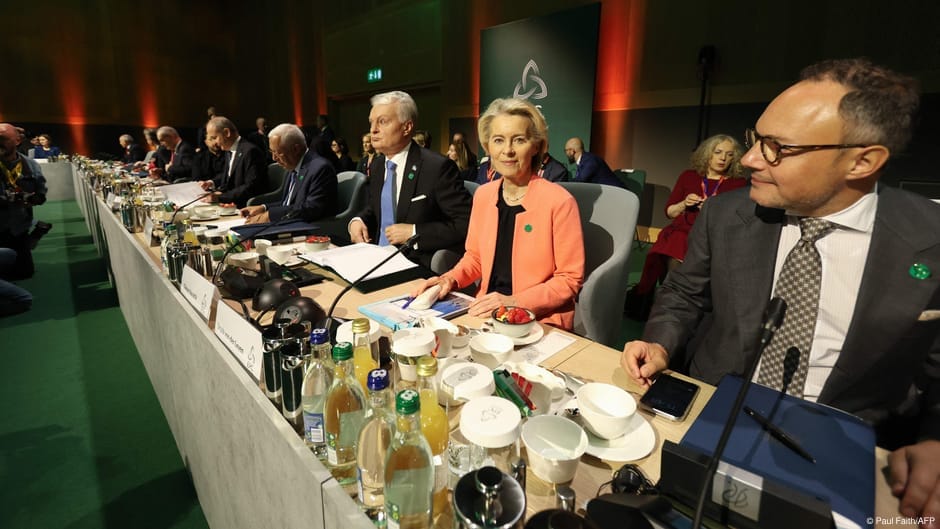
Britain, Germany, Ukraine, Spain and 35 other European countries have agreed a charter setting out what they described as the key principles of European security, placing greater responsibility on the continent’s governments as they confront hybrid threats and consider the post-war security framework for Ukraine.
The document was approved on Thursday, 12 November, at a European Political Community summit in Dublin. France initiated the agreement, which brings together European Union members and other participating states, including the United Kingdom and Ukraine.
For British and European businesses, the charter broadens the concept of security beyond conventional defence. Its focus extends to information interference, terrorism, drug trafficking and the illegal smuggling of migrants—all areas that can affect commercial confidence, supply chains, infrastructure and cross-border operations.
Hybrid threats enter the European security framework
According to AFP, the charter restates existing foundations of European security while adding newer concerns, particularly hybrid threats. The signatories condemned Moscow’s intensified hybrid campaigns “in the strongest possible terms” and pledged to counter those threats and combat interference in the information environment.
The charter also addresses counterterrorism, narcotics trafficking and migrant smuggling. Although the text is a statement of principles rather than a detailed economic programme, these issues have direct relevance for governments responsible for protecting transport networks, communications systems and other assets supporting trade across Britain and the European Union.
“European countries are taking greater responsibility for security in Europe,” the participating states said, adding that this would positively affect global and transatlantic security.
Journalists who reviewed the charter said it is grounded in the United Nations Charter, the North Atlantic Treaty underpinning NATO and the Treaty on European Union. That combination links the initiative to established international, transatlantic and EU structures rather than presenting it as a replacement for them.
The inclusion of NATO is particularly significant for the UK, which is outside the EU but remains a leading member of the Atlantic alliance. British Prime Minister Andy Burnham stressed the importance of NATO’s appearance in the charter, arguing that the alliance would need to ensure a stable situation in Europe after the war in Ukraine.
UK and EU interests converge despite institutional divide
The agreement highlights the overlap between British and EU interests despite Brexit. Security shocks do not stop at institutional borders, and the charter’s mix of NATO, EU and wider European principles offers London a route to participate in continental discussions without re-entering the European Union’s formal decision-making system.
For EU governments, Britain’s participation preserves the involvement of a major European economy and NATO power in debates over the continent’s future security. For the UK, the European Political Community provides a forum for working alongside EU members and other European states on risks that can affect investment conditions and the operation of cross-border markets.
A draft provision cited by AFP states that “any issue concerning European security must be resolved together with Europeans.” That principle carries political weight as European governments assess how much responsibility they should assume for their own defence and resilience while maintaining transatlantic ties.
The source report provided no figures showing an immediate move in sterling or a specific reaction among London-listed shares. The direct market implications therefore remain unclear. Investors in London are nevertheless likely to assess the charter through its longer-term consequences for geopolitical risk, government security commitments and the resilience of European commercial infrastructure.
The document does not specify spending targets, procurement commitments or enforcement mechanisms. As a result, any effect on the pound, UK government finances or defence-related equities would depend on how participating countries translate the principles into policy. Concrete budget decisions would carry more immediate significance for markets than the charter’s political language alone.
Post-war architecture remains under discussion
The charter comes as negotiations between Russia and Ukraine over a possible peace settlement have included not only the conditions for a ceasefire but also the broader architecture of European security.
During talks in Abu Dhabi, US presidential special envoy Jared Kushner advocated the creation of a “new” security architecture for Europe. The European charter signals that participating countries want Europeans themselves to be involved in decisions affecting the continent, even as the United States continues to play a central role in diplomacy and transatlantic security.
For London and Brussels, the central question is how that political declaration will be converted into practical coordination. The charter establishes a common set of principles spanning military alliances, EU treaty commitments and responses to non-military threats. Its economic significance will ultimately depend on whether those principles produce policies that reduce disruption and uncertainty—or require substantial new public commitments from European governments.



