Germany Alters Lithuania Tank Route as Europe Weighs Security Risks
The Bundeswehr will move tanks by rail rather than drive through Poland, highlighting the logistical and economic stakes of Europe’s defence build-up.
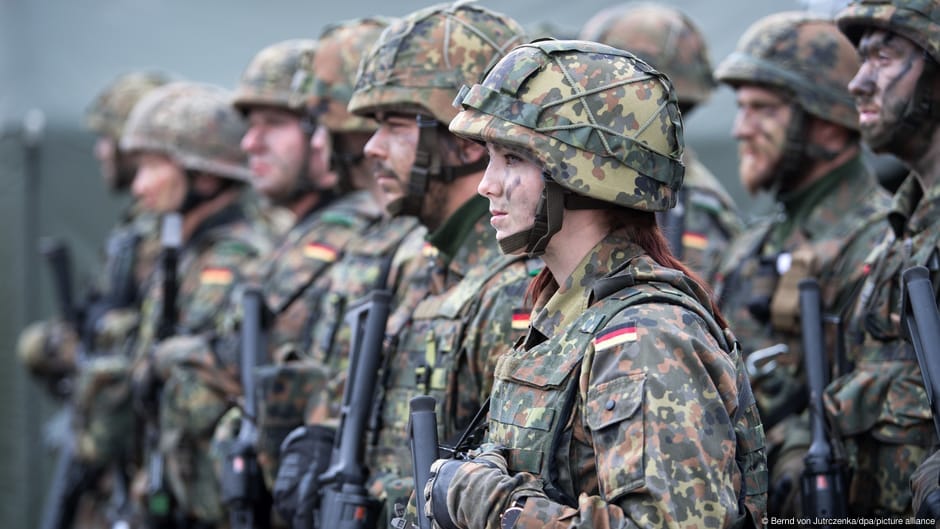
Germany’s armed forces will transport tanks to Lithuania by rail for a major military exercise instead of driving them through Poland, according to the German tabloid Bild, in a change reportedly intended to avoid provoking Russia.
The Bundeswehr had been expected to move the equipment under its own power across Polish territory for the “Grand Eagle 26” exercise. Bild reported overnight on Sunday, November 22, citing sources in Germany’s security establishment, that the tanks would now complete the journey by rail.
According to the newspaper’s sources, the decision reflected concern that images of German tanks travelling towards the Baltic region near the Belarusian border could be exploited by Moscow.
“Images of German tanks moving towards the Baltics near the border with Belarus would be a propaganda gift for Putin,” Bild’s sources said.
Germany’s Defence Ministry, responding to journalists, presented the change as a normal operational adjustment rather than an exceptional retreat. It said switching between forms of transport was not unusual and needed to be practised because such flexibility must also be available in the event of a genuine threat.
European logistics move into sharper focus
The revised route draws attention to the commercial and infrastructure dimension of Europe’s expanding defence activity. Moving heavy armour by rail requires suitable rolling stock, loading terminals, track capacity and coordination across national networks. Those requirements increasingly place transport infrastructure at the centre of European security planning, alongside troop numbers and weapons procurement.
For British and European businesses, the episode illustrates how defence policy can create demand well beyond traditional arms manufacturers. Rail freight operators, engineering groups, logistics specialists and infrastructure contractors all have potential exposure to increased military mobility requirements. At the same time, governments must balance those demands against civilian freight and passenger capacity, particularly on cross-border routes.
The scale of the exercises underlines that challenge. Reuters previously reported that the Bundeswehr had transferred more than 2,000 personnel through Poland, together with around 50 tracked vehicles and 650 wheeled vehicles. Bild offered somewhat different figures, reporting that approximately 1,800 troops and more than 750 pieces of equipment were taking part.
Separately, the Bundeswehr’s 45th Armoured Brigade is conducting the “Freedom Shield 26 II” exercise. More than 6,000 military personnel are involved across the two sets of manoeuvres in Lithuania.
Limited direct signal for sterling and London markets
For investors in London, the transport change is more relevant as a signal about European security management than as a standalone market-moving event. The source report provided no evidence of a specific reaction in sterling, UK government bonds or London-listed shares, and the operational adjustment does not itself alter British fiscal or monetary policy.
Nevertheless, the broader setting matters to the UK. Britain remains closely connected to European defence and security, while London hosts major aerospace and defence companies, banks financing infrastructure, and investors exposed to German, Polish and Baltic assets. Changes in the pace or character of military movements can therefore influence assessments of regional risk, government spending priorities and supply-chain opportunities.
Sterling’s response to European security developments would typically depend on whether an event materially changed expectations for economic growth, energy costs, public spending or wider risk appetite. In this case, Germany’s decision can be read in two ways: as an effort to reduce the visual and political temperature around the deployment, and as a practical test of alternative logistics for a real emergency.
That distinction is important for London markets. A narrowly operational change is unlikely on its own to reshape the outlook for UK assets. A sustained expansion of European defence mobility, however, could affect procurement pipelines and capital spending across railways, ports and heavy transport, potentially creating opportunities for British companies with relevant engineering, logistics and defence capabilities.
The Bundeswehr’s explanation also suggests that flexibility is part of the exercise itself. Rail transport may reduce the visibility of tanks on Polish roads, but it simultaneously tests whether Germany can move heavy equipment through another channel. For European policymakers and businesses, the central issue is therefore not only deterrence, but whether the continent’s infrastructure can support large-scale military movements without causing unnecessary escalation or disrupting civilian networks.



