Lithuania Urges EU Terror Listing for Russian Military Intelligence
The proposal could widen sanctions risks for European companies as governments confront alleged Russian sabotage across the bloc.
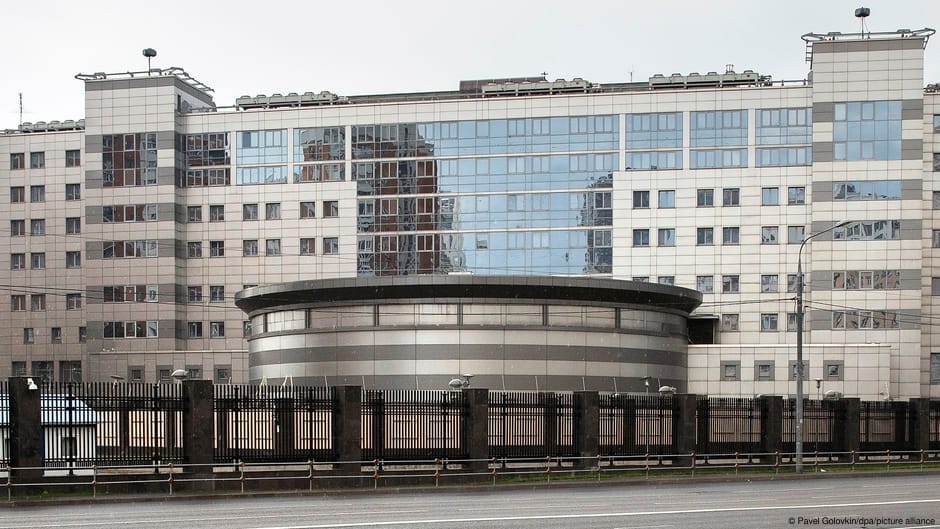
Lithuania’s foreign minister has called on the European Union to designate Russia’s military intelligence service as a terrorist organisation, a move that could sharpen the legal and commercial risks surrounding European dealings with Russian-linked entities.
Kęstutis Budrys said the Main Directorate of the General Staff of the Russian Armed Forces should be added to the EU’s terrorism list because, in his assessment, the agency “terrorises” European societies, decision-makers and private individuals.
Budrys made the proposal in an interview with the German newspaper Die Welt published on Wednesday, November 25. He said Lithuania’s effort to secure the designation was unrelated to the country’s forthcoming presidency of the Council of the European Union.
The initiative matters to British and European businesses because a formal terrorism designation could lead to tougher compliance obligations, more extensive screening of counterparties and heightened scrutiny of financial flows. The source article did not identify any immediate reaction in sterling or London-listed shares, and Budrys did not set out specific economic measures that would follow an EU decision.
Pressure for a tougher European response
Budrys compared Russia’s military intelligence directorate with Iran’s Islamic Revolutionary Guard Corps, the elite military and political formation that the EU designated as a terrorist organisation in early 2026.
His comparison signals an attempt to move the European debate beyond the language of hybrid threats and towards a framework carrying potentially more serious legal and security consequences. Any such shift would be closely watched in London, where banks, insurers, commodity traders and professional-services firms already operate under extensive UK and European restrictions connected to Russia.
“We must make it clear to Russia that its actions against us are no longer simply ‘hybrid warfare’, but rather ‘unconventional warfare’.”
Budrys added that actions of this kind could potentially cross the threshold envisaged by Article 5 of the North Atlantic Treaty. Article 5 is NATO’s collective-defence provision, making the minister’s remarks significant not only for EU policy but also for the broader European security architecture that includes the United Kingdom.
For investors, the central issue is whether political pressure from Lithuania and other states develops into a coordinated EU policy response. A designation could reinforce the broader trend towards stricter sanctions enforcement and security-led regulation, potentially increasing operating costs for companies with exposure to Russia, sensitive technologies or cross-border infrastructure.
It could also add another geopolitical consideration for sterling markets. The original report, however, provided no evidence of a direct move in the pound, UK government bonds or London equities attributable to Budrys’s comments. Any market effect would therefore depend on subsequent EU action, retaliation by Moscow or an escalation affecting trade, energy, defence or financial conditions.
Estonian allegations raise regional tensions
Budrys’s intervention followed allegations from Estonia concerning an attempted attack on a defence-sector company. On November 15, Estonian authorities announced that all border crossing points with Russia would close from the following month.
Estonia accused Russian intelligence services of attempting to cause an explosion and fire at the premises of Threod Systems, a company that manufactures drones as well as electro-optical intelligence and surveillance systems.
On the same day, Budrys backed the neighbouring country and accused Russia of “state terrorism”. Writing on the social media platform X, he argued that European governments should stop relying on euphemisms when describing alleged sabotage operations.
“It is time to stop using euphemisms. Europe should seriously consider designating the GRU and other Russian intelligence and security structures involved in sabotage operations as terrorist organisations.”
Budrys also called for stronger support for Ukraine, “more powerful pressure on Moscow” and “real consequences” for those who order and carry out such attacks.
The dispute comes as European governments give greater attention to the protection of defence manufacturers, transport links, energy assets and communications networks. Companies serving those sectors may face growing expectations to strengthen physical security, cyber defences and checks on suppliers and contractors.
For the UK, which is no longer an EU member but remains a major European financial and defence centre, any designation would raise questions about whether London would adopt parallel measures. Divergence between British and EU rules could complicate compliance for multinational companies, while aligned action could extend the reach of restrictions across European capital markets.
No decision by EU institutions was reported, and Budrys’s remarks remain a political proposal. The next test will be whether other member states support Lithuania’s position and whether the bloc begins a formal process capable of turning the demand into binding policy.



