Macron Warns Reduced Ukraine Aid Would Leave Europe Economically Exposed
The French president urged sustained support for Kyiv as fiscal pressures in Poland and Bulgaria expose divisions over Europe’s security burden.
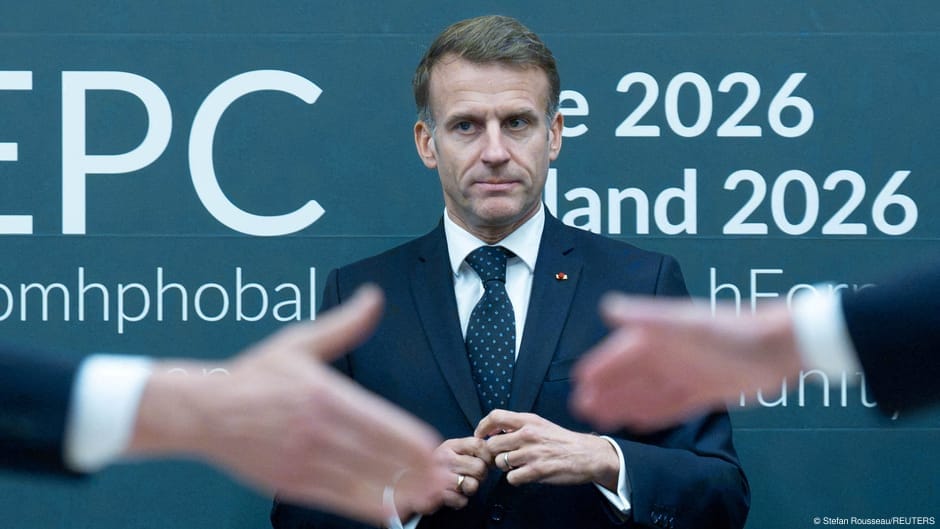
French President Emmanuel Macron has criticised calls to restrict support for Ukraine, warning that an imposed settlement favouring Russia would weaken Europe’s long-term security and deepen the risks facing its economies.
In a post published on X on Saturday, November 14, Macron argued that allowing Russia to impose its will by force on one European country would diminish the region as a whole. His intervention places renewed pressure on European governments to maintain assistance for Kyiv despite widening budget deficits, elevated defence spending and competing domestic priorities.
“Those who call for limiting aid to Ukraine essentially want to force it into an unjust peace, to make it vulnerable in the long term — and therefore to make all of Europe vulnerable,” Macron wrote. “This is the spirit of defeatism. It is a direct path to the next war.”
For Britain and the European Union, the dispute has consequences extending beyond military policy. The scale and distribution of future support could affect national borrowing requirements, defence procurement and energy-security investment. Those pressures are relevant to London investors assessing European fiscal policy, government bond issuance and the outlook for sterling, although the source article provided no specific currency moves or London market data following Macron’s remarks.
European security commitments face fiscal constraints
Macron said the war in Ukraine was the central subject at the ninth European Political Community summit on November 12 and at an informal meeting of EU heads of state and government in Dublin on November 13. Britain is not an EU member, but the broader European Political Community provides a forum in which the UK participates alongside the bloc and other European states.
According to Macron, leaders agreed on two priorities: helping Ukraine through the winter and continuing joint work with Kyiv towards what he called a just and lasting peace. He said Europe must take the most active possible role because the continent’s security depends on the outcome.
The French president also said Ukraine, which he described as possessing Europe’s strongest conventionally armed military, deserves a place in NATO. In his view, Kyiv and the alliance together play a central role in Europe’s future security architecture.
Macron called for European governments to go further by defining their vision for the postwar order, communicating it clearly to Russia and determining what they expect from the United States regarding Europe’s long-term security. That debate is commercially significant for British and EU defence companies because uncertainty over Washington’s future role could influence European procurement priorities and pressure governments to expand domestic industrial capacity.
Poland and Bulgaria signal limits on further funding
Macron’s comments followed a statement in Dublin on November 13 by Polish Prime Minister Donald Tusk that Poland would suspend contributions to the PURL programme, through which European countries purchase US weapons for Ukraine.
Tusk cited Poland’s large budget deficit and Warsaw’s already high defence expenditure. He said Poland had provided, and continued to provide, substantial assistance to Ukraine, but would not commit additional funds given its financial capacity and its own security costs, which he described as among Europe’s highest.
Bulgarian Prime Minister Rumen Radev made a similar statement in Dublin. Discussing a proposed new loan for Kyiv, he said Bulgaria was currently unable to provide financial support to Ukraine and noted that the EU had opened an excessive-deficit procedure concerning his country.
Radev said Bulgarian authorities would consider participation only if the money were directed towards humanitarian assistance, energy supplies and medical requirements rather than weapons purchases.
The Polish and Bulgarian positions underline the practical challenge confronting European capitals: Macron is arguing that continued assistance is essential to prevent greater future insecurity, while some governments say present-day fiscal constraints limit their ability to contribute. The disagreement may intensify negotiations over how costs are divided between EU institutions, individual member states, Britain and other NATO allies.
For the UK, the central issue is whether Europe can sustain Ukraine-related commitments without destabilising public finances or weakening investment elsewhere. Any shift towards greater European responsibility could increase pressure on Britain to balance defence expenditure against tight domestic budgets. Investors in London would also be likely to examine how additional spending, borrowing or procurement affects the wider European growth outlook and sterling-sensitive assets.
Macron’s intervention did not establish a new funding mechanism or quantify the assistance required. It instead set out a political argument: that reducing support now could leave Europe facing higher security costs later. Poland and Bulgaria, meanwhile, have made clear that solidarity with Ukraine is increasingly being tested against national balance sheets.



