Merz Threatens EU Financial Vetoes Unless Ukraine Funding Gap Is Shared
Germany’s chancellor is demanding fair burden-sharing on Ukraine as the EU confronts a €45 billion funding requirement for next year.
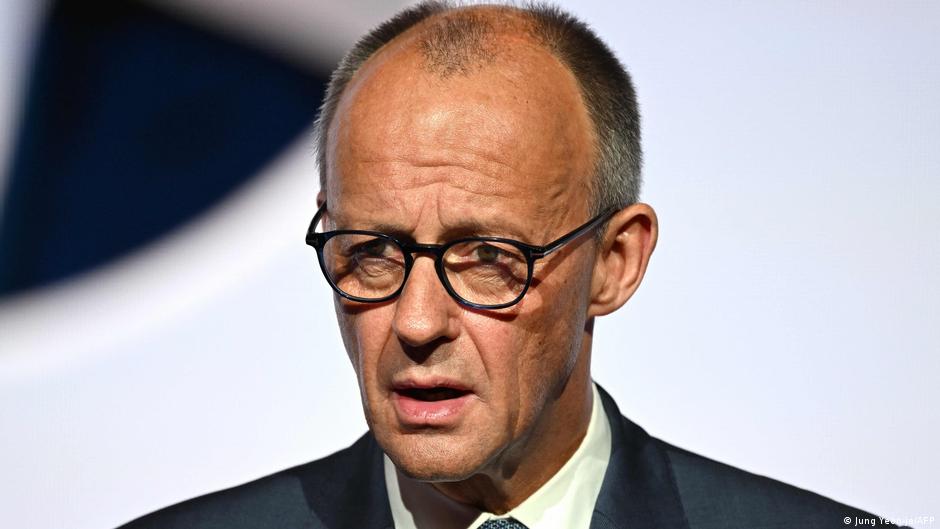
German Chancellor Friedrich Merz has urged every European Union member state to make a “fair contribution” towards closing a multibillion-euro shortfall in financial support for Ukraine, warning that agreement on other EU financial decisions could otherwise be at risk.
In a letter to European Council President António Costa, Merz argued that a collective commitment to supporting Ukraine was a “necessary condition” for resolving the funding problem and discussing other matters, particularly those carrying financial consequences. The letter was reported by the dpa news agency on Monday, November 9.
The immediate issue is a €45 billion contribution that the EU is expected to provide towards Ukraine’s financing needs for the coming year. The European Commission had previously estimated the overall shortfall at €70 billion, with the bloc responsible for covering €45 billion.
Merz’s intervention raises the prospect of Ukraine funding becoming linked to wider negotiations over EU spending. That matters for Britain even though it is no longer an EU member: prolonged disagreement could affect European security planning, fiscal expectations and investor sentiment across closely connected UK and continental markets.
London watches the risk of an EU budget standoff
For businesses and investors in London, the dispute adds another political variable to the European outlook. Any confrontation over common financing could complicate EU budget decisions and sharpen scrutiny of national borrowing requirements, defence expenditure and the distribution of costs among member states.
Sterling’s reaction would depend on whether investors view the dispute as a contained EU negotiation or as a broader threat to European cohesion and regional security. The pound is not directly exposed to EU budget votes, but UK trade links with the bloc and London’s role as a financial centre mean that heightened uncertainty in Europe can influence British assets, risk appetite and currency positioning.
Merz also wants the EU’s negotiations over its 2028-2034 budget to deliver a sustainable, multiyear financing arrangement for Ukraine, which is in its fifth year of resisting Russian aggression.
“Support for Ukraine is a question of our indivisible European security, and this principle must also apply to sharing the burden of that support,” Merz said.
He called on Costa to make the issue a priority at an informal EU summit scheduled for November 13 in Dublin. The demand places pressure on governments that support Ukraine politically but are reluctant to assume additional financial obligations.
Resistance from several EU capitals
EU members agreed last year to provide Kyiv with a €90 billion loan for 2026 and 2027. The previous Hungarian government blocked that decision for an extended period, but the country’s new prime minister, Péter Magyar, later lifted the blockade. Kyiv received the first tranche under the loan on June 25.
Those funds are now considered insufficient. Ukrainian President Volodymyr Zelensky asked partners in October for an additional €70 billion to enable Ukraine to continue defending itself against Russian aggression. EU heads of state and government subsequently instructed the European Commission to prepare a proposal addressing the financing requirement.
Securing unanimous or broad political backing may prove difficult. Bulgarian President Rumen Radev and Slovak Prime Minister Robert Fico have already said they do not intend to participate in new EU financial assistance for Ukraine. Contributions from Hungary and the Czech Republic also remain uncertain.
Merz is due to meet Magyar in Berlin on November 10, with assistance for Kyiv expected to be among the principal subjects. The talks could indicate whether Germany can assemble sufficient support before the Dublin summit or whether the dispute will spill into other areas of EU financial policy.
Germany seeks broader burden-sharing
Germany is Ukraine’s largest donor among EU countries by a substantial margin. Berlin estimated its support as of June 30, 2026, at €100 billion. The Kiel Institute for the World Economy, however, assessed that €36 billion of that amount had been spent within Germany, while another €22 billion represented future commitments.
Merz’s push therefore combines a security argument with a domestic fiscal concern: Berlin wants other member states to assume a greater share rather than leaving the largest economies to carry a disproportionate burden. The debate also comes as European governments balance military support, welfare spending, industrial competitiveness and pressure on public finances.
For the UK, the practical significance extends beyond the EU’s internal budget mechanics. Britain has its own commitments to Ukraine and remains deeply involved in European defence, while British companies are exposed to the region through trade, investment and energy markets. A durable EU funding agreement could reduce uncertainty over Ukraine’s finances; a prolonged veto battle could instead reinforce concerns about fragmented European policymaking.
London markets will consequently be attentive to the November meetings, particularly for signs that the disagreement is affecting broader fiscal negotiations. The central question is whether Merz’s threat accelerates a compromise or turns Ukraine support into a bargaining instrument across the EU’s wider financial agenda.



