Pentagon Strategist Exits NATO Talks, Raising European Policy Concerns
Elbridge Colby’s criticism of Ukrainian strikes exposed a widening transatlantic divide ahead of European-led talks in Berlin.
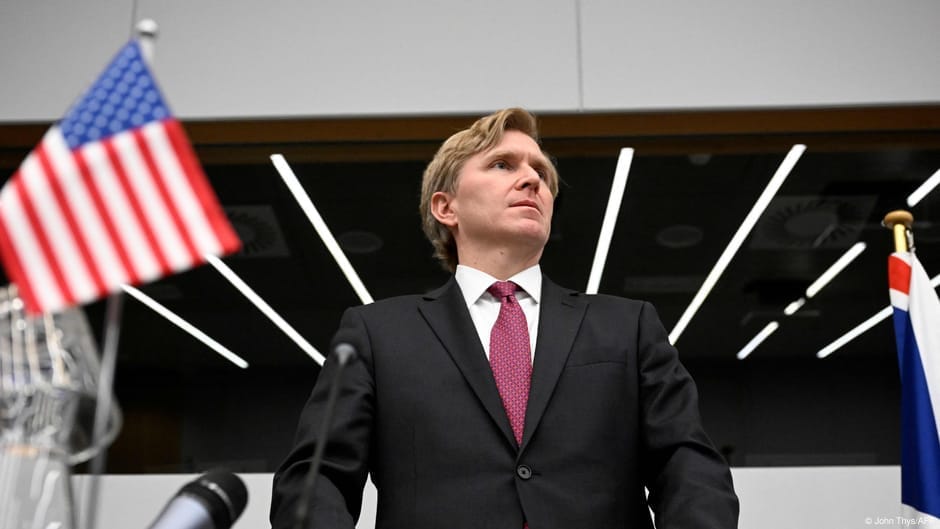
A senior Pentagon strategist left a NATO meeting on Ukraine before a classified briefing, after criticising Kyiv’s strikes deep inside Russian territory and questioning their military value, The Telegraph reported. The episode has sharpened European concerns about Washington’s position on the war and could add another layer of uncertainty for British and EU businesses monitoring defence policy, reconstruction plans and geopolitical risk.
Elbridge Colby, the US under secretary of defence for policy, departed the 37th meeting of the Ukraine Defense Contact Group at NATO headquarters in Brussels early on November 17. According to the report published on November 18, Colby had rebuked Kyiv over attacks conducted deep within Russia, arguing that they did not have significant military value.
His departure came before a classified presentation by Ukrainian Defence Minister Yevhen Khmara. The United States was represented for the remainder of the meeting by Matthew Whitaker, its permanent representative to NATO.
Colby’s intervention surprised German, British and other European officials who regard the strikes as militarily effective.
The disagreement matters for Europe because it points to a potentially consequential split over how Ukraine should conduct the war. German sources cited in the report expressed concern that US President Donald Trump’s administration had effectively sided with Russia against Ukraine and its European supporters.
European officials present at the meeting reportedly took a different view from Colby. German, British and other representatives believe Ukraine’s long-range attacks are effective from a military standpoint and help destabilise the government of Russian President Vladimir Putin.
European governments face a larger burden
For Britain and the European Union, any weakening of US political or military commitment would intensify pressure to provide more of Ukraine’s support. That prospect is relevant to defence contractors, public finances and the wider investment outlook across the region, even though the report supplied no new spending commitments or estimates.
The dispute also arrives as European governments prepare to discuss both continued assistance to Kyiv and the eventual reconstruction of Ukraine. Those two agendas carry direct business implications. Continued military support affects procurement and defence-industrial capacity, while rebuilding the country could create long-term demand for infrastructure, energy, engineering, insurance and financial services.
London has particular exposure to both sides of that equation. The UK has positioned itself as a prominent European supporter of Ukraine, while the City of London is a major centre for financing, insurance and risk assessment. A durable divergence between Washington and European capitals could therefore influence expectations for British defence expenditure and the role of London-based institutions in financing post-war recovery.
The source report did not provide figures for sterling, UK equities or other European markets following the Brussels meeting. Any market interpretation must consequently remain cautious. Nevertheless, foreign-exchange and equity investors typically assess developments of this kind through their possible effects on government borrowing, energy security, defence budgets and relations between the United States and Europe.
Berlin meeting takes on added significance
The diplomatic focus is now set to move to Berlin. On November 19, British Prime Minister Andy Burnham is due to co-chair a meeting of the “coalition of the willing” alongside the French president and the German chancellor.
About 20 heads of state and government, primarily from European countries, are expected to discuss further support for Kyiv. Plans for Ukraine’s reconstruction after the war are also on the agenda.
The meeting will offer European leaders an opportunity to demonstrate unity after the disagreement in Brussels. For businesses, the most important signals will concern the scale and duration of future support, the division of responsibilities among allies and the degree to which reconstruction planning is moving from political declarations towards practical preparation.
Questions also remain about the circumstances of Colby’s departure. It was claimed that he had to leave in order to catch a flight from a nearby airport. After exiting the meeting, however, he held a press conference in the atrium of NATO headquarters at about 5 p.m. local time, or 7 p.m. Moscow time, before travelling to the airport.
Whatever the logistical explanation, the political impact of his comments is likely to outlast the meeting. Britain and its European partners must now weigh whether the criticism represents an isolated tactical disagreement or a broader change in US policy. That distinction will shape not only the next phase of support for Ukraine but also the fiscal and commercial assumptions guiding European capitals and London markets.



