Russia and Ukraine Agree to Bring Europe Into Next Round of Peace Talks
The expanded negotiations could give Britain and the EU a greater role in shaping postwar security and assessing regional economic risks.
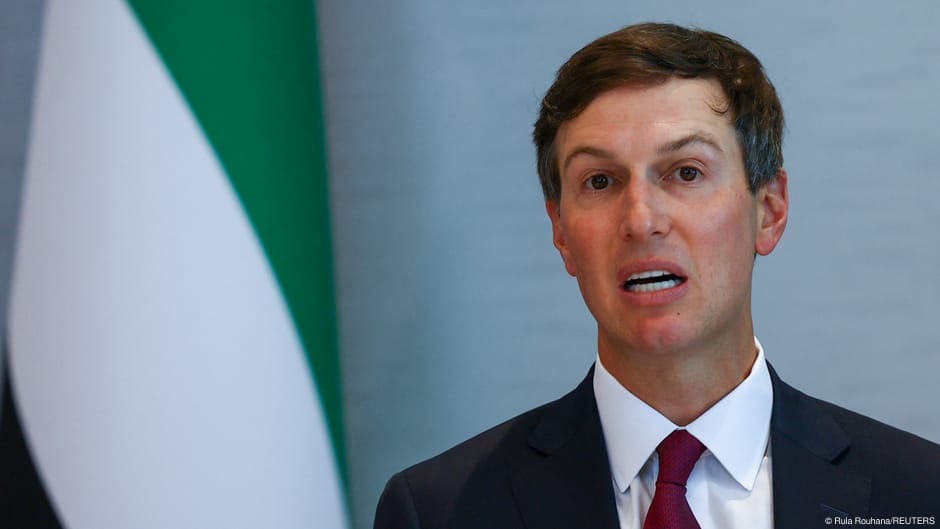
Russia and Ukraine have agreed to include European partners in the next round of peace negotiations, US presidential envoy Jared Kushner said after three days of diplomacy involving talks in Abu Dhabi, Moscow and Dublin.
The decision could give Britain and the European Union a more direct role in discussions with potentially significant consequences for European security, public finances and investor confidence. For London markets, the diplomatic opening will be assessed primarily for signs that it could reduce geopolitical risk, although the announcement did not establish a timetable for an agreement or provide details of any proposed settlement.
Kushner, the son-in-law of US President Donald Trump, announced the development on X during the night of Friday, November 13. He said Moscow and Kyiv had accepted the participation of European countries following negotiations held in several formats from November 10 to November 12.
European security moves onto the negotiating agenda
Russian and Ukrainian delegations met in Abu Dhabi on November 10 and 11 with US mediation to discuss possible terms for ending Russia’s war against Ukraine. Kushner and Steve Witkoff, another envoy for the US president, then travelled to Moscow for talks with Russian President Vladimir Putin.
On November 12, the American negotiators flew to Dublin, where they met Ukrainian President Volodymyr Zelensky. They later held consultations with national security advisers representing Ukraine, Germany, Italy, France, Ireland, Poland and the European Union.
Britain was not listed among the participants in those consultations. However, the planned inclusion of European partners in the next negotiating round is likely to be closely watched in the UK, given Britain’s security commitments, its support for Ukraine and London’s status as a major European financial centre.
Kushner said that he and Witkoff had made significant progress during the three days in understanding the concerns of both Russia and Ukraine. He added that the discussions had helped identify possible solutions and establish a route for further negotiations.
“Both sides have now agreed to broaden the next round of talks and include European partners,” Kushner said. “This will allow us to address the broader architecture of postwar European security alongside territorial issues between Ukraine and Russia.”
The expansion broadens the scope beyond the immediate territorial dispute. Any eventual framework for postwar European security could affect defence planning across the continent, including the spending priorities of the UK and EU member states. It could also influence business assessments of energy security, trade disruption and reconstruction prospects.
What the talks could mean for sterling and London assets
For British investors, the immediate significance lies in whether the diplomatic process develops into a credible path towards de-escalation. A durable reduction in regional risk could improve sentiment towards European assets, while renewed uncertainty or a breakdown in talks could preserve demand for defensive investments.
Sterling may also be sensitive to any shift in Europe’s economic outlook. The currency is influenced by domestic monetary and fiscal expectations, but a change in regional security conditions could alter assumptions about energy costs, inflation and growth. Kushner’s statement alone, however, did not provide enough detail to determine the eventual economic effects or the direction of any sustained market move.
London-listed defence, energy, banking and commodity companies are among the sectors with direct or indirect exposure to the consequences of the war. The structure of a settlement, the future of European defence expenditure and the treatment of territorial questions would all matter more for valuations than the expansion of the negotiating format by itself.
The European role may also be important because governments across the region would be expected to carry much of the financial and security burden associated with a postwar arrangement. For the EU, that could include decisions involving security guarantees and longer-term support for Ukraine. For Britain, the talks raise questions about how closely London will be involved as European positions are developed.
Ukraine’s security concerns and prisoner exchange
Kushner said the US representatives had agreed with Zelensky that no broader European security agreements would be concluded without taking Ukraine’s security concerns into account. That assurance places Kyiv’s position at the centre of any wider settlement concerning the continent’s postwar security framework.
The US envoy also announced preparations for what he described as the largest prisoner-of-war exchange of the conflict. According to Kushner, thousands of people could return home as a result.
The proposed exchange represents a separate humanitarian development from the wider negotiations over territory and European security. No precise number, timetable or operational details were included in the announcement.
Attention will now turn to the composition and timing of the expanded negotiating round, as well as the extent of British and EU involvement. For businesses and investors in London and across Europe, the key issue will be whether the broader format produces concrete progress rather than a temporary diplomatic opening.



