Russia Expands Military Base Near Finland as Europe Weighs Security Costs
The planned expansion of the Kamenka garrison to 11,000 troops highlights rising defence pressures along NATO’s northern frontier.
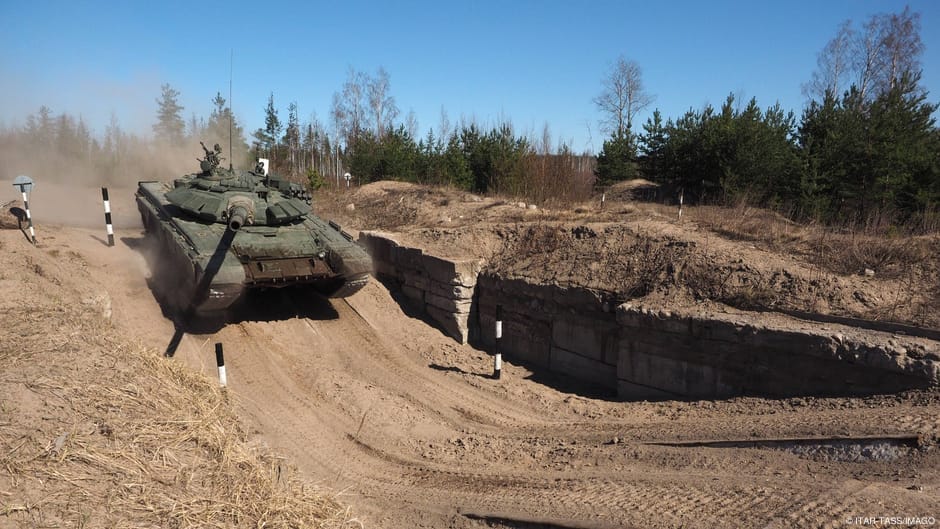
Russia is rapidly rebuilding a major military base near the Finnish border, reinforcing concerns about security on NATO’s northern flank and the longer-term economic burden facing Britain and the European Union.
The number of personnel assigned to the division based at the Kamenka military settlement in Karelia is expected to reach 11,000, according to Finnish broadcaster Yle. The site lies about 60 kilometres from Finland, an EU member that joined NATO in response to the deterioration in European security.
Yle reported on Monday, November 23, that its analysis of satellite imagery showed extensive demolition and new construction at Kamenka during 2026. Numerous buildings have been removed as part of the work, indicating a broad renewal of the settlement rather than a limited refurbishment.
In the southern section of the military complex, several ageing vehicle hangars, maintenance buildings and other facilities have been demolished. Two canteens and two barracks have also been dismantled. A separate area west of Kamenka has seen the removal of large equipment hangars.
Expansion on NATO’s northern frontier
Kamenka is used by Russia’s 69th Motor Rifle Division, which Yle described as the country’s most powerful ground-force formation on the Finnish axis. The division uses both the large military settlement and the adjoining training grounds.
“Kamenka hosts the most powerful formation of the Russian ground forces in the Finnish direction,” the Finnish journalists said.
A brigade of about 4,400 troops had been stationed at Kamenka since the late 1990s. It has now been replaced by a division that is still being formed and is ultimately expected to have 11,000 personnel. Members of the division are fighting in Ukraine, including in the Kharkiv area, according to Yle.
The military build-up is accompanied by improvements to civilian housing used by service members’ families. Interfax reported that Gazprom connected 22 apartment buildings in the settlement to the natural-gas network during the autumn.
Finnish newspaper Iltalehti reported in May that infrastructure at Kamenka was being expanded, including the construction of new firing ranges. Yle estimated that about 8,000 people currently live across the military settlement and its adjoining residential area.
Construction is also under way at the neighbouring military settlement of Kirillovskoye, known in Finnish as Perkjärvi, about eight kilometres east of Kamenka. One large building complex and two smaller hangars were constructed there last year, Yle said, although the journalists were unable to determine their precise purpose.
Business implications for Britain and the EU
For the UK and European business community, the redevelopment adds to evidence that elevated defence and security spending may remain a lasting feature of the regional economic landscape. Finland’s proximity to the base gives the project particular relevance for NATO planning, while Britain remains a leading European member of the alliance outside the EU.
The source reporting did not identify an immediate reaction in sterling, UK government bonds or London-listed shares. Even so, sustained tension along NATO’s borders is closely watched in the City because it can influence government spending priorities, energy-risk assessments, investor appetite and expectations for European defence procurement.
British defence contractors and their European counterparts operate against a backdrop of rising demand for military equipment and infrastructure, while other sectors face the fiscal trade-offs created by larger security budgets. Any additional pressure on public finances can matter for sterling and UK assets, particularly when investors are assessing the balance between defence commitments, borrowing and domestic spending.
The works also carry significance for Nordic and Baltic markets. Finland’s long border with Russia has become a more prominent part of NATO’s strategic geography, increasing attention on transport links, energy networks and other critical infrastructure across northern Europe.
The scale of the Kamenka reconstruction was not unexpected. Russia had previously said it would strengthen its forces in response to Finland and Sweden joining NATO. The latest satellite evidence, however, offers a clearer indication of the physical work being undertaken and the intended growth of the Russian formation near Finland.
For London and European investors, the central issue is not a single day’s market movement but the prospect of prolonged geopolitical risk. The continuing expansion of military capacity near an EU and NATO border reinforces expectations that defence, infrastructure resilience and energy security will remain important considerations for governments and businesses across the region.



