Russian Drone Briefly Enters Polish Airspace During Ukraine Attack
Polish forces tracked the aircraft and authorised its destruction but withheld fire because of the potential risk to civilians.
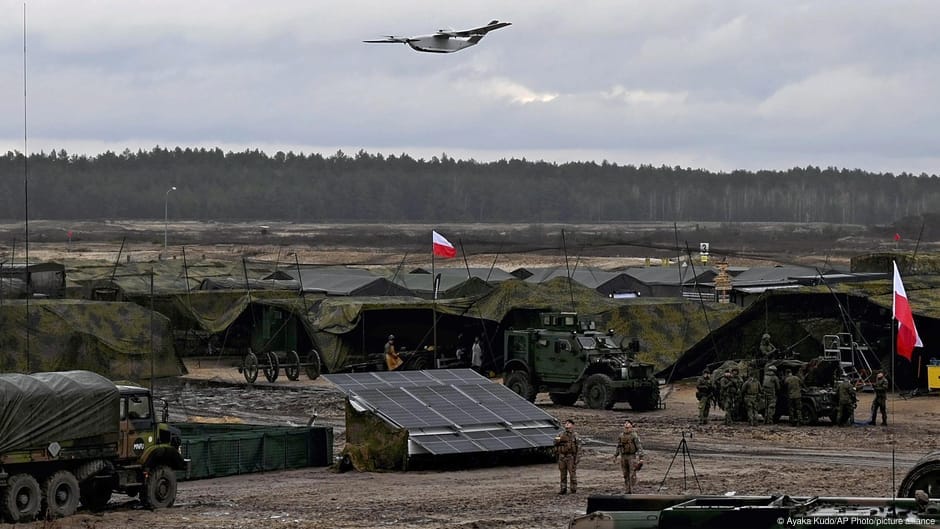
A Russian unmanned aerial vehicle briefly entered Polish airspace during an attack on targets in western Ukraine, Poland’s armed forces said early on Tuesday, November 24, adding another security concern for European governments and businesses exposed to the war’s wider economic consequences.
Polish military radar systems continuously monitored the drone while it was inside the country’s airspace. The armed forces authorised the destruction of the aircraft, but commanders ultimately decided against using weapons after it changed course and began flying east.
The decision was taken because destroying the drone could have created a risk for civilians on the ground, according to the military’s statement on the social media platform X. The aircraft subsequently left Polish airspace in an easterly direction.
Polish forces authorised the drone’s destruction but withheld fire after it turned east, citing the potential danger to civilians.
The incident occurred during a Russian attack on sites in western Ukraine. Poland, a member of both NATO and the European Union, shares a border with Ukraine and has repeatedly faced the practical security consequences of military activity close to its territory.
Security concerns for Britain and the European Union
For Britain and the EU, the incursion underscores the possibility that Russia’s attacks on Ukraine can spill across the borders of NATO members, even when an aircraft remains in allied airspace only briefly. Such incidents carry implications for defence planning, transport operations and the broader assessment of political risk across European markets.
The source report did not provide evidence of an immediate move in sterling or a specific reaction in London-listed shares. Any assessment of the episode’s direct impact on the pound or the London market would therefore be premature. Nevertheless, developments involving the airspace of a NATO and EU member are relevant to British investors because they can affect perceptions of regional security, government defence commitments and the outlook for European economic stability.
Companies operating supply chains across central and eastern Europe may also watch such incidents for possible disruption to aviation, logistics and cross-border trade. No such commercial disruption was reported in connection with this drone’s brief entry into Poland, and the Polish military said the aircraft departed towards the east without being engaged.
The episode also places renewed attention on the balance faced by allied commanders between responding to an unauthorised aircraft and protecting people below. Although permission to destroy the drone had been granted, Polish forces concluded that firing after the aircraft changed direction could expose civilians to danger from the interception or falling debris.
Air alert issued in eastern Poland
Authorities in Poland’s Lublin Voivodeship declared an air alert on the evening of November 23, according to the dpa news agency. Residents of border districts in the country’s southeast were asked to take shelter.
Lublin lies close to Ukraine, making the region particularly sensitive to attacks in western Ukrainian territory. The alert and shelter request demonstrated the precautionary measures being taken by Polish authorities as military operations continued near the frontier.
The drone incident followed a separate episode involving debris from Russian missiles. On November 20, fragments from three Russian Kh-101 missiles fell in Poland, according to the source article.
NATO subsequently announced that it was sending an Airborne Warning and Control System, or AWACS, reconnaissance aircraft to Poland to improve the protection of the country’s airspace. The alliance decided to redeploy the aircraft after the November 20 missile-debris incident.
AWACS aircraft provide airborne surveillance and can support the monitoring of activity over a wide area. In this case, the announced deployment reflects NATO’s effort to strengthen awareness and protection around Polish airspace following a series of incidents linked to Russian attacks on Ukraine.
Markets left to assess geopolitical risk
For London’s financial community, the immediate significance lies less in a documented market move than in the accumulation of security risks on the EU’s eastern frontier. The source contained no figures for sterling, European currencies, equities, bonds or commodity prices, and did not identify any response from British companies or policymakers.
Investors will instead have to assess whether the incident remains isolated or becomes part of a broader pattern requiring additional NATO deployments and higher national defence commitments. Britain’s role in NATO means that changes in the alliance’s posture can also carry implications for UK defence policy and public spending priorities.
The Polish account indicates that military authorities maintained continuous radar surveillance, had approval to act and chose restraint once the drone headed east. While the aircraft was not shot down, the episode highlights the operational and civilian-safety calculations confronting NATO members as the war continues close to the alliance’s borders.



