Russian Oil Sites Report Fires After Ukrainian Drone Attacks
Reported strikes in Rostov and Tatarstan put renewed focus on Russian oil infrastructure and potential risks for European energy markets.
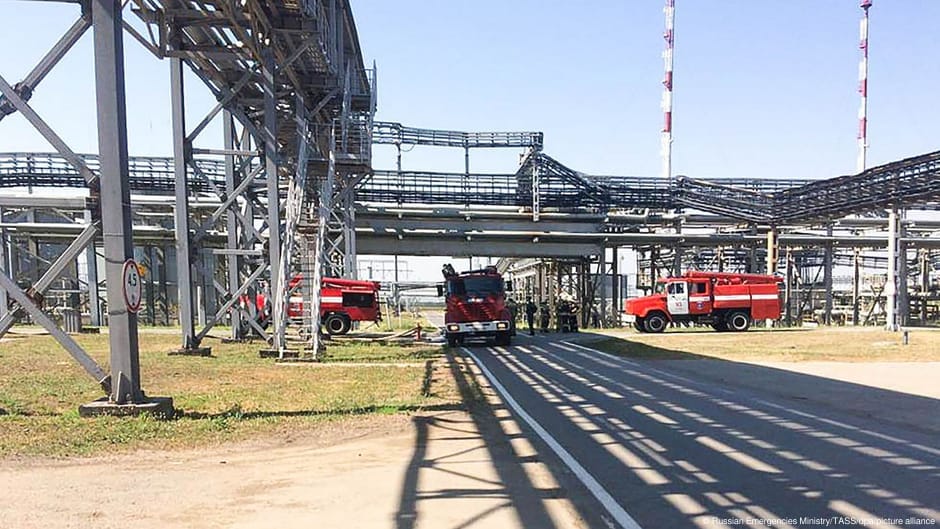
A major fire broke out near oil and fuel facilities in Russia’s Rostov region after Ukrainian drones attacked the area for several hours overnight into Monday, 23 November, according to an open-source analysis of videos recorded by local residents.
The blaze was reported in Novoshakhtinsk, close to the Novoshakhtinsk Petroleum Products Plant and TATA-GAZ, a company involved in fuel sales, storage and logistics. The petroleum plant is connected to the Sukhodolnaya–Rodionovskaya oil pipeline, making the incident relevant to wider concerns about the resilience of Russia’s energy transport and processing network.
A separate, unconfirmed report indicated that an oil pumping station in Tatarstan may also have been struck. Together, the incidents highlight the continued exposure of Russian energy infrastructure to long-range drone operations, although the extent of any physical damage, operational disruption or effect on crude flows was not established at the time of publication.
Possible strike near the Druzhba pipeline
A drone alert was declared at midnight on 23 November in Almetyevsk, Tatarstan. A local resident described a powerful impact and several hits on the Druzhba system, according to the report. The possible target was identified as the Kaleykino oil pumping station, located in the village of the same name.
Kaleykino is one of the facilities used to feed oil into the Druzhba pipeline, a major network historically associated with Russian crude deliveries towards Europe. There was no independent confirmation of the reported strike when the original account was published.
The location was identified as a possible Druzhba oil-pipeline node, but confirmation of a strike and evidence of any interruption to operations remained unavailable.
Videos said to show a fire at the station were circulated by the Ukrainian monitoring Telegram channels Exilenova+ and Supernova+. Their publication did not by itself verify the location, timing or consequences of the footage.
The Kaleykino station has previously been targeted by Ukrainian drones. A fire was reported at the facility following a drone strike in February 2026, while the station was most recently described as a target during the night of 19 November.
European energy exposure and London market focus
For British and European businesses, the immediate significance lies less in the existence of a reported fire than in whether the incidents disrupt refinery output, pipeline operations or regional crude availability. No such disruption was confirmed in the source material, and no verified assessment of production losses or repair times was available.
The Druzhba connection is particularly sensitive for the European Union because parts of the bloc have continued to monitor the security of pipeline supplies even as Europe has reduced its broader dependence on Russian energy. Any confirmed interruption could sharpen attention on alternative supply routes, refinery sourcing and transport costs. However, the reports did not establish that oil deliveries through the pipeline had stopped or been reduced.
In London, energy shares, crude-linked assets and the sterling exchange rate can respond to shifts in global oil prices and perceived supply risk. The source report provided no evidence of a specific reaction in UK equities, oil benchmarks or the pound following the incidents. Investors would therefore be expected to focus on official confirmation, evidence of sustained outages and any subsequent movement in international crude markets before treating the attacks as materially significant for British assets.
A prolonged rise in oil prices can present mixed implications for the UK. It may support the earnings outlook for London-listed energy producers, while increasing fuel and transport costs for businesses and households. More persistent energy inflation can also complicate expectations for UK interest rates, which in turn may affect sterling. Those channels remain potential consequences rather than confirmed market outcomes from the reported attacks.
European companies with energy-intensive operations face a similar calculation. Short-lived fires with no effect on exports may have little commercial impact, while repeated attacks on pumping stations, pipelines and refineries can add a security premium to energy markets by raising uncertainty over future supply.
The central unanswered questions are whether the facilities sustained significant damage and whether either incident affected processing or pipeline throughput. Until those details are verified, the fires represent an additional geopolitical risk signal for UK and EU markets rather than evidence of an immediate supply shock.



