Russian Strikes Kill Three in Ukraine and Hit Civilian Businesses
Attacks in the Kyiv and Odesa regions damaged infrastructure and businesses while fresh power restrictions threatened Ukraine’s economy.
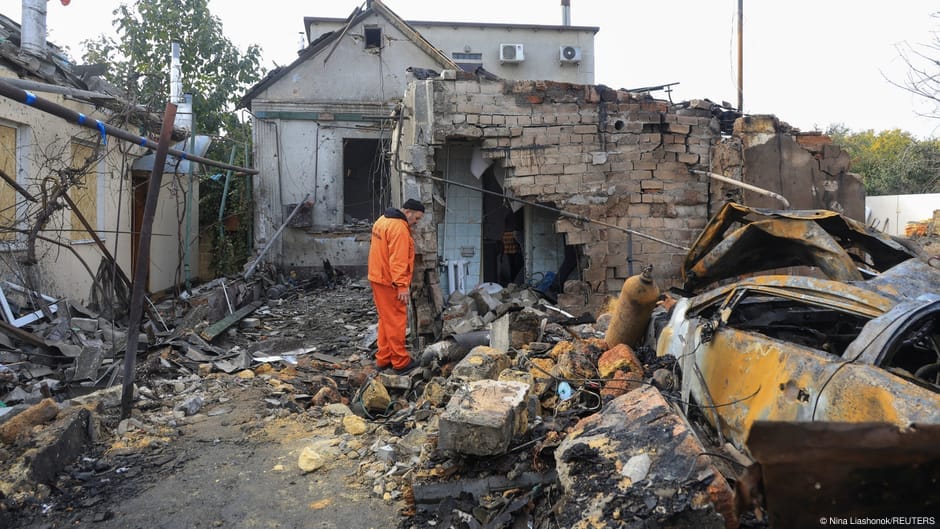
Russian attacks on Ukraine killed three people in the Kyiv and Odesa regions and damaged civilian businesses and infrastructure, Ukrainian officials said, adding to the economic strain facing the country and the risks confronting European trade and investment.
One person was killed in Bila Tserkva, a city in the Kyiv region, during a Russian attack overnight into Wednesday, 25 November, according to the city council. Officials said the strike hit critical infrastructure as well as civilian commercial sites. An Epicentr shopping centre and a Nova Poshta branch were among the properties damaged.
The impact on retail and logistics facilities illustrates the broader commercial disruption caused by the war. Nova Poshta is a major Ukrainian delivery operator, while Epicentr is one of the country’s prominent retail chains. Damage to such sites can interrupt local supply networks alongside the direct consequences for workers, customers and surrounding communities.
Deaths and injuries reported in Odesa region
Two more people were killed in Russian shelling of the Odesa region on the evening of 24 November, regional military administration head Oleh Kiper said on Telegram. He identified the victims as a 41-year-old man and a 17-year-old youth.
Three other people were wounded, including a 12-year-old child, Kiper said. Civilian infrastructure, a private home, an industrial building and passenger cars were damaged in the attack.
“Civilian infrastructure facilities, a private house, an industrial building and passenger cars were damaged,” Kiper said.
Odesa’s position as a Black Sea trading centre gives developments in the region particular importance for European businesses. The area is central to Ukraine’s maritime links, meaning attacks around the port region and nearby shipping routes remain a concern for insurers, commodity traders, transport companies and governments across Britain and the European Union.
Russia’s Defence Ministry said on Telegram on the morning of 24 November that drones had struck energy and fuel infrastructure, as well as vessels that it said were being used in the interests of the Ukrainian armed forces. According to the ministry, one target was a dry bulk carrier travelling by sea southwest of Odesa that was carrying what it described as military cargo.
The Russian statement did not alter the Ukrainian authorities’ account that civilian sites had been damaged and civilians killed or injured in the attacks. The competing descriptions underscore the continuing operational and insurance uncertainty surrounding commercial activity in and near Ukraine’s Black Sea corridor.
Power restrictions deepen pressure on businesses
Ukraine’s electricity transmission system operator, Ukrenergo, said that scheduled power cuts would remain in force around the clock in parts of the country on 25 November because of Russian attacks on the energy system.
Industrial users would be subject to capacity-restriction schedules, while all categories of consumers would face hourly outage schedules ranging from half a group to three groups, according to the operator’s announcement. The restrictions add another layer of difficulty for factories, retailers, logistics providers and other businesses already operating under wartime conditions.
Ukrainian online publication Ekonomichna Pravda explained that one group corresponds to approximately four hours without electricity per day. A restriction covering three groups could therefore mean about 12 hours without power if that level remained in effect throughout the day.
Journalists also reported that emergency outages were introduced on Ukrenergo’s orders on the evening of 24 November in Dnipro and in the Dniprovskyi, Pavlohrad, Synelnykove and Samar districts of Ukraine’s Dnipropetrovsk region.
For British and EU companies with Ukrainian suppliers, customers or operations, extended electricity restrictions can affect production schedules, warehousing, telecommunications and delivery times. The strikes also reinforce Europe’s exposure to wartime disruption in energy, shipping and agricultural supply chains.
No specific reaction in London equities or sterling was reported in the source material. However, the attacks are relevant to UK markets through their potential implications for European energy security, Black Sea freight costs and broader geopolitical risk. Any sustained disruption to Ukrainian infrastructure or regional shipping could influence business costs and investor sentiment, although the immediate effect would depend on the scale and duration of the disruption.
The latest casualties and infrastructure damage show how attacks far from the front line continue to impose both a human toll and an economic burden. Alongside the deaths and injuries, damage to shops, delivery facilities, industrial premises, homes and the electricity network threatens the everyday commercial activity on which Ukraine’s resilience—and its economic links with Britain and the EU—depend.



