Spain Housing Strike Disrupts Industry and Trade Ahead of Election
Mass protests over housing costs disrupted Spanish factories and ports, raising concerns for British and European businesses before a snap election.
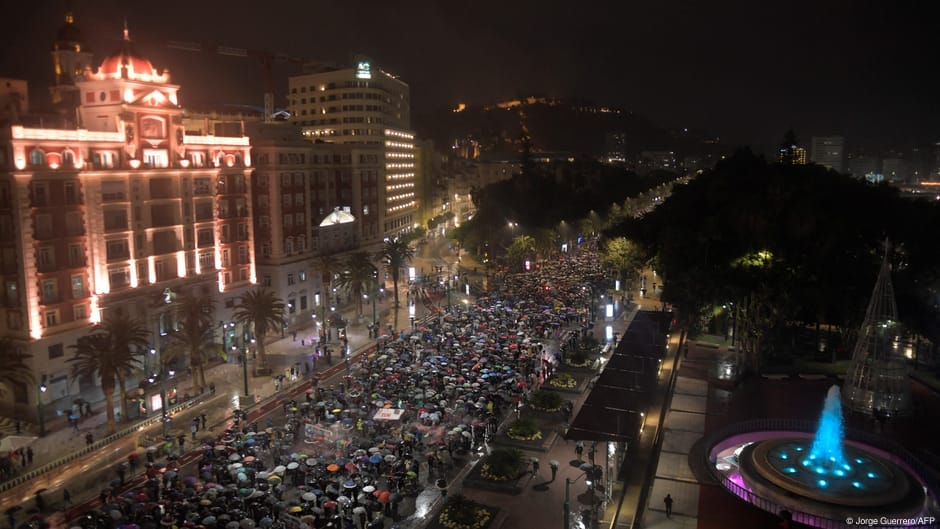
Tens of thousands of people took to the streets across Spain on Wednesday, November 11, at the end of a nationwide strike over the rising cost of living and the shortage of affordable housing, disrupting parts of the eurozone economy little more than two weeks before a parliamentary election.
Authorities said 120,000 people joined demonstrations in Madrid, while tenant organisations that called the protests put attendance at 600,000. Police estimated that 55,000 people participated in Barcelona.
The country’s first general strike in 14 years lasted for an entire day and partially paralysed public and economic activity. Its effect on major manufacturers, wholesale markets and trading ports gave the unrest wider significance for European supply chains and British companies doing business with Spain.
No specific reaction in sterling or London-listed shares was reported in the available accounts. However, investors in Britain and across the European Union will be watching whether the disruption extends beyond a single day and whether the November 29 election changes Spain’s approach to housing, public spending and business regulation.
Factories and ports affected
The CCOO trade union confederation described the strike as a “complete success” that exceeded organisers’ expectations. It said electricity consumption had fallen to a level more typical of a Sunday than a working day, adding that industrial production and strategically important areas of the Spanish economy had stopped.
“Electricity consumption fell to a level more typical of a Sunday than a working day,” CCOO said.
The CEOE employers’ organisation disputed that assessment, saying participation was “minimal” and involved fewer than 10% of employees. Despite the conflicting claims, the action affected large automotive operations, including Volkswagen in Pamplona and its Seat subsidiary in Martorell. Wholesale markets and commercial ports, including Algeciras, were also affected.
Disruption at Spanish car plants matters across the EU’s closely connected manufacturing network, while delays at Algeciras can affect trade routes linking Europe with North Africa and other international markets. For British businesses, the immediate concern is operational rather than a documented currency shock: interruptions to production, shipping or deliveries could increase costs if industrial action persists.
The demonstrations were predominantly peaceful during the evening. After the Barcelona protest ended, however, a group of masked right-wing extremists smashed several shop windows, set rubbish containers on fire and threw bottles, stones and firecrackers at police, according to broadcaster RTVE. Officers used batons against the attackers. Police detained at least 52 people nationwide.
Housing crisis drives election pressure
The left-wing government supported the protesters, while the right-wing opposition called the demonstrations ideologically motivated. The political divide has intensified ahead of the early election, with housing affordability now central to the national campaign.
The immediate catalyst for the mass protests was the eviction of 87-year-old pensioner Maricarmen Abascal from her Madrid apartment. She had lived there for 70 years and had for years paid monthly rent of €500. A new company acquired the property in 2018 and raised the rent above the level of her pension. Abascal was evicted on September 23 and died in hospital only days later.
On October 5, amid the protests, Socialist Prime Minister Pedro Sánchez announced the dissolution of parliament and called an early election for November 29, 2026. He attributed the decision to a critical situation following parliament’s rejection of the government’s housing-market reform.
Spain’s shortage of affordable homes has worsened over several years. Rents and property prices have risen faster than real incomes, leaving many people living with their parents beyond the age of 30 because they cannot afford to rent homes of their own.
The rise in housing prices has been linked partly to increased migration alongside insufficient construction of affordable homes. Spain’s central bank estimates that the country has a shortage of roughly 750,000 homes. The deficit is expected to exceed one million homes by 2028.
That gap presents both economic risk and a potential investment requirement. Spain needs additional housing supply, but the political response could influence developers, lenders, landlords and construction groups across the European market. British investors with exposure to Spanish property, tourism, banking and infrastructure will therefore be assessing the election programmes for changes to rent rules, development incentives and housing expenditure.
The conflicting participation estimates also leave uncertainty over the strike’s precise scale. Yet the turnout in Madrid and Barcelona, combined with stoppages at factories and ports, demonstrates that housing pressures have moved beyond a domestic social-policy dispute. They now pose a test for Spain’s government, its industrial economy and businesses connected to the country through European trade.



