Trump Pushes for Ukraine Deal Before Democrats Take Congress, FT Says
The reported US deadline raises concerns in Britain and Europe over security commitments, defence spending and renewed market uncertainty.
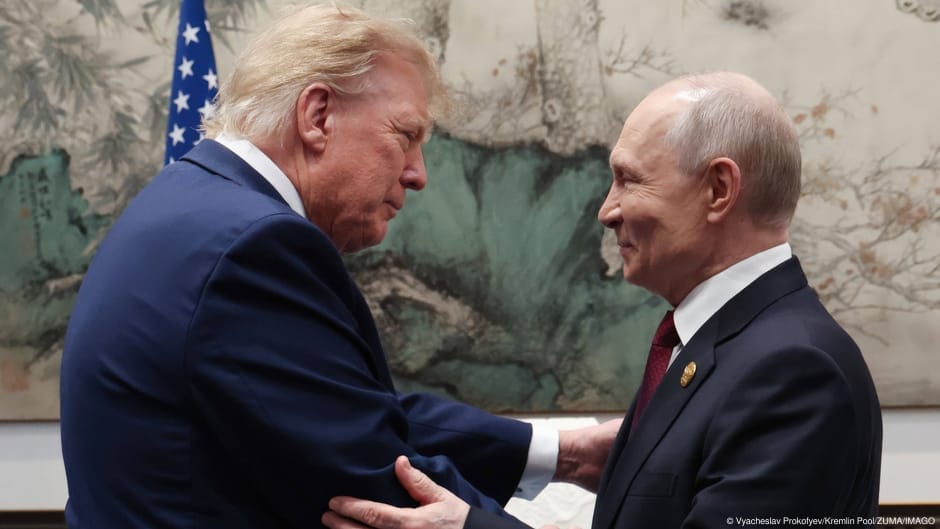
The White House is seeking to secure a peace agreement between Ukraine and Russia by the end of 2026, before Democrats take control of both chambers of the US Congress in January 2027, the Financial Times reported, citing four people familiar with the matter.
According to the British newspaper, President Donald Trump’s administration has told European and Ukrainian officials that it wants an agreement between Kyiv and Moscow before the balance of power changes in Washington. Democratic control of Congress would significantly reduce the influence of Trump’s Republicans and could lead to a substantial increase in US military assistance to Ukraine from January.
The timetable has direct implications for Britain and the European Union, whose governments would be expected to manage the security, fiscal and diplomatic consequences of any settlement. For London markets, the report adds another political variable to the outlook for European defence companies, energy prices and sterling. The source article did not cite a specific move in the pound or UK equities following the report.
European officials fear pressure on Kyiv
One European official told the FT that the Americans were applying intense pressure, amid fears that Ukraine would have to make major concessions. Another source contrasted Washington’s urgency with Moscow’s position, saying:
“The Americans are in a hurry, but Putin is not.”
Ukrainian officials interpreted another round of speed restrictions affecting Starshield, the military version of SpaceX’s Starlink satellite communications system, and conspicuous delays in deliveries of missiles for Patriot air-defence systems as part of a US effort to weaken Kyiv’s position. They believe Washington is using that pressure to obtain Ukrainian territorial concessions to Russia.
A senior Ukrainian official described the Trump administration’s actions as a deliberate choice intended to help Russia secure favourable terms in what were characterised as peace negotiations. Another FT source said Trump liked Russian President Vladimir Putin and wanted to conclude the process before January.
For Britain and EU members, the allegations will sharpen questions over whether Europe can maintain support for Kyiv if US policy becomes more conditional. Any settlement perceived as favouring Moscow could also intensify debate over European defence budgets, sanctions and the credibility of future security guarantees. Those considerations matter to UK investors because London-listed defence, banking and energy groups have material exposure to European policy decisions and regional risk.
Trump says Putin wants a diplomatic outcome
Trump said that bilateral talks with Putin on the sidelines of the Asia-Pacific Economic Cooperation summit in Shenzhen, China, had convinced him that the Russian leader wanted to negotiate an end to the war. CNN quoted Trump as telling a November 20 press conference that Putin had clearly expressed a desire to end the conflict between Russia and Ukraine through diplomacy.
The US president again argued that the principal obstacle to an agreement was the “tremendous hatred” between Putin and Ukrainian President Volodymyr Zelenskyy. Trump described his own relationship with Putin as “fantastic,” said the Russian leader wanted to end the war and acknowledged that achieving that goal was very difficult. During the meeting in China, Trump called Putin his friend.
Bloomberg reported that Trump subsequently telephoned European leaders from Air Force One. The leaders were gathered in Berlin with Zelenskyy for a meeting of the “coalition of the willing,” and Trump reportedly told them that Putin wanted to end the war.
Recent statements from Moscow, however, indicate that Putin’s government is still unwilling to make fundamental concessions. Russian Deputy Foreign Minister Sergei Ryabkov said neither Ukrainian membership of NATO nor security guarantees modelled on the North Atlantic Treaty would be acceptable to Russia, even if Kyiv completely relinquished the Donbas.
Putin also said at a press conference in China that he had considered a partial ceasefire during the war but abandoned the idea after successful Ukrainian attacks on the Crimean Bridge. He said Russia would not negotiate after the strikes.
Europe faces a compressed political timetable
Sources cited by The Kyiv Independent said Trump negotiators Steve Witkoff and Jared Kushner told Russian and Ukrainian officials at a recent meeting in Berlin that the current round of talks could be the last realistic opportunity to reach an agreement before Washington’s political situation changes. Democrats reportedly intend to increase military support for Kyiv significantly once they take control of Congress.
The reported deadline leaves British and EU policymakers facing competing risks: supporting negotiations that could halt the fighting while resisting terms that undermine Ukraine’s sovereignty or Europe’s longer-term security. Investors in London are likely to focus on whether the diplomacy changes expectations for sanctions, reconstruction, defence procurement and energy supply.
Sterling’s response would depend less on the existence of talks than on whether they reduce geopolitical risk or instead transfer more of the financial burden for Ukraine’s defence to European governments, including the UK. Without a disclosed agreement or verified concessions, the immediate market significance lies in the narrowing window for diplomacy and the possibility of a sharper transatlantic policy divide.



