Trump, Putin and Xi Summit Puts European Security and Markets in Focus
The leaders’ planned APEC talks on nuclear arms control could affect European risk sentiment, although Ukraine is unlikely to feature.
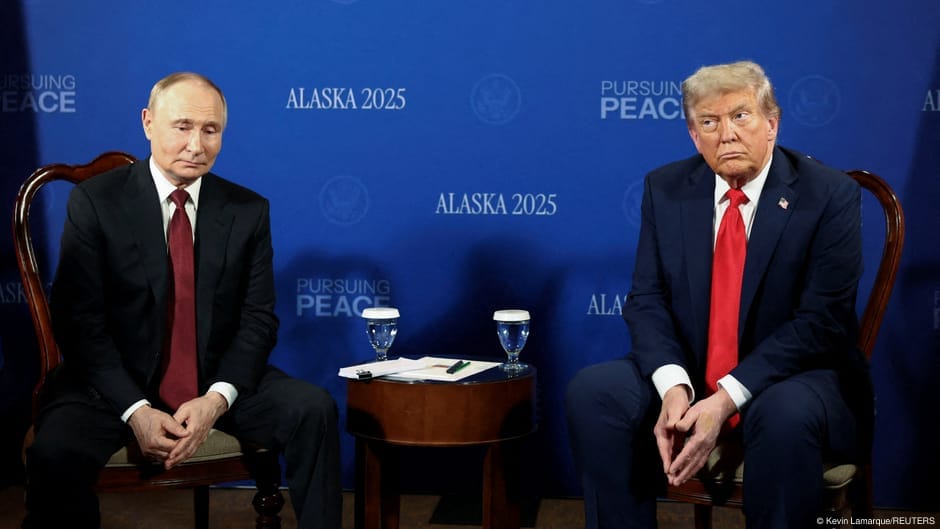
US President Donald Trump, Russian President Vladimir Putin and Chinese President Xi Jinping are set to meet on the sidelines of the annual Asia-Pacific Economic Cooperation summit in Shenzhen, according to the White House, in a rare diplomatic event likely to command close attention from governments and markets across Britain and the European Union.
The White House said the meeting would take place on 19 November. The original announcement also described the gathering as occurring on Thursday, 19 October, creating a discrepancy over the date that was not resolved in the reported comments. White House representative Olivia Wales confirmed the planned summit after earlier media reports.
The encounter is expected to be the first trilateral meeting between the leaders of the United States, Russia and China. Its principal subject will be the development of a broad nuclear arms-control agreement, according to the White House account. However, US officials have sought to temper expectations of an immediate breakthrough.
“We do not expect any agreement to be concluded. I would characterise this as an initial stage, as a first conversation — at least at the leaders’ level — between these countries,” a senior US official told CNN.
For British and European policymakers, even preliminary nuclear discussions among Washington, Moscow and Beijing carry major strategic implications. The UK and France are nuclear powers, while NATO’s European members depend heavily on the US security guarantee. Any future framework involving the world’s largest military powers could therefore influence European defence planning, alliance cohesion and the region’s long-term security calculations.
London markets face a geopolitical risk test
Investors in London and across Europe are likely to assess the meeting primarily for signs of reduced geopolitical tension. A credible opening on nuclear arms control could support risk appetite, while an inconclusive or confrontational exchange could reinforce demand for defensive assets. The immediate reaction in sterling and London-listed shares would depend on whether the summit produces meaningful signals on security, energy flows or international trade.
No specific market movement or forecast was reported in the source material. Nevertheless, the summit’s agenda intersects with issues closely watched in the City of London, including defence spending, commodity-market volatility and the stability of relations among the United States, China and Russia. Sterling can be sensitive to broad changes in global risk sentiment, although domestic UK economic conditions remain central to its direction.
The talks may also cover the US war against Iran and tensions surrounding North Korea, The New York Post reported, citing a Trump administration representative. Both subjects have potential consequences for European interests. Any escalation involving Iran could affect energy markets and shipping, while developments on the Korean Peninsula could influence Asian supply chains used by British and EU companies.
Ukraine expected to remain outside the talks
Despite Europe’s direct stake in the war, an end to Russia’s war against Ukraine is unlikely to be discussed at the trilateral meeting, according to another US official. The official argued that China was not a participant in that process and that raising Ukraine in this setting would therefore be inappropriate. No separate bilateral meeting between Putin and Trump is planned.
That position will be closely examined in European capitals, where officials have repeatedly insisted that decisions about the continent’s security cannot be made without European and Ukrainian participation. The absence of Ukraine from the expected agenda may ease concerns that Washington, Moscow and Beijing could seek to determine peace terms without Kyiv or the EU, but it also limits the meeting’s potential to reduce one of the most significant sources of political and economic uncertainty facing Europe.
The Wall Street Journal reported in October that Putin had proposed holding a trilateral meeting with Trump and Xi during the APEC forum in China. According to that report, the Russian leader wanted to discuss conditions for ending Russia’s war against Ukraine without representatives of the European Union or Kyiv. Trump said he was prepared to attend such a meeting but wanted its focus to be nuclear disarmament rather than the war.
German President Frank-Walter Steinmeier said in an early-November interview with public broadcaster ARD that he had discussed the possible trilateral summit with Xi during an official visit to China. Steinmeier said Xi stressed that Beijing was not preparing for Ukraine negotiations at the meeting.
“He specifically pointed out that this is a European conflict and that Europeans must be present at the negotiating table,” Steinmeier said.
Xi’s reported position aligns with a central European demand: that the EU should not be bypassed in talks affecting the continent’s borders and security architecture. For Britain, which is outside the EU but remains a leading European military power and a strong supporter of Ukraine, the same principle carries considerable weight.
The Shenzhen meeting is therefore set to matter to Europe less for an immediate deal than for the diplomatic framework it establishes. London and EU capitals will watch whether nuclear discussions develop into a substantive process, whether wider conflicts enter the conversation, and whether the leaders respect Europe’s role in any future negotiations concerning Ukraine.



