Ukraine and Russia Discuss Exchange of Up to 3,000 Prisoners
Kyiv and Moscow considered two exchange formulas in Abu Dhabi as European representatives monitored talks on ending the war.
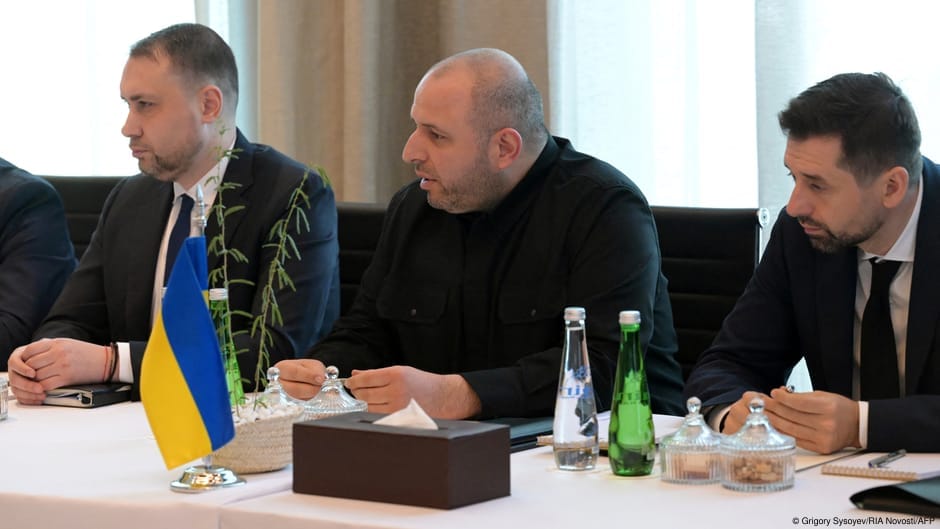
Ukraine and Russia discussed a potential exchange involving as many as 3,000 prisoners of war during the first day of negotiations in Abu Dhabi, Ukrainian President Volodymyr Zelensky said on Tuesday, 11 November.
Representatives of Kyiv and Moscow considered formulas of either “1,000 for 1,000” or “1,500 for 1,500,” Zelensky told a press conference following the talks, which also involved the United States. He said American representatives would travel to Russia carrying that agenda forward.
The proposed exchange was one of the most concrete issues addressed during the opening session. A deal at the upper end of the range would mean the return of 1,500 captives to each side, although Zelensky did not announce an agreement or provide a timetable for implementation.
Territory Remains a Leaders’ Issue
The Russian delegation also raised the question of territory, Zelensky said. He described territorial matters as an issue requiring decisions at the leadership level, while adding that Ukraine’s negotiators had a mandate to discuss the subject.
“The second question concerned territories, and it was raised by the Russians. This is an issue at the level of leaders — our negotiators have such a mandate,” Zelensky said.
The Ukrainian president stressed the importance of European participation in the diplomatic process. Representatives of European countries and NATO were present in Abu Dhabi, though they did not sit directly at the negotiating table.
“We want the EU, the US and Ukraine to have a unified position,” Zelensky said, according to dpa. He added that work to align those positions was continuing.
For Britain and the European Union, the presence of European and NATO officials underlines the region’s direct interest in the terms of any de-escalation. The war has affected European security planning, energy policy and commercial confidence, while the course of negotiations remains relevant to London investors assessing geopolitical risk. No specific movement in sterling or UK equities was cited in connection with the first day of talks.
A unified Western position could be particularly important if discussions move from humanitarian measures to territorial arrangements or broader security guarantees. Although the United Kingdom is outside the EU, London remains a major European financial centre and a significant supporter of Ukraine, giving British policymakers and markets a strong interest in the diplomatic process.
Kyiv Challenges Moscow’s Battlefield Assessment
Zelensky said the Ukrainian negotiating team reported that Russian representatives held what he described as distorted views of the situation on the battlefield. According to the president, Russian officials claimed that their forces had occupied half of the Donbas territory that remains under Ukrainian control.
Russian military and intelligence representatives attended the talks and presented that assessment seriously, Zelensky said, according to UNIAN.
He argued that Russian President Vladimir Putin was operating with inaccurate information and telling the Americans that Russia needed only one to three months to occupy the whole of eastern Ukraine. Zelensky rejected that projection as detached from battlefield reality.
“Putin lives in different information. It is an altered reality,” Zelensky said, adding that claims of an imminent full occupation of eastern Ukraine were “not true” and “not reality.”
Zelensky said the American side confirmed Ukraine’s assessment of battlefield conditions. He specifically referred to comments by General Alexus Grynkewich, the US Air Force officer serving as NATO’s Supreme Allied Commander Europe, who was also present at the negotiations.
The conflicting accounts of territorial control add uncertainty to the talks, particularly because the Russian delegation has placed territory on the agenda. For European governments and businesses, the credibility of battlefield assessments may influence expectations about the duration of the conflict, the prospects for sanctions policy and the risk outlook surrounding energy and Black Sea trade.
Energy and Black Sea Talks Ahead
Zelensky said the second day of negotiations on ending the war would focus more heavily on de-escalation measures, energy, the Black Sea and another discussion of the prisoner exchange. Delegates would also examine whether a trilateral meeting between the leaders of Ukraine, Russia and the United States could be arranged.
Energy and Black Sea security are closely watched in Britain and across the EU because disruption in the region can affect commodity supplies, shipping routes and inflation expectations. Any substantive de-escalation could therefore carry implications beyond the immediate parties, including for European energy costs, business sentiment and sterling-sensitive UK assets.
However, Zelensky’s account indicated that the process remained at a negotiating stage. The parties had discussed possible exchange formulas and a future leaders’ meeting, but no final prisoner agreement, territorial settlement or de-escalation package was announced after the first day.



