US Envoys Seek Direct Russia-Europe Talks as Markets Watch Security Risk
Jared Kushner said preparations for multilateral talks involving European representatives are under way after meetings with Moscow and Kyiv.
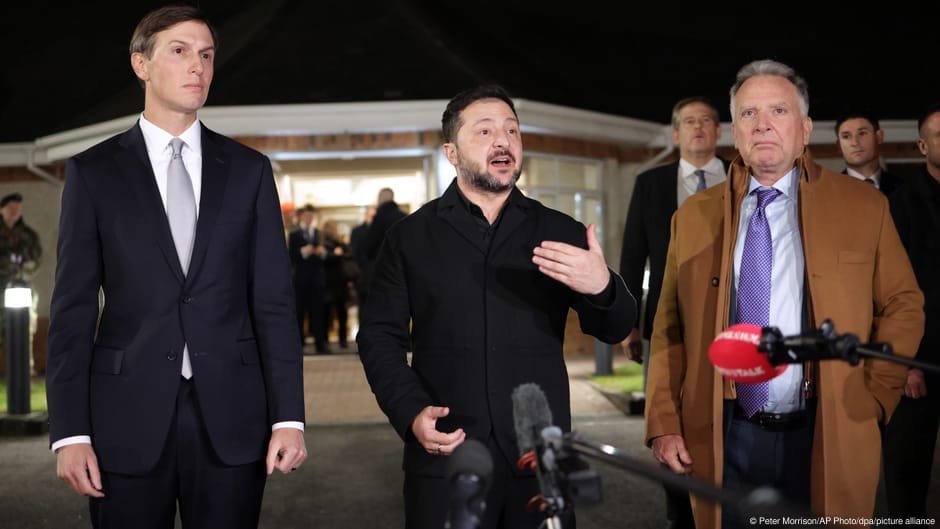
US presidential envoys Jared Kushner and Steve Witkoff are seeking to facilitate direct engagement between Moscow and European partners as part of negotiations over Ukraine and the continent’s wider security architecture, Kushner said on Saturday, November 14.
The initiative carries particular significance for Britain and the European Union, whose governments face the economic and security consequences of the war while seeking a role in any settlement negotiated with Russia. For London markets, the diplomatic effort puts geopolitical risk back in focus, with investors likely to assess whether progress could improve confidence across Europe or whether prolonged uncertainty will continue to weigh on the regional outlook and sterling.
Kushner wrote on X that he and Witkoff were “focused on facilitating direct engagement” between Russia and European partners. He said work to bring European representatives into the Ukraine talks reflected NATO’s continuing importance, describing the alliance, which includes the United States, as an essential future pillar of European security.
“Any final agreement must be approved by all interested parties,” Kushner said, adding that President Donald Trump would support only arrangements that strengthen Ukrainian and European security and make future conflicts less likely.
The comments indicate that European governments are expected to participate in the diplomatic process rather than simply respond to an agreement reached by Washington, Moscow and Kyiv. That distinction matters for the UK and EU because decisions involving security guarantees, sanctions and the broader relationship with Russia could have direct consequences for public finances, defence investment, energy policy and business confidence.
European participation moves up the agenda
Kushner identified preparations for the next round of trilateral negotiations involving Russia, the United States and Ukraine as another priority. He said both Moscow and Kyiv recognised that “practical compromises” would be required to end the war.
According to the US envoy, several new ideas emerged during talks held over the past week, and some could produce a breakthrough. He did not provide details of those proposals, and no timetable for a potential agreement was announced.
Kushner and Witkoff participated in several meetings during the week aimed at ending the war in Ukraine. On November 10 and 11, they represented Washington at trilateral talks in Abu Dhabi attended by delegations from Moscow and Kyiv.
On November 12, the two envoys travelled to Russia for a meeting with Russian President Vladimir Putin. They arrived in Dublin the following day, where they met Ukrainian President Volodymyr Zelensky.
The sequence of meetings suggests an effort by Washington to maintain contact with both sides while broadening the process to include Europe. For Britain, the Dublin stop and the promise of European representation underline the importance of coordination among Ukraine’s partners as negotiations develop.
Sterling and London investors await clearer signals
The date of the next talks has not been publicly confirmed. However, in comments to the Russian television programme Vesti before leaving Moscow, Kushner said further discussions would take place “as early as next week” and would use a multilateral format.
Witkoff separately said that the date had already been set and that European representatives would attend. Neither envoy identified which European countries or institutions would be represented.
For UK businesses and financial markets, the immediate significance lies in whether the talks produce credible evidence of reduced geopolitical risk. A durable settlement could influence expectations for European energy security, government defence spending and cross-border investment. Conversely, an inconclusive process would leave companies exposed to the same uncertainty that has complicated planning across the region.
Sterling’s response will depend on the substance and credibility of any progress rather than the announcement of another negotiating round alone. London-listed companies with significant European operations, along with energy, defence and financial shares, are among the areas where investors may look for signals about the direction of policy and regional risk.
No specific market movement was cited in Kushner’s statement, and the envoys disclosed no proposed terms. The central development for European capitals is therefore procedural: Washington says direct Russia-Europe engagement is being pursued, NATO remains central to the security framework, and European representatives are expected at the next multilateral discussions.
Whether those discussions deliver the breakthrough Kushner suggested may be possible will determine their longer-term relevance for Ukraine, European security and the economic outlook watched closely from London.



