Germany Approves 2027 Budget with Increased Defense Spending and Borrowing Amid Russia Concerns
Berlin plans higher public spending and borrowing in 2027, sparking debate over economic growth and implications for UK and EU markets.
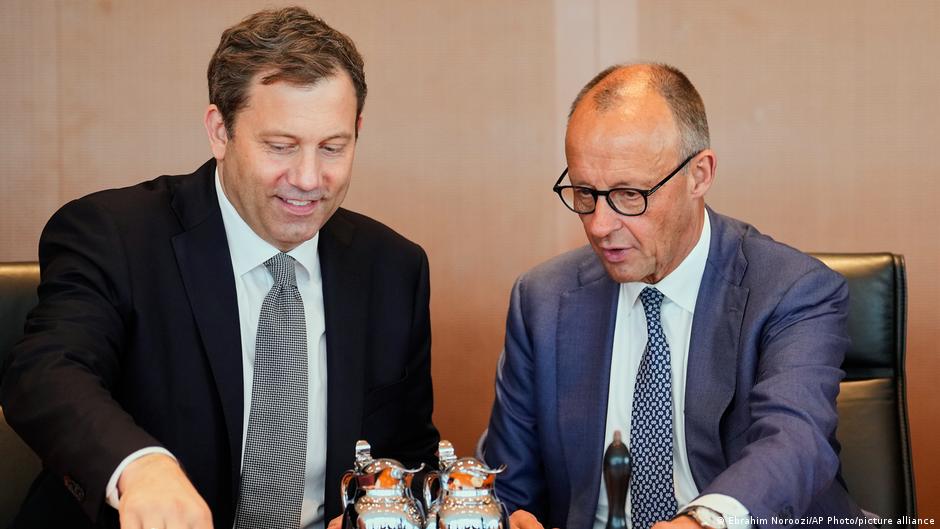
On July 6, the German government approved its draft federal budget for 2027, setting the stage for increased public spending and borrowing against the backdrop of heightened security concerns related to Russia.
The budget, prepared by Finance Minister Lars Klingbeil, forecasts total expenditures rising to €555.4 billion — a nearly 6% increase from 2026. Meanwhile, net new borrowing is set to climb to €118.7 billion, up from €98 billion this year. These figures signal a significant fiscal expansion that may affect financial markets across Europe, including London’s sterling-sensitive investors.
Defense Spending and Fiscal Priorities
The largest share of the budget, €201.4 billion, is allocated to the Federal Ministry of Labour and Social Affairs, primarily for pension payments. The second-largest allocation is to the Ministry of Defence, which sees a sharp 32.7% increase from €82.69 billion to €109.75 billion. Transport receives the third-largest budget, €26.43 billion.
Minister Klingbeil justified the rise in borrowing and expenditures as essential to address what he described as decades of underfunding that weakened Germany’s armed forces. He emphasized the urgency of strengthening defense capabilities as a response to Russia’s perceived threat, stating, "We cannot protect ourselves from President Putin with a balanced budget." This marks a significant policy shift with implications for EU defense cooperation and procurement, areas where British defense firms and London’s financial sector have vested interests.
"We must catch up on three decades of underfunding that led to the weakening of our armed forces in a very short time," Klingbeil said, underscoring the budget’s security rationale.
Notably, the budget plans to redirect funds from the Climate and Transformation Fund back into the main budget, raising concerns among environmental advocates and business stakeholders focused on sustainable investments.
Market and Business Community Reactions
The expansionary fiscal policy has drawn criticism from major German industrial and business groups. The Federal Association of German Industry (BDI) voiced alarm over the budget’s trajectory. CEO Tanja Gönner remarked that the increase in spending and borrowing could be troubling amid the need to stimulate economic growth and improve state spending efficiency.
Similarly, Helena Melnikov, CEO of the Association of German Chambers of Commerce and Industry (DIHK), highlighted a looming fiscal imbalance. She warned that by 2030, spending on social welfare, defense, and interest payments will consume 80% of the budget, leaving little room for growth-oriented investments.
For British and broader EU investors, these fiscal choices in Europe’s largest economy will be closely watched. The increased German borrowing could influence Eurozone bond yields and sterling exchange rates, while defense sector expansion may open new opportunities for cross-border industrial cooperation and procurement contracts involving UK firms.
London’s financial markets, sensitive to shifts in European fiscal policies, may react to any perceived increase in sovereign risk or changes in capital flows stemming from Germany’s fiscal stance. Moreover, Brexit-era dynamics make the alignment of UK firms with EU defense initiatives a complex but potentially lucrative avenue.
As the Bundestag prepares to debate and approve the budget, investors and businesses on both sides of the Channel will monitor developments closely to assess risks and opportunities presented by Germany’s strategic fiscal pivot.