Sanctioned Russian Shadow-Fleet Tanker Sends Distress Signal off Ireland
The UK Coastguard is coordinating the response as the MYRA tanker crosses the North Atlantic in extreme weather conditions.
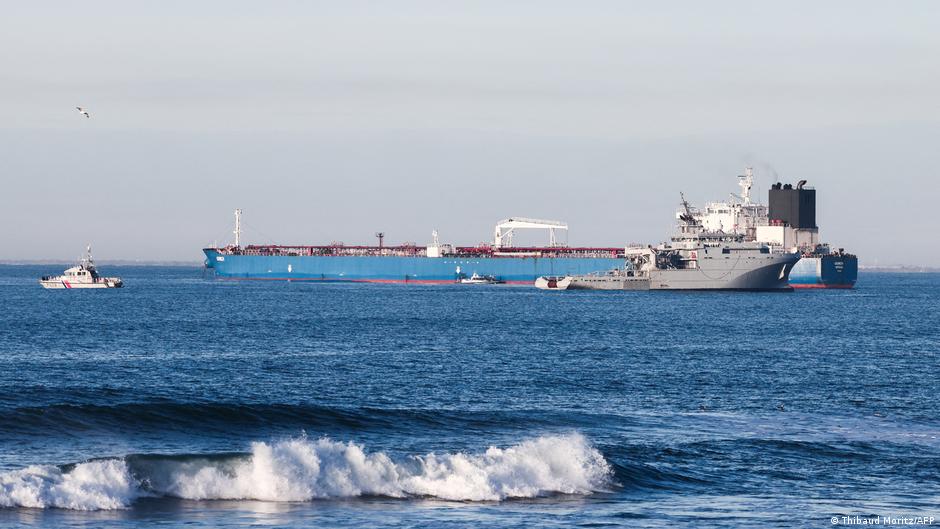
A sanctioned oil tanker associated with Russia’s so-called shadow fleet has sent a distress signal in the North Atlantic, focusing British and European attention on the operational and financial risks posed by vessels used to circumvent restrictions on Russian energy exports.
The MYRA issued the alert off Ireland’s north-western coast, maritime monitoring project SeaNews reported on Saturday, October 24. The distress signal was transmitted through the Inmarsat-C satellite communications system, while the UK Coastguard is coordinating the operation involving the tanker.
The vessel is subject to sanctions imposed by the United States, the European Union and the United Kingdom. Its location near European waters makes the incident particularly relevant for London and Brussels, which have sought to tighten enforcement against ships accused of helping Moscow maintain oil revenues despite Western restrictions.
Severe weather complicates Atlantic passage
According to SeaNews, the 75,000-tonne tanker had departed from the Russian port of Ust-Luga and continued travelling at around 9 knots, equivalent to approximately 17 kilometres per hour, after sending the distress signal.
The vessel was navigating extreme weather conditions. Waves in the area reportedly reached 8.8 metres at the time of the alert, while wind gusts were estimated at roughly 130 kilometres per hour. The tanker was about 348 kilometres from the coast.
The UK Coastguard is coordinating the response as MYRA continues moving through extreme North Atlantic weather.
No interruption to the tanker’s voyage was reported by SeaNews, and the available information did not specify the nature of the emergency or whether the ship was carrying cargo. The continuing movement of the vessel suggests it retained propulsion, although the distress call raises questions about its condition and the potential need for assistance.
For Britain and Ireland, the immediate concern is maritime safety and the possibility that a damaged tanker could create environmental or navigational risks near European waters. Any rescue, towing or pollution-control operation could also test how authorities provide emergency assistance to a sanctioned vessel while remaining compliant with financial and commercial restrictions.
UK and EU sanctions in focus
Ukraine’s Defence Intelligence Directorate, known as the GUR, lists MYRA in its War & Sanctions database. The agency alleges that the tanker has been used to export Russian oil and petroleum products to third countries in circumvention of sanctions.
The GUR links the vessel to Fractal Marine DMCC, a company registered in the United Arab Emirates. Ukrainian intelligence describes the business as one of the leading operators of Russia’s shadow fleet, a term used for tankers and corporate structures that facilitate Russian energy shipments outside conventional Western-controlled trading, insurance and shipping channels.
According to the Ukrainian database, MYRA has repeatedly called at the Russian ports of Ust-Luga and Primorsk. It has also visited ports in Senegal, Turkey, Brazil, Estonia and Denmark, illustrating the international reach attributed to the vessel’s trading activity.
The United States added MYRA to its sanctions list on July 30, 2025, followed by the European Union on October 24, 2025. Switzerland and Ukraine imposed sanctions on December 13, 2025, while the UK listed the vessel on February 24, 2026. Canada followed on March 25, 2026.
The incident therefore falls directly within the enforcement interests of both the UK and EU. London remains a major centre for maritime insurance, finance and legal services, while EU governments oversee ports and waters used by international shipping. Shadow-fleet operations can challenge those systems through opaque ownership, changing operators and reduced reliance on established service providers.
Links alleged to Iranian shipping network
Ukraine’s intelligence service alleges that MYRA forms part of a shipping network controlled by Mohammad Hossein Shamkhani. He is the son of Ali Shamkhani, Iran’s former Supreme National Security Council secretary and a former adviser to the country’s supreme leader.
Ali Shamkhani was killed in a joint US-Israeli operation in February 2026, according to the Ukrainian account. The GUR claims that his son controls a network of tankers, operators and shell companies involved in money laundering and in transporting Russian and Iranian oil, including shipments destined for China.
Those allegations broaden the significance of the Atlantic emergency beyond a single ship. They connect the vessel to concerns in London and European capitals about cooperation between sanctioned Russian and Iranian energy networks and the use of intermediaries outside Western jurisdictions.
No specific movement in sterling or London-listed markets was attributed to the tanker incident. However, investors in Britain’s insurance, shipping and energy sectors are likely to monitor any disruption, salvage requirements or pollution threat. A single distress call would not ordinarily be expected to determine the pound’s direction, but a wider escalation involving sanctions enforcement, energy supply or maritime liabilities could have greater relevance for sterling and London markets.