Abu Dhabi Ukraine Talks Put European Security and Markets in Focus
US-mediated negotiations on 10-11 November will address security, de-escalation and reconstruction with direct implications for Britain and Europe.
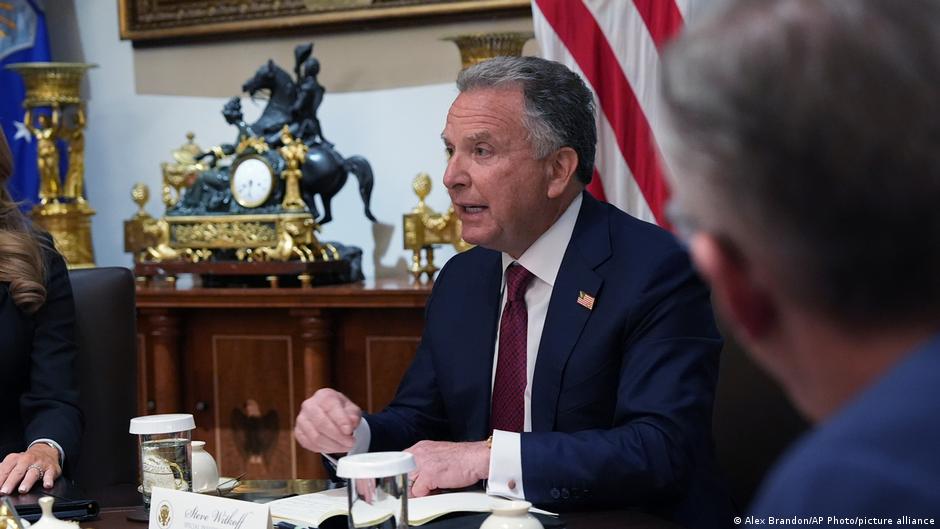
Russia and Ukraine will hold a new round of US-mediated talks in Abu Dhabi on 10 and 11 November, putting European security, reconstruction finance and the economic consequences of the war back on the agenda for Britain and the European Union.
Steve Witkoff, US President Donald Trump’s special envoy, announced the meeting on Tuesday, 3 November. He said the discussions in the capital of the United Arab Emirates would focus on postwar security, de-escalation, humanitarian initiatives and the next steps towards peace.
“The discussions will focus on postwar security, de-escalation, humanitarian initiatives and the next steps towards peace,” Witkoff wrote on X.
The negotiations will be conducted at working-group level as part of Trump’s effort to end Russia’s war against Ukraine, according to the envoy. The format suggests that officials will concentrate on practical elements of a potential settlement rather than a meeting between national leaders.
Britain and EU Join Brussels Security Discussions
The Abu Dhabi talks will be accompanied by consultations in Brussels this week between US negotiators and representatives of Britain, France, Germany, the European Union and NATO. Those meetings will cover security guarantees for Ukraine, Europe’s postwar security architecture and options for providing economic support for Ukraine’s reconstruction.
Britain’s participation gives London a direct role in discussions that could shape Europe’s defence commitments and the financing of Ukraine’s recovery. For the EU, the talks bring together two closely connected questions: how to establish a durable security framework and how to fund the rebuilding of damaged infrastructure and economic capacity.
Those issues also matter to the City of London and European financial centres. A credible de-escalation process could affect perceptions of geopolitical risk across the region, while any reconstruction framework may eventually involve governments, development institutions, insurers and private capital. However, Witkoff did not disclose proposed funding totals, specific financial mechanisms or commitments by any participating country.
Sterling and London-listed companies exposed to European energy, defence, commodities and infrastructure are likely to remain sensitive to developments surrounding the talks. The announcement itself provided no market figures, and there was no detailed settlement plan against which investors could assess the immediate economic consequences. Attention will therefore centre on whether the meetings produce concrete steps rather than broad diplomatic language.
Envoy Seeks to Build on Earlier Meetings
Witkoff said the United States hoped to consolidate progress made in Kyiv, Oslo and St Petersburg and move towards a comprehensive and durable peace agreement capable of providing long-term security for future generations.
“We hope to consolidate the progress achieved in Kyiv, Oslo and St Petersburg on the path towards a comprehensive and lasting peace agreement,” he said.
In October, Trump’s special envoy met Ukrainian President Volodymyr Zelenskyy in Oslo. He subsequently travelled to St Petersburg, where he held talks with Russian President Vladimir Putin. The planned Abu Dhabi session represents the next stated stage in that diplomatic sequence, with the UAE again serving as a venue for negotiations involving Russia, Ukraine and the United States.
The agenda described by Witkoff spans both immediate and longer-term concerns. De-escalation and humanitarian initiatives address the continuing effects of the conflict, while postwar security and reconstruction require decisions that could shape European public finances and investment priorities well beyond any ceasefire.
For Britain, the Brussels consultations may be as consequential as the Abu Dhabi working groups. Decisions on security guarantees could influence future defence planning, while the structure of reconstruction support could determine how costs and opportunities are distributed among the United States, the UK, EU members and international institutions.
European governments will also be watching for clarity on how a future security arrangement would relate to NATO and the EU. Witkoff’s statement confirmed that both organisations would be represented in the Brussels discussions, but it did not specify the form of any guarantees or identify which countries might assume particular obligations.
Markets Await Evidence of Durable Progress
For UK and European investors, the principal question is whether the diplomatic process can reduce uncertainty surrounding regional security and economic policy. A lasting agreement could eventually influence energy risk, government spending and confidence in cross-border investment, while prolonged or inconclusive negotiations would leave those uncertainties in place.
The previous round of US-mediated talks between Russia and Ukraine took place in February 2026, shortly before the beginning of the US and Israeli war against Iran. The interval since that meeting underscores the importance of whether the November sessions can maintain momentum across several negotiating venues.
No final agreement was announced ahead of the Abu Dhabi talks, and Witkoff offered no timetable beyond the two-day meeting. The immediate focus for London and European markets will be on signals of measurable progress, including any detail on de-escalation, security guarantees and the financing of Ukraine’s reconstruction.