France Opens Taliban Talks on Afghan Returns as Europe Tightens Migration Policy
Paris is pursuing technical deportation arrangements alongside other EU states, raising legal and political risks for European governments.
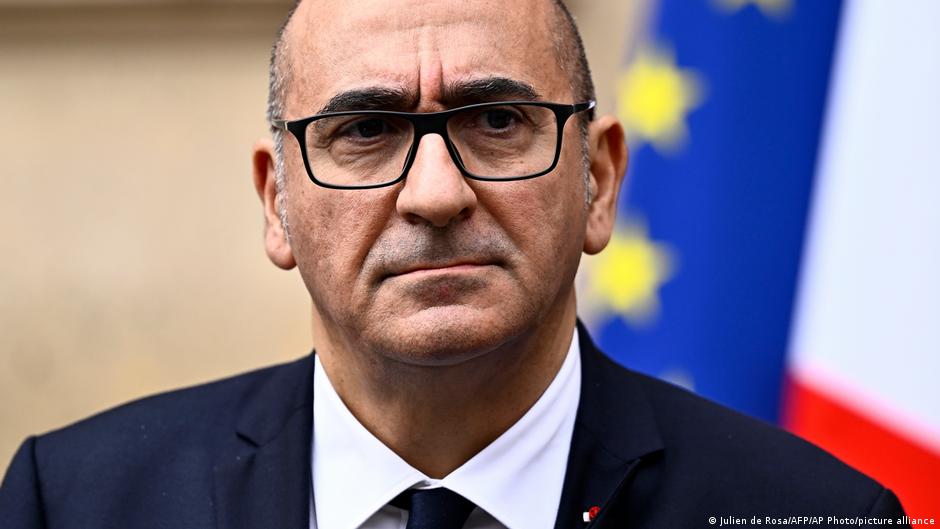
France has opened technical talks with representatives of the Taliban over the possible return of Afghan migrants who do not have permission to remain in the country, despite Paris having neither diplomatic relations with Kabul nor formal recognition of its government.
French Interior Minister Laurent Nuñez disclosed the contacts during an address to parliament on Monday, 2 November. The initiative places France among a wider group of European governments seeking to accelerate returns to Afghanistan, particularly in cases involving people convicted of criminal offences.
“We are trying to secure the possibility of returning a certain number of Afghans who are in the country illegally. These are technical discussions,” Nuñez said, according to AFP.
The minister added that other European countries, including Germany, maintain similar contacts with the Taliban. France is reportedly part of a group of about 20 European Union states—including Germany, Belgium and Sweden—that want to increase the pace of returns.
European migration policy faces a legal and political test
The French initiative is significant for European governments attempting to reconcile tighter migration enforcement with their refusal to recognise the Taliban administration. The movement returned to power in Afghanistan in 2021, but France does not officially recognise the government it formed and has no diplomatic relationship with Kabul.
Nuñez said some Afghan nationals in France “may pose a threat to public order,” making their removal a priority for the authorities. The focus on public-order cases reflects mounting pressure across Europe for governments to demonstrate that deportation orders can be enforced even when the destination country is controlled by an internationally isolated regime.
For Britain, which is outside the EU but faces many of the same political pressures over irregular migration and removals, the French discussions will be closely watched. Any workable European arrangement with Taliban officials could influence the wider policy debate over how governments engage with authorities they do not recognise. It could also affect cooperation between the UK and continental partners on migration routes, border enforcement and the treatment of Afghan nationals whose asylum claims have failed.
The source material reported no immediate reaction in sterling or London-listed markets. The direct financial implications are therefore limited for now. However, migration policy remains relevant to British and European businesses through public spending, labour supply, compliance requirements and political stability. A coordinated shift towards more removals could also expose governments to court challenges and human-rights scrutiny, adding uncertainty around implementation.
Opposition warns of gradual normalisation
The talks have drawn criticism from France’s opposition. Léa Balage El Mariky, a lawmaker from the Ecologists party, accused the government of beginning a “normalisation of diplomatic relations” with the Taliban regime.
She said the authorities in Kabul were committing crimes against humanity through a policy described as “gender apartheid.” Her criticism highlights the central political risk for Paris and other European capitals: even contacts officially restricted to operational matters could be interpreted as granting legitimacy to the Taliban.
That concern is likely to complicate attempts to establish return mechanisms. European governments may present the discussions as narrowly technical, but deportations generally require practical cooperation over travel documents, identity checks and admission at the destination. Sustained engagement on those issues could blur the boundary between administrative coordination and political recognition.
UN warning sharpens human-rights concerns
In September, UN High Commissioner for Human Rights Volker Türk called for an end to forced returns to Afghanistan, citing the continuing humanitarian crisis and a deteriorating human-rights situation. That warning creates a direct challenge for European states seeking to expand deportations, particularly if individuals face risks after arrival.
Since returning to power, the Taliban has imposed a series of restrictions on women and girls. These include bans preventing most of them from attending secondary school and higher education.
The International Criminal Court has previously issued arrest warrants for several senior Taliban figures over allegations of crimes against humanity connected to the persecution of women and girls. Those proceedings reinforce the legal and reputational sensitivities surrounding any official European contact with the movement.
France’s approach will consequently be scrutinised beyond its borders. EU governments want more effective return policies, but they must contend with international warnings, potential legal objections and opposition claims that technical engagement could evolve into de facto diplomatic acceptance.
For London, the immediate issue is less a market-moving event than a test of Europe’s direction on migration. If France, Germany and other EU states develop a functioning returns channel, British policymakers could face renewed pressure to explain whether the UK should pursue comparable arrangements or maintain greater distance from Kabul. Until the negotiations produce a concrete mechanism, however, their practical impact on migration flows, public finances and sterling remains uncertain.