China Warns US Against Space War Preparations as Europe Weighs Risks
Beijing’s response to Washington’s orbital weapons disclosure raises security questions for Britain, the EU and space-reliant businesses.
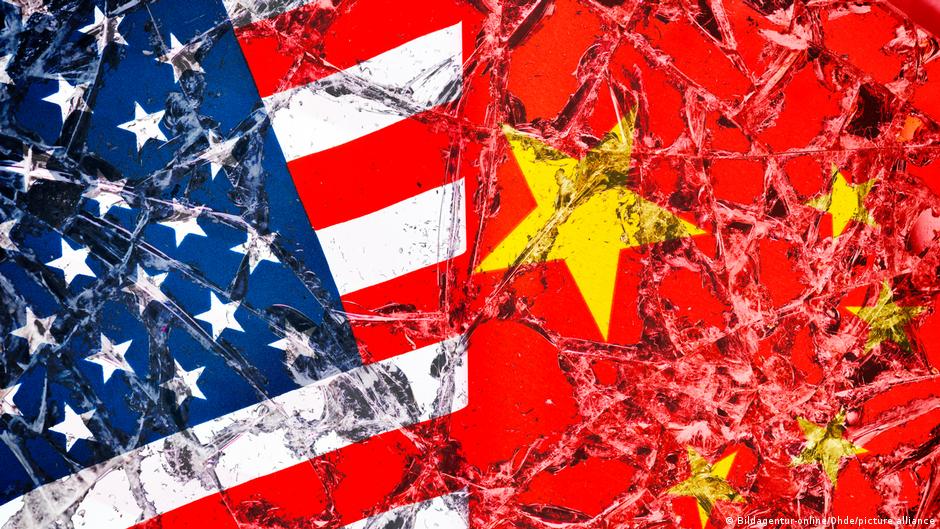
China has urged the United States to stop preparing for conflict in space after Washington, for the first time, formally confirmed that it has weapons systems in orbit capable of both defensive and offensive uses. The exchange adds a new layer of geopolitical risk for Britain and the European Union, where governments, investors and listed companies increasingly depend on satellites for communications, navigation, logistics, defence coordination and financial infrastructure.
The Chinese foreign ministry issued its warning on Tuesday, 15 September, after the US Space Force confirmed that it had orbital assets intended to support control of space. Beijing cautioned against the “militarisation of space,” against turning it into a battlefield and against an arms race beyond Earth’s atmosphere.
“We call on the American side to stop building up military capabilities and preparing for war in space,” Chinese foreign ministry spokesman Guo Jiakun said at a briefing.
The statement followed remarks a day earlier by US Air Force Secretary Troy Meink, who said on 14 September that the United States had “space control” assets located in orbit. He said the systems operated by the US Space Force were capable of protecting the joint force from hostile action, but did not provide details about the weapons themselves.
For UK and European businesses, the dispute is not only a defence story. Satellite-dependent sectors include banking, aviation, shipping, energy grids, telecommunications and insurance. Any perception that space is becoming a more active theatre of military rivalry can feed into risk pricing, defence procurement expectations and investor scrutiny of companies exposed to satellite disruption. Sterling-sensitive markets would also be alert to whether heightened geopolitical tensions lift demand for safe-haven assets or affect UK-listed aerospace and defence shares.
Why London and Europe Are Watching
The US statement said space control includes capabilities needed to ensure control over space and protect it, and that such capabilities may be used for both offensive and defensive purposes. It also referred to kinetic and non-kinetic means. The distinction matters for European policymakers and market participants because modern space conflict may not only involve physical strikes on satellites, but also cyber operations, jamming and other forms of interference that could disrupt commercial services without a conventional battlefield confrontation.
London’s market reaction to space-security developments would likely be most visible through defence, aerospace, satellite communications and cybersecurity names, as well as through broader risk sentiment affecting sterling. The source material did not report a specific move in the pound or UK equities following the statements. Still, the episode lands in a market environment where investors already monitor China-US tensions, the war in Ukraine and defence spending across NATO members, including European commitments to resilience in communications and surveillance.
The US Space Force statement specifically named China and Russia. It said China is developing and operating space action capabilities and counter-space defence systems as part of its military modernisation strategy. It also said Russia views space as a theatre of military operations and assumes that dominance in space will become a decisive factor in future conflicts.
Those assessments resonate in Europe because the war in Ukraine has underlined the importance of satellite communications, observation and navigation for battlefield effectiveness. Commercial satellite networks have also become strategic assets. Russia has been suspected of developing weapons against Starlink satellites used by the Ukrainian military. Such suspicions have sharpened concerns among European governments over the vulnerability of commercial systems that support military and civilian operations alike.
Orbital Weapons and the Treaty Gap
The dispute also highlights the limits of existing international rules. The 1967 Outer Space Treaty prohibits placing nuclear weapons in space. The United States, Russia and China are among the parties to the treaty, which requires that the exploration and use of outer space be conducted for peaceful purposes. However, the treaty does not extend the same prohibition to conventional weapons placed on satellites or spacecraft.
That legal distinction is increasingly important as military competition shifts towards cyberattacks, signal interference and anti-satellite capabilities. AFP has noted that Russia, the United States, China and India are examining options outside the treaty framework, including strikes against adversaries’ satellites that play crucial roles in military communications, observation and navigation.
The US Space Force itself was created in 2019 during Donald Trump’s first presidential term as a separate branch of the US armed forces, in response to potential threats from Russia and China. Its evolution has been closely watched by allies, including Britain and EU member states, as transatlantic defence planning increasingly treats space as essential to deterrence, command systems and economic resilience.
For Europe, the policy challenge is balancing deterrence with restraint. NATO allies rely heavily on US space capabilities, yet European governments also have a direct interest in preventing escalation that could endanger civilian satellite services. The commercial stakes are broad: aviation routing, maritime trade, precision agriculture, emergency response, payments timing and energy-system coordination all rely in part on space-based infrastructure.
China’s warning therefore places a familiar geopolitical contest in a domain where the economic consequences could be dispersed and difficult to insure. For Britain, the immediate market question is whether investors begin to price space-security risk more explicitly into defence procurement, satellite operators and cyber resilience. For the EU, the issue is also strategic autonomy: how far Europe can protect the space assets that underpin both its economy and its security while remaining aligned with the United States.
Neither Washington nor Beijing has indicated a near-term resolution. The United States has confirmed the existence of orbital systems but withheld operational details. China has called for restraint and warned against an arms race. Between those positions sits a growing European concern that the next phase of great-power competition may unfold above the atmosphere while its costs are felt in markets, supply chains and public services on the ground.