Council of Europe Criticizes Democratic Backsliding in Georgia, Raising Concerns in London and Brussels
PACE resolution urges Georgian authorities to halt opposition persecution and restore democratic standards amid international scrutiny.
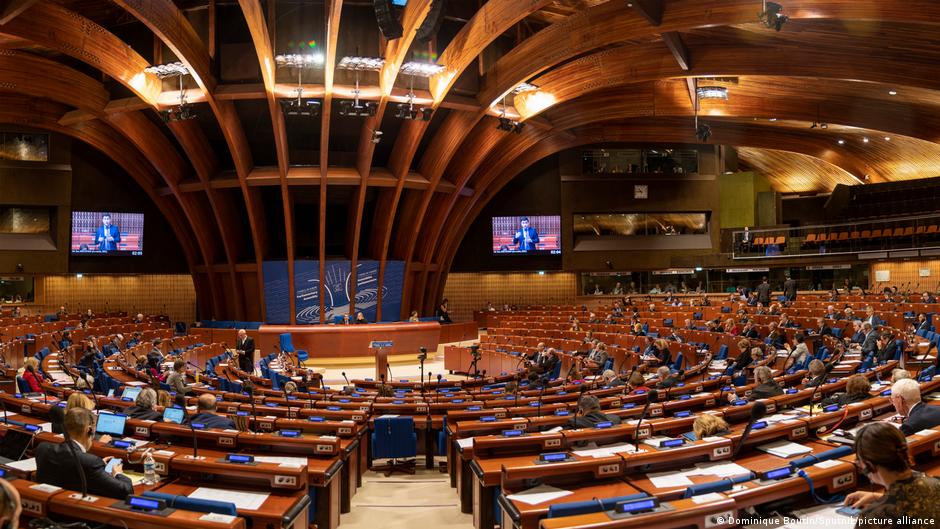
On June 24, the Parliamentary Assembly of the Council of Europe (PACE) adopted a resolution sharply criticizing the Georgian government's recent democratic regression. The resolution calls on Tbilisi to repeal repressive legislation, stop persecuting opposition figures, and create conditions for free and fair elections.
Implications for UK and European Interests
PACE's resolution was supported by 83 members, with five opposing and four abstaining, reflecting widespread European concern over Georgia's political trajectory. The condemnation arrives at a sensitive time as the UK and the EU both seek stability in their Eastern neighborhood, where democratic norms and the rule of law are fundamental pillars underpinning regional cooperation and trade.
London-based investors and market participants are closely monitoring these developments. Georgia’s political instability could influence investor confidence, affecting sterling exchange rate dynamics and the broader financial links between the UK and the South Caucasus region. The UK government, alongside EU institutions in Brussels, emphasizes democratic governance as a prerequisite for engagement.
The resolution highlights ongoing suppression of civil society, political opposition, and dissenting voices in Georgia, urging compliance with European Court of Human Rights (ECHR) rulings and Organization for Security and Co-operation in Europe (OSCE) recommendations. It also stresses the necessity of investigating police violence during protests.
"PACE expresses deep concern over the continued democratic backsliding in Georgia, marked by repression of civil society and political opposition despite previous resolutions and recommendations," the text states.
For London markets, Georgia’s political risks may translate into cautious capital inflows, potentially impacting trade relations and foreign direct investment flows. The UK’s strategic interest in supporting democratic resilience aligns with the EU’s broader Eastern Partnership policy aimed at curbing authoritarian tendencies and fostering integration.
Georgian Government’s Response and European Dialogue
Georgia’s parliamentary speaker, Shalva Papuashvili, denounced the resolution as "anti-Georgian," accusing PACE and the European Parliament of disregarding Georgia’s sovereignty and the electoral mandate of the ruling Georgian Dream party, which won the 2024 parliamentary elections. He referenced his delegation’s suspension from PACE membership over the dispute.
This confrontation underscores the complex dynamics between Georgia and its European partners. While PACE emphasizes adherence to democratic standards as non-negotiable for Council of Europe membership, Georgia’s leadership frames such critiques as external interference.
Despite tensions, the Parliamentary Assembly reiterated its commitment to dialogue aimed at restoring democratic principles, indicating ongoing diplomatic efforts. For the UK and EU, maintaining a united front in supporting democratic governance in Georgia remains a strategic priority.
In summary, the PACE resolution signals significant concerns over Georgia's democratic practices, with potential repercussions for UK and European economic and political interests. Stability in Georgia is not only critical for domestic governance but also for sustaining investor confidence and advancing regional cooperation frameworks in which London and Brussels play key roles.