German CDU State Leader Resigns After Election Rout Watched by UK Markets
Daniel Peters stepped down after the CDU failed to enter a German state parliament for the first time, adding to political risk watched in London and Europe.
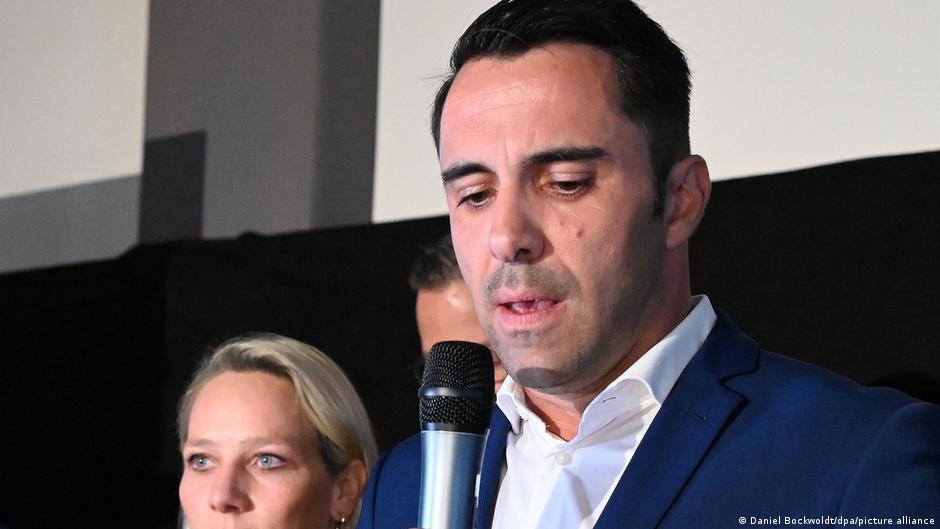
The head of Germany’s Christian Democratic Union in Mecklenburg-Western Pomerania has resigned after the party suffered a historic defeat in state elections, a setback likely to be read in London and across European business circles as another sign of political fragmentation in the eurozone’s largest economy.
Daniel Peters, chairman of the CDU’s state branch in Mecklenburg-Western Pomerania, said he was taking personal responsibility for the conservatives’ result after a meeting of the party’s state executive in Schwerin on Monday, September 21. The 45-year-old described the outcome as a “crushing defeat” for the party.
The CDU, the party of German Chancellor Friedrich Merz, won just 4.9% of the vote in the election held the previous day. That result left it below the 5% threshold and, for the first time in the history of the Federal Republic of Germany, outside the parliament of one of Germany’s federal states.
For British and European companies with exposure to Germany, the result adds a fresh political signal from a country central to the region’s industrial supply chains, investment climate and fiscal debate. While the vote was regional, the CDU’s failure to enter the Landtag is a notable blow for the chancellor’s party at a time when investors in London routinely track German political stability as a key marker for European risk.
AfD Wins, SPD Seeks Coalition Without Far Right
The far-right Alternative for Germany finished first in the Mecklenburg-Western Pomerania Landtag election with 38.2% of the vote. The Social Democratic Party of Germany, led in the state by incumbent premier Manuela Schwesig, came second with 35.5%.
The Left Party also entered the state parliament with 6.5%, while Alliance 90/The Greens cleared the threshold with 5.7%. Other parties failed to pass the 5% barrier.
The SPD has already announced the start of talks with both the Left Party and the Greens with the aim of forming a governing coalition without the AfD. That effort will be closely watched by EU policymakers and market participants because it may indicate how mainstream parties attempt to contain far-right gains while preserving workable administrations.
For the UK, the direct economic effect of a single German state election is limited, but the political implications are broader. Germany remains one of Britain’s most important European trading partners, and any evidence of instability in Berlin’s governing party can influence sentiment toward European assets, sterling-euro positioning and expectations for EU economic coordination.
“It would be inappropriate in this situation, and given the scale of this historic defeat, to immediately present an analysis or draw conclusions about the future balance of forces,” Philipp Amthor said.
Philipp Amthor, 33, will temporarily take over as head of the CDU in Mecklenburg-Western Pomerania. He is state minister for cooperation between Germany’s federal states and the federal centre. Amthor said the Christian Democrats in the state now need time to “reflect on this result”.
His remarks point to the scale of the internal review now facing the CDU. The party’s result was not merely a weak showing; it removed one of Germany’s traditional governing forces from a regional parliament altogether. For a chancellor’s party, that carries national resonance even when the immediate mandate concerns only one federal state.
Why London Will Watch the Fallout
London’s market reaction to German regional politics is usually filtered through expectations for federal policy, eurozone cohesion and the outlook for European growth. The source result provides no market figures, but the political development gives traders and analysts a new data point in assessing whether Chancellor Merz’s CDU can hold ground against both the far right and rival mainstream parties.
Sterling impact, in particular, would depend on how investors interpret the wider European risk picture. A stronger perception of political uncertainty in Germany can affect sentiment toward the euro, while UK-focused investors may also weigh whether Germany’s domestic politics could complicate decisions on trade, energy, defence spending or EU fiscal priorities.
The election outcome also matters for British businesses operating in the EU because Germany’s political direction often shapes the broader regulatory and investment environment. Mecklenburg-Western Pomerania is only one state, but the symbolism of the CDU failing to cross the parliamentary threshold is significant for companies that plan around long-term German and European policy continuity.
For now, the practical next step is coalition formation. The SPD’s declared intention to negotiate with the Left Party and the Greens would exclude the AfD despite its first-place finish. That approach reflects a familiar pattern in German politics, where mainstream parties often seek combinations designed to keep the far right out of government.
Peters’ resignation gives the CDU a clear internal consequence after the result, but not yet a clear recovery strategy. Amthor’s temporary leadership indicates a pause for reflection rather than an immediate reset. For European investors and UK businesses alike, the key question is whether the result remains a regional shock or becomes part of a wider challenge to Germany’s governing centre-right.