Macron and Trump Push Ukraine Infrastructure Truce as Europe Watches Markets
France and the United States are seeking a moratorium on attacks on Ukrainian energy and civilian infrastructure as Kyiv presses for tougher sanctions on Russia.
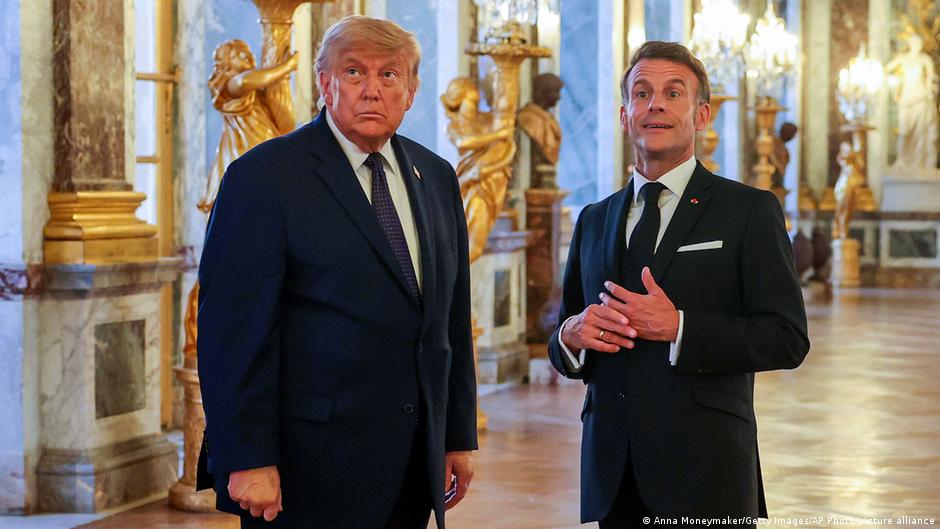
French President Emmanuel Macron said he and U.S. President Donald Trump had discussed joint efforts to secure a moratorium on strikes against Ukraine’s energy and civilian infrastructure, a proposal with direct significance for European governments, British businesses and investors watching the war’s impact on energy security, inflation expectations and sterling.
Macron wrote on X on Monday, 21 September, that the two leaders had addressed initiatives aimed at halting attacks on energy facilities during Russia’s war against Ukraine. For London and other European financial centres, the question is not only humanitarian or diplomatic. Repeated strikes on Ukraine’s power grid and civilian systems have fed wider concerns about regional stability, winter energy risks and the durability of supply chains running through central and eastern Europe.
“We will also combine our efforts to achieve a moratorium on strikes against Ukraine’s energy infrastructure and civilian infrastructure. Civilians must be protected, and we must start serious talks as soon as possible on the conditions for peace between Russia and Ukraine,” Macron said.
The French leader’s comments came after talks with Trump in New York, where world leaders were gathering for the 81st session of the United Nations General Assembly. The session is taking place from 22 to 26 September and is expected to bring together nearly 130 world leaders. Ukrainian President Volodymyr Zelensky is also expected to meet Trump on 22 September.
European security and the London market
The initiative lands at a sensitive moment for European policymakers and markets. The UK and the European Union have spent years trying to reduce exposure to shocks caused by the war, from energy price spikes to defence procurement pressures and sanctions enforcement. A credible pause in attacks on Ukrainian energy and civilian infrastructure would be closely watched in London because it could ease some risk premiums attached to European energy and industrial costs.
Sterling has often been sensitive to shifts in expectations around European growth, energy costs and geopolitical risk. While Macron’s announcement did not include financial measures or market data, the direction of travel matters for UK investors. Any reduction in the threat to Ukraine’s energy network could be read as supportive for broader European stability, while uncertainty over implementation would limit any immediate confidence effect.
London-listed companies with exposure to energy, infrastructure, defence, commodities and European consumer demand are likely to remain alert to signals from New York. The proposal also intersects with the UK’s own strategic interests: a more resilient Ukraine reduces pressure on European allies, while any path toward talks could affect sanctions policy, reconstruction expectations and defence spending assumptions.
Speaking to reporters after his meeting with Trump, Macron said the two leaders agreed on the need to help Ukraine strengthen its defence capabilities. According to Macron, this includes additional interceptor missiles for Kyiv to defend against Russian aerial attacks. That emphasis on air defence is central to Europe’s security debate, particularly as governments across the continent weigh their own stockpiles, procurement pipelines and commitments to Ukraine.
For EU capitals, the issue is practical as much as political. Ukraine’s ability to protect power stations, substations and civilian sites shapes the country’s economic endurance and its capacity to avoid larger humanitarian crises. For Britain, which remains outside the EU but deeply tied to European security, the stakes include regional stability, defence industry demand and the inflationary consequences of renewed energy disruption.
Zelensky seeks sanctions momentum
According to a DW correspondent, a bilateral meeting between Macron and Zelensky also began in New York on the evening of 21 September. The meeting followed Zelensky’s separate talks with U.S. lawmakers, where the Ukrainian president thanked them for passing the late Senator Lindsey Graham’s law on “hellish sanctions” against Russia.
“I want the sanctions to start working,” Zelensky said.
That message will resonate in Europe, where sanctions remain one of the main economic instruments used against Moscow. The effectiveness and enforcement of those measures are watched closely by British and EU officials, not least because London has long positioned itself as a key centre for financial sanctions policy, asset tracing and compliance.
For businesses, the sanctions landscape remains complex. Stronger measures against Russia may increase compliance burdens, especially for banks, insurers, commodity traders and logistics groups. At the same time, a tougher sanctions regime could be seen by Ukraine’s supporters as necessary to force Moscow toward negotiations and reduce the frequency of attacks on civilian infrastructure.
Macron’s call for serious talks on the conditions for peace between Russia and Ukraine does not amount to a settlement proposal, and the source account did not provide details on how a moratorium would be enforced or monitored. It also did not indicate Russia’s response. Those gaps matter for markets: investors tend to distinguish between diplomatic language and mechanisms that can change battlefield behaviour.
Still, the combination of French, American and Ukrainian diplomacy in New York gives European governments a focal point during the UN gathering. If the initiative gains traction, London markets may look for signs of lower geopolitical stress, particularly through energy-linked assets and sterling sentiment. If it stalls, attention is likely to return to air defence deliveries, sanctions pressure and the continuing cost of protecting Ukraine’s civilian infrastructure.
For now, the central message from Macron is that France and the United States intend to work together on both protection and pressure: seeking a halt to strikes on Ukrainian energy and civilian infrastructure while backing stronger Ukrainian defences against Russian air attacks. For Britain and the EU, that agenda sits at the intersection of security policy, economic resilience and market confidence.