German Far-Right AfD Party Retains Popularity Amid Debate Over Possible Ban
Polls show 45% of Germans oppose banning AfD, which leads conservative bloc by 8 points, raising questions for UK and EU markets.
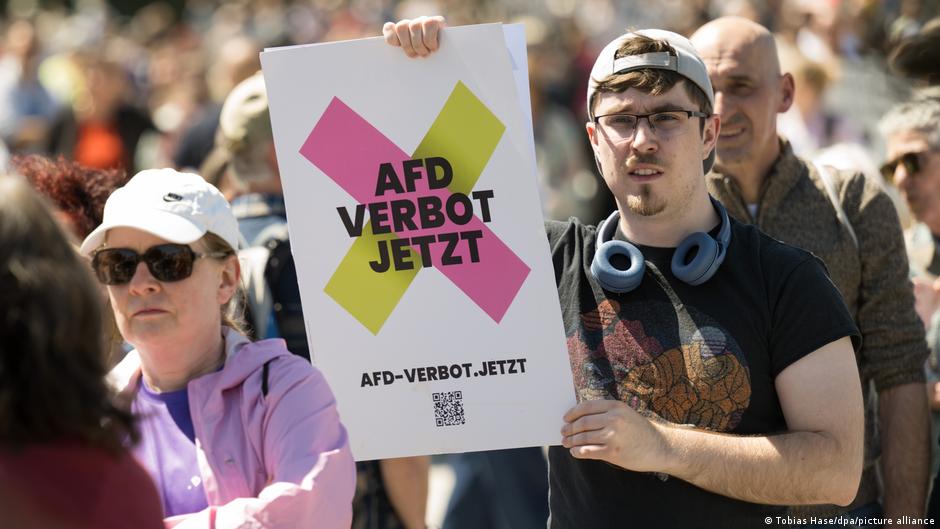
Recent polling data from the German research institute Insa reveals a divided public opinion on the potential ban of the far-right party Alternative for Germany (AfD). According to the survey, 45% of Germans oppose banning AfD, which currently enjoys a significant lead of 8 percentage points over the traditional conservative bloc CDU/CSU. Only 40% support banning the party, while 15% remain undecided.
AfD's Impact on German Politics and Implications for UK and EU Markets
The AfD's sustained popularity presents a complex political landscape in Germany, the largest economy in the European Union and a key trade partner for the United Kingdom. The party's rise and resilience could ripple across European markets, impacting investor confidence and currency valuations, especially the euro and British pound sterling.
“We are the new people's party in Germany,” declared Alice Weidel, co-chair of AfD, signaling the party's ambitions to reshape Germany’s political dynamics.
Since February 2021, Germany’s Federal Office for the Protection of the Constitution (BfV) has placed AfD under surveillance for suspected right-wing extremism. Despite this, the party remains the most popular in Germany, holding steady at 29% support compared to 21% for the CDU/CSU bloc, which saw a slight decline. The Social Democratic Party (SPD) and the Greens each hold around 13% support, while the Left Party is at 10%.
Additionally, 42% of respondents endorse a ‘firewall’ strategy (Brandmauer) that isolates AfD politically, refusing any cooperation at any level. However, 39% view this approach as misguided, highlighting the polarized German electorate. This division may prompt cautious sentiment in London’s financial markets, as uncertainty in Germany can affect European economic stability and sterling’s exchange rates.
Public approval for Germany’s federal government has fallen, with only 13% of Germans endorsing its performance. Chancellor Friedrich Merz's approval has also declined to 13%, marking a new low. This political turbulence could lead to shifts in EU policy priorities, influencing negotiations and trade relations with the UK.
From the perspective of British businesses and investors, the AfD’s rise and the divided German public opinion add layers of uncertainty. Germany’s political direction remains pivotal for the EU’s future economic policies, which in turn affect British exports, investments, and the sterling exchange rate. Market watchers in London will be monitoring these developments closely for signs of potential volatility.
In summary, the AfD’s continued popularity and the contentious debate over banning the party highlight deep divisions within Germany. The party’s claim to political leadership marks a notable shift that could have far-reaching consequences for UK-European economic relations and market dynamics.