Italy Cost-of-Living Protests Raise Fresh Concerns for European Business
Mass demonstrations and a 24-hour general strike highlight mounting pressure from housing, fuel and defence costs across Europe.
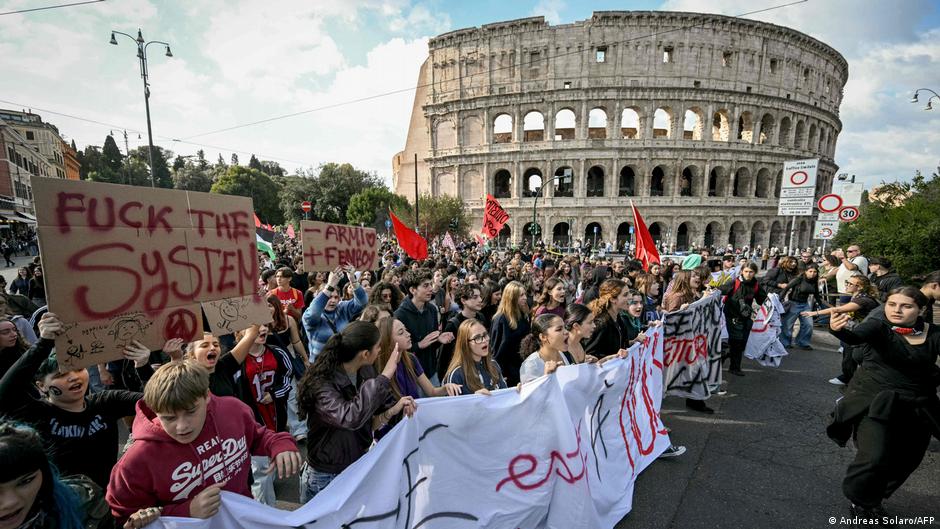
Mass protests over Italy’s rising cost of living and increased military spending have added to signs of economic and political strain across Europe, with potential implications for businesses, investors and policymakers in the UK and European Union.
Hundreds of thousands of people took to the streets across Italy on 30 October, while a nationwide 24-hour general strike was held at the initiative of the Unione Sindacale di Base, or USB. Demonstrations were organised in more than 60 cities, according to national news agency ANSA.
Estimates of participation differed sharply. USB, the trade union that organised the demonstrations, said between 1 million and 1.5 million people took part. Italy’s Interior Ministry put the number at 255,000.
The protests focused on household expenses that have become increasingly difficult for many consumers to absorb, particularly higher apartment rents and fuel prices. Demonstrators also opposed an increase in military expenditure, arguing that public money should instead be directed towards housing and other domestic priorities.
“We need more housing, not more bombs,” one protest slogan said.
Business pressure from household costs
For European businesses, the demonstrations underscore the continuing tension between public spending priorities and pressure on household budgets. Higher rents and fuel prices can reduce consumers’ disposable income, weakening demand for discretionary goods and services. A general strike can also disrupt transport, logistics, retail operations and other parts of the economy, although the source did not provide an estimate of the strike’s financial impact.
The developments are relevant to British companies with customers, suppliers or operations in Italy and elsewhere in the EU. They also highlight a broader challenge facing European governments: balancing defence commitments with demands for spending on housing, education and measures intended to ease living costs.
No specific movement in sterling or reaction from London markets was reported in connection with the Italian demonstrations. However, UK investors typically monitor large-scale labour action and political unrest in major European economies because prolonged disruption can affect regional growth expectations, cross-border commerce and confidence in European assets. Any eventual impact on sterling would depend on whether the protests develop into a wider economic or political shock rather than remaining primarily domestic events.
Clashes reported in Rome and Turin
ANSA said the demonstrations were largely peaceful in all participating cities except Rome and Turin. In those two cities, some protesters began setting rubbish bins on fire and throwing objects at police during the evening. Law enforcement officers responded with tear gas and water cannon.
Italian Interior Minister Matteo Piantedosi defended the police response in a post on the social media platform X. He said the measures taken were balanced and effective, allowing the authorities to protect citizens’ right to demonstrate peacefully despite attempts by some individuals to provoke disorder and violence.
The unrest in Rome and Turin introduces an additional concern for companies exposed to city-centre activity, travel or logistics, although no broader commercial damage was detailed. The difference between the organisers’ attendance estimate and the Interior Ministry’s figure also leaves uncertainty over the precise scale of public participation.
European demonstrations widen
Italy’s protests formed part of a wave of demonstrations that has spread across other European countries in recent weeks. France and Belgium have also seen protests. In France, demonstrations in several cities developed into vandalism and clashes with police.
Similar action is scheduled for 31 October in more than 30 German cities. The demonstrations have been called by the movement Gen-Z regelt, whose name translates as “Generation Z decides.” Tens of thousands of participants, predominantly young people, are expected to attend.
German demonstrators are set to protest against the rising cost of living and the potential return of military conscription. They are also expected to demand increased spending on education. Experts believe the German events will take place largely without disorder.
The spread of protests from Italy to other major European economies could increase scrutiny of how governments allocate resources as living costs remain a central concern. For London-based investors and British businesses, the key question is whether the demonstrations remain isolated national events or evolve into sustained industrial action capable of disrupting trade and weakening consumer confidence across the continent.
For now, the Italian action chiefly signals mounting pressure on European households and growing resistance to higher defence expenditure. The combination of cost-of-living concerns, labour mobilisation and debate over military commitments presents a policy challenge that extends beyond Italy and is likely to remain relevant to both EU and UK commercial interests.