Jay Clayton Confirmed as US Director of National Intelligence Amid Bipartisan Concerns
Jay Clayton's appointment as Director of National Intelligence raises questions over his security experience and impact on UK and EU markets.
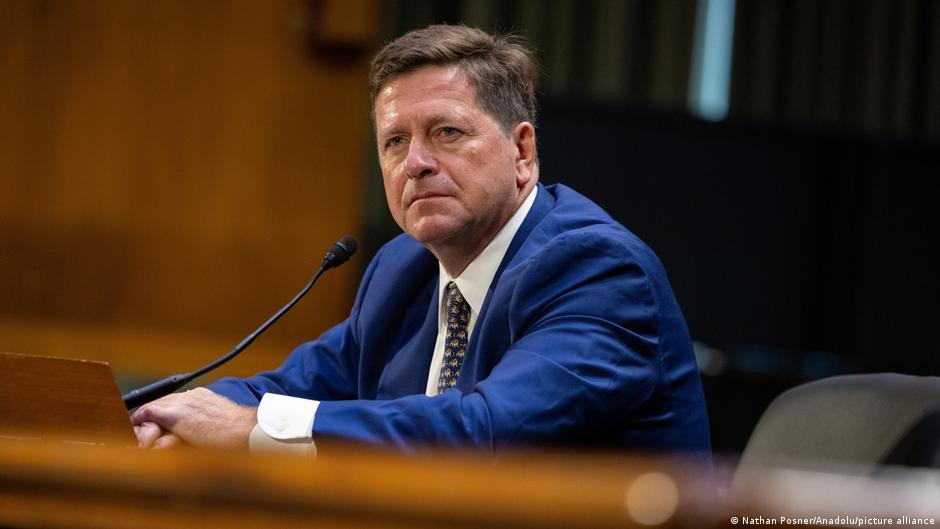
The United States Senate has confirmed Jay Clayton, former Southern District of New York prosecutor, as the new Director of National Intelligence (DNI) in a narrow 51-47 vote. The confirmation was met with bipartisan skepticism, notably with all Senate Democrats voting against the nomination.
Implications for UK and European Business Interests
Jay Clayton's appointment to head the US intelligence community—comprising 18 agencies including the CIA, NSA, and the Defense Intelligence Agency—comes at a sensitive time for transatlantic relations. Although Clayton lacks direct experience in intelligence or national security, his extensive legal and regulatory background in securities and enforcement is well known.
Previously, Clayton served as chairman of the US Securities and Exchange Commission (SEC) and worked at the prestigious law firm Sullivan & Cromwell, experiences that resonate strongly with London's financial sector. His regulatory expertise may influence US approaches to financial oversight, potentially impacting the sterling and broader UK-EU market dynamics.
"Clayton's leadership at the SEC underscores his ability to navigate complex financial regulations, a skill that could affect transatlantic financial ties and market stability."
The markets in London and across Europe are closely monitoring how US intelligence policies under Clayton will align with broader security cooperation frameworks. Given his lack of direct intelligence experience, some experts have voiced concerns about potential shifts in US intelligence priorities that could affect data sharing and counter-terrorism efforts critical to European security.
Political Context and Senate Opposition
Clayton's confirmation followed the resignation of former DNI Tulsi Gabbard in May and a contentious interim period under William Pulte, whose lack of intelligence experience also raised doubts. Senate Democrats initially viewed Clayton as a preferable alternative but reversed their support during confirmation hearings, partly over his evasive responses about the legitimacy of the 2020 US presidential election. Clayton referred to Joe Biden as “recognized” winner without explicitly acknowledging the election results amid former President Donald Trump's unfounded claims of fraud.
During Pulte's brief tenure, significant staff reductions—amounting to nearly 30% of the DNI's workforce—were initiated, raising concerns about the capacity of the US intelligence community. Clayton inherits these challenges at a time when collaboration between US and European intelligence agencies remains critical for countering shared threats such as cyberattacks and geopolitical instability.
From a UK and EU perspective, Clayton’s mandate will be watched closely for indications on future intelligence-sharing agreements, regulatory stances, and the broader impact of US policy on financial markets, including sterling's performance amid ongoing global uncertainties.
As transatlantic relations evolve, the new DNI’s approach to intelligence leadership and regulatory expertise will be key factors influencing market confidence and cooperative security efforts between the US, UK, and European Union.