Russian Missile Strikes on Kyiv Deepen Risk Focus for UK and EU
At least one person was killed in Kyiv and two in Kharkiv as renewed Russian attacks intensified security concerns across Europe.
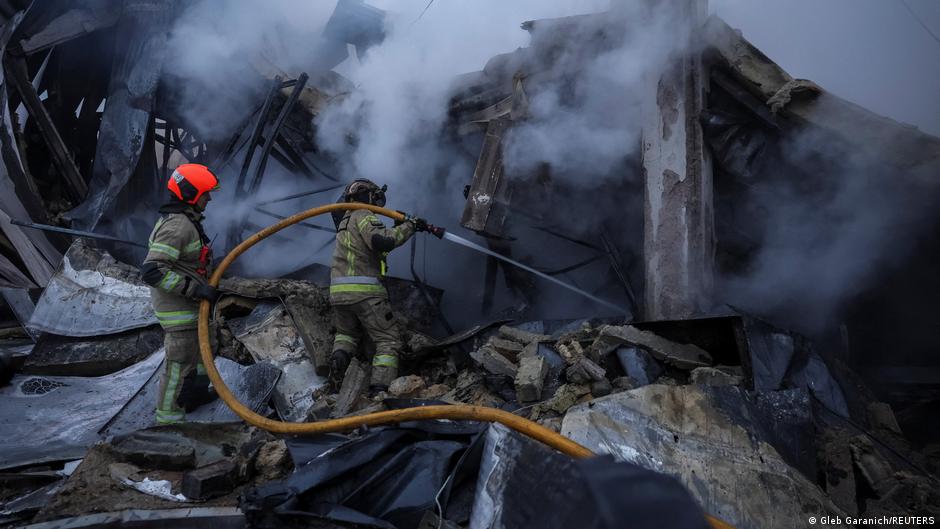
Russian forces launched a series of missile strikes on Kyiv on the evening of 26 October, killing at least one person and injuring no fewer than 10, according to Ukrainian authorities. Three of those wounded were reported to be in serious condition.
The renewed assault on the Ukrainian capital adds to the geopolitical risks confronting Britain and the European Union, including uncertainty over regional security, trade and investor confidence. The available reports did not provide evidence of a specific move in sterling or an immediate reaction among London-listed shares, but the attacks give UK and European markets another escalation to assess.
Ukraine’s Air Force said the ballistic missiles had been launched from Bryansk. Kyiv Mayor Vitali Klitschko reported at about 11 p.m. local time on Telegram that at least one person had died and 10 had been injured. Medical teams took nine of the wounded to hospital, he said, with three in serious condition.
Damage reported across two Kyiv districts
Klitschko said Russian attacks had affected two districts of the capital. In the Desnianskyi district, a strike was recorded near a metro station and close to a university dormitory. In the Dniprovskyi district, a building within a non-residential development area was hit.
Windows were also shattered in two departments of a medical facility in the Dniprovskyi district. According to the mayor, neither patients nor medical personnel were injured there. Authorities were still working to establish the full consequences of the attacks.
The Kyiv City Military Administration said a residential building in the Desnianskyi district had been damaged. Preliminary information indicated that people might be trapped inside, although officials had not confirmed their number or condition at the time of publication.
Medical teams hospitalised nine injured people, three of whom were in serious condition, according to Kyiv’s mayor.
The assault was continuing when the initial reports were published, including through the use of jet-powered drones. That detail indicated that emergency workers and residents faced an active and evolving threat while damage assessments and rescue operations were under way.
Fatalities and property damage in Kharkiv
Russian forces had attacked Kharkiv several hours earlier. Mayor Ihor Terekhov said two people had been killed and four injured in shelling of the city’s Novobavarskyi district.
Apartment buildings, private homes and vehicles were damaged, Terekhov wrote on Telegram. The reports from Kyiv and Kharkiv therefore placed the combined preliminary toll at three people killed and at least 14 injured across the two cities, based solely on the figures released by local authorities.
The casualty numbers and damage assessments remained provisional. In Kyiv, officials were investigating whether residents were trapped in a damaged building, while the continuing attack raised the possibility of further reports from emergency services.
European businesses monitor escalation risk
For British and EU businesses, the immediate significance lies in the renewed evidence that the war continues to expose major Ukrainian cities, transport infrastructure, residential property and public institutions to sudden disruption. The reported strike near a Kyiv metro station and damage to a medical facility illustrate the operational risks facing employers, workers and organisations maintaining activity in the capital.
The attack also reinforces the broader security considerations confronting European companies with staff, suppliers or other commercial links to Ukraine. Businesses must account for interruptions to mobility, the need to shelter employees and the possibility that repeated attacks could affect facilities beyond their intended or reported targets.
Investors in London and across Europe typically distinguish between the direct human and physical consequences of an attack and any wider financial-market transmission. The source reports contained no market pricing, currency data or company disclosures, meaning no direct sterling impact or sector-specific London reaction could be established from the information available.
Nevertheless, renewed strikes on Kyiv and Kharkiv form part of the risk environment watched by UK and EU policymakers, companies and investors. Any sustained escalation could influence assessments of regional exposure and business continuity, while the immediate priority for Ukrainian authorities remained rescue work, medical treatment and determining the full extent of the damage.