Lula Wins Brazil Runoff as Bolsonaro Seeks Vote Annulment
The disputed result adds political uncertainty for British and European businesses assessing exposure to Brazil’s unstable economy.
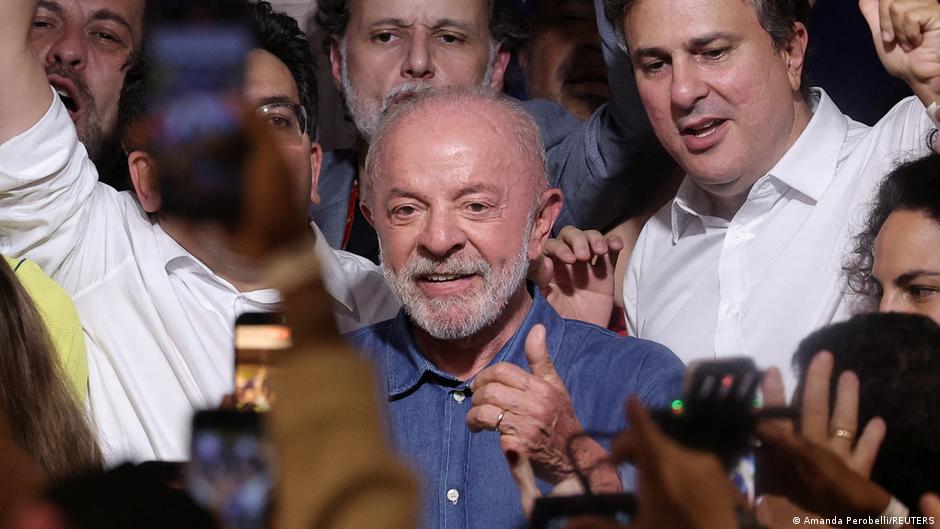
Brazilian President Luiz Inácio Lula da Silva has won a closely contested second-round election, while his rival, Senator Flávio Bolsonaro, has refused to concede and called for the result to be annulled.
Official results from the vote held on Sunday, October 25, gave the 80-year-old centre-left incumbent 51.8% of ballots. Bolsonaro, a right-wing populist and the son of former far-right president Jair Bolsonaro, received 48.2%.
The outcome marks the first time in Brazilian history that a presidential candidate who finished second in the initial round has gone on to win the runoff. Lula is now set to hold the presidency for a fourth, non-consecutive term.
For British and European companies with interests in Latin America’s largest economy, the narrow margin and Bolsonaro’s challenge introduce a period of political uncertainty. The source results did not provide an immediate reaction in sterling or London-listed securities, but investors will be watching whether the dispute delays a clear transition or affects confidence in Brazilian institutions.
Result challenged over extended voting
Bolsonaro cited the extension of polling hours in demanding that the election be invalidated, according to the Associated Press. The dispute centres on a last-minute decision to keep polling stations open for an additional two hours.
Both Lula and Bolsonaro had previously requested longer voting because of public transport problems and adverse weather conditions in some parts of Brazil. Supreme Court Justice Cristiano Zanin ultimately ordered the extension only three minutes before polling stations had been scheduled to close.
The central question for markets is whether the challenge remains a legal dispute over voting hours or develops into a broader test of political stability.
The decision could become a focal point in Bolsonaro’s effort to overturn the result. However, the article provided no evidence of a court ruling invalidating the count and reported Lula as the winner on the basis of the official results.
Celebrations followed the announcement in Brazil’s largest cities. Fireworks and vuvuzelas were heard in Rio de Janeiro, while thousands of people wearing red, the colour associated with Lula’s Workers’ Party, took to the streets of São Paulo, AFP reported.
European businesses face policy and currency uncertainty
The election matters to companies in Britain and the European Union because political stability in Brazil can influence investment decisions, financing conditions and the commercial environment for multinational groups. A prolonged challenge could make businesses more cautious while they wait for greater clarity about the next administration and its ability to govern.
For London markets, the most relevant channels would include UK-listed companies with Brazilian operations, funds holding Brazilian assets and banks or commodity businesses exposed to the country. The source article did not identify individual companies or report any specific share-price movements, so an immediate market impact cannot be established from the election report alone.
Sterling’s direct exposure is similarly difficult to quantify from the available information. Any effect on the pound would probably be indirect, transmitted through broader risk sentiment, emerging-market currencies or the performance of internationally focused London stocks. Investors would also need to distinguish Brazil-specific volatility from wider moves in global currency and equity markets.
European businesses will be assessing more than the election dispute. Lula’s campaign for another term was complicated by public concern over the cost of living and rising crime. The contest also took place against a backdrop of corruption scandals, economic instability and allegations of interference by the United States.
Those pressures may constrain the president’s room for manoeuvre after the election. The close result points to a deeply divided electorate, while the demand for annulment threatens to keep attention focused on the legitimacy of the vote rather than the government’s economic programme.
Political resolution becomes the immediate focus
The next phase will be important for foreign investors seeking predictability. A swift institutional resolution could limit disruption and allow attention to return to inflation, living costs, public security and economic policy. A prolonged confrontation, by contrast, could deepen uncertainty around investment and corporate planning.
Lula’s victory gives him another mandate, but the circumstances underline the challenges awaiting his fourth presidency. British and EU businesses will now watch the courts, Bolsonaro’s response and the durability of Brazil’s political institutions before drawing firmer conclusions about commercial risk.