Georgia Opposition Launches New Protest Wave as EU Tensions Deepen
Thousands marched in Tbilisi as opposition leaders challenged Georgian Dream and called for a major demonstration on November 28.
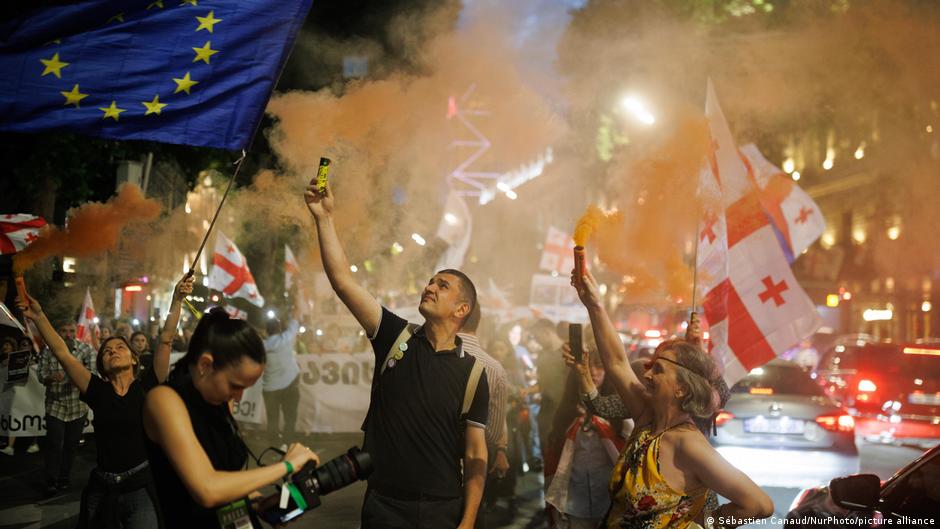
Georgia’s opposition has declared the start of a new wave of protests against the governing Georgian Dream party, escalating a political confrontation closely watched by the European Union and businesses assessing risk across Europe’s eastern neighbourhood.
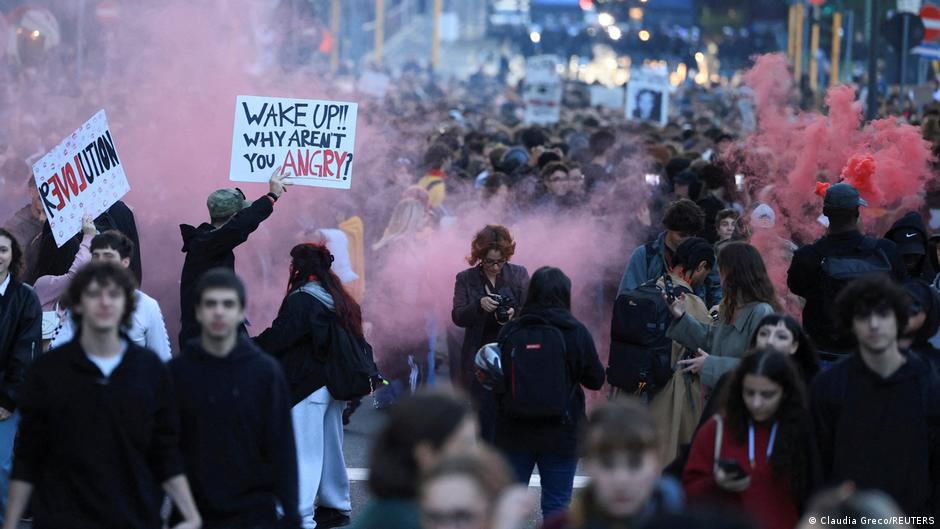
Thousands of demonstrators marched through Tbilisi on Sunday, October 25, under the slogan “Georgia without Ivanishvili,” a reference to Bidzina Ivanishvili, the influential founder of Georgian Dream. The demonstration was organised by opposition parties and civil society groups while Georgia’s Constitutional Court considers a lawsuit seeking to ban opposition parties.
Participants walked from Tbilisi State University towards Rustaveli Avenue, according to Kavkazsky Uzel. They carried Georgian, Ukrainian and European Union flags, reflecting the movement’s identification with Georgia’s previously declared European trajectory. A large security presence was also reported at the demonstration.
Opposition targets November 28 for major rally
Nika Gvaramia, leader of the Coalition for Change, described Sunday’s march as the opening of a renewed protest campaign. Opposition organisers are now seeking a much larger turnout on November 28, the second anniversary of the beginning of mass protests in Georgia, or in the days immediately following it.
“We are starting today, and we definitely need a culmination, whether it is on November 28 or in the following days. It is important that there are very many of us on the 28th, so that the wind cannot extinguish the fire,” Gvaramia said, as quoted by Kavkazsky Uzel.
Gigi Tsereteli, leader of European Georgia, also attended the march and said the planned November 28 demonstration would be both large and important. He argued that Georgia had shifted from being a leading candidate for European integration to an outsider, while restrictions on political competition were intensifying.
“What is happening in Georgia today in terms of the destruction of democracy and disruption is truly unimaginable, given that we were a champion country on the path towards European integration and today we are outsiders,” Tsereteli said, according to Georgia Online. He added that parties were being banned, political life was effectively being restricted and political prisoners represented another major challenge.
European alignment remains the central fault line
The latest mobilisation follows a prolonged period of political unrest that began with mass opposition to Georgia’s “foreign agents” law in spring 2024. Protests intensified after Georgian Dream won the subsequent parliamentary election and developed into a broader crisis in November 2024, when the authorities decided to postpone negotiations on joining the European Union until 2028.
Earlier demonstrations were marked by clashes with police. Officers used tear gas and water cannon to disperse protesters, reinforcing concerns among opponents of the government about democratic standards, civil liberties and the country’s relationship with Europe.
For the EU, the confrontation carries strategic significance beyond Georgia’s domestic politics. The presence of EU and Ukrainian flags at the march illustrates how opposition groups have linked democratic governance to the country’s geopolitical alignment. Any further deterioration could complicate Brussels’ approach to enlargement and its efforts to maintain influence in the South Caucasus.
British interests are less direct, but the crisis remains relevant to UK companies, investors and policymakers exposed to regional trade, transport and political risk. Georgia occupies an important position between Europe and Asia, and prolonged instability could weaken confidence in the country as a commercial and transit partner. The dispute over opposition-party bans may also affect perceptions of legal certainty and institutional independence.
Limited immediate implications for sterling and London markets
The source material provided no evidence of a direct move in sterling or a measurable reaction among London-listed securities following Sunday’s march. Georgia’s economy is too small to make its domestic political developments a major standalone driver for the pound or the broader UK equity market.
However, London investors with exposure to emerging Europe, regional infrastructure or companies operating in the Caucasus may monitor the November 28 rally for signs of escalation. The most relevant market questions will be whether demonstrations remain peaceful, how security forces respond and whether the Constitutional Court advances efforts to prohibit opposition parties.
For now, the political timetable is centred on November 28. Opposition leaders are treating that date as a potential culmination of the new campaign, while the government faces renewed scrutiny over its democratic record and its decision to delay EU accession talks. The scale of the planned rally—and the authorities’ handling of it—could determine whether Georgia’s confrontation enters another sustained phase.