Bulgaria Presidential Vote Heads to Runoff as Ukraine Policy Divides
The inconclusive election adds political uncertainty on the EU’s Black Sea frontier, with security policy in focus for European investors.
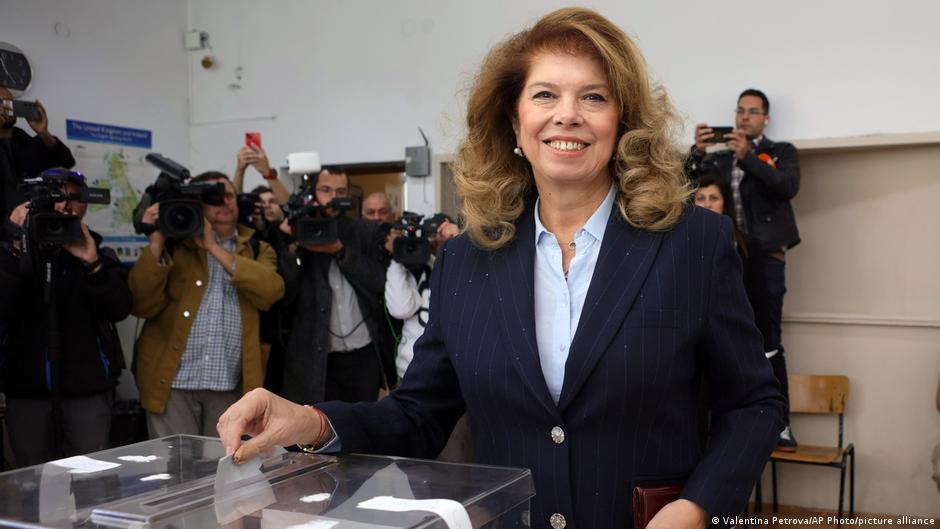
Bulgaria’s presidential election will proceed to a second round after no candidate secured the required absolute majority in the first ballot, extending political uncertainty in an EU member state strategically positioned on the Black Sea and close to the war in Ukraine.
According to Bulgaria’s Central Election Commission, incumbent head of state Iliyana Yotova received 34.6% of the vote after 95.3% of ballots had been processed. Pro-Western former prime minister Andrey Gyurov placed second with 32%, setting up a closely contested runoff that is expected to take place on November 1.
Turnout was just 22.2%, far below the required threshold of more than 50%. The weak participation prevented the first round from producing a conclusive result and underscored the limited engagement surrounding a campaign that initially featured few rallies, no televised debates and numerous personal attacks against the two leading candidates.
Black Sea security raises stakes for Europe
The runoff carries wider foreign-policy significance because of Bulgaria’s proximity to the conflict in Ukraine. The country is a member of both the European Union and NATO, while its Black Sea coastline places it close to commercial shipping routes exposed to the consequences of regional hostilities.
During October alone, four merchant vessels off the Bulgarian Black Sea coast were reportedly struck by drones. In a separate incident, a Starlink station near Sofia was damaged in an arson attack. Yotova and Bulgaria’s government, headed by Rumen Radev, responded cautiously to the incidents, neither offering an unambiguous assessment nor identifying those responsible. That restrained approach also influenced the election campaign.
For British and European businesses, the contest is relevant primarily through its potential implications for regional security, trade routes and EU cohesion over Ukraine. Companies operating supply chains through southeastern Europe will be watching for any change in Bulgaria’s diplomatic posture or security cooperation after the runoff. London investors are also likely to assess the result as part of the broader geopolitical risk surrounding European transport, energy and communications infrastructure.
The election does not by itself establish a direct catalyst for sterling, but renewed security concerns on the EU’s eastern and Black Sea flanks can affect wider European risk sentiment. For UK markets, the immediate focus is therefore less on Bulgaria’s domestic presidency than on whether the result reinforces or complicates Western coordination over Ukraine.
Ukraine policy separates the candidates
Differences over support for Kyiv became the central issue during the final weeks of campaigning. Yotova has advocated a diplomatic conclusion to the war and sought to reassure voters that Bulgarian troops would not be sent to Ukraine, even though the possibility had not been the subject of broad public debate.
Gyurov has previously expressed support for Ukraine. While serving as head of government, he signed a security cooperation agreement with Kyiv, giving voters a clearer contrast between the two candidates’ approaches to the conflict and Bulgaria’s relationship with Ukraine.
The runoff presents voters with a choice between Yotova’s emphasis on diplomacy and Gyurov’s record of supporting security cooperation with Kyiv.
The contrast may also matter in Brussels, where Bulgaria’s position contributes to EU decisions on assistance for Ukraine and the bloc’s response to threats around the Black Sea. British policymakers and businesses retain an interest in those decisions despite the UK’s departure from the EU, particularly where sanctions, defence cooperation and maritime security require coordination with European partners.
A limited office with strategic influence
Bulgaria’s presidency has formally limited powers, but the office carries meaningful institutional and international responsibilities. The president represents the country abroad, subject to certain exceptions, and serves as commander-in-chief of the armed forces.
The president also signs decrees appointing the prosecutor general and the heads of the highest courts. The officeholder can appoint an acting prime minister from a closed list of eligible officials established by the constitution and has the power to veto legislation passed by parliament.
Those authorities give the eventual winner influence during periods of parliamentary instability as well as a prominent voice on security and foreign affairs. With Yotova and Gyurov separated by only 2.6 percentage points in the partial count, the November 1 runoff is positioned as a consequential test of Bulgaria’s direction at a time of heightened regional risk.
European and UK market participants will now look beyond the subdued first-round campaign to the candidates’ final statements on Ukraine, Black Sea security and relations with Western partners. The outcome will not determine Bulgaria’s economic policy alone, but it could shape the country’s international stance and the political backdrop facing businesses across the region.