King Charles III Visits US Amid Transatlantic Tensions, Impacting UK-EU Relations and Sterling
King Charles III arrives in Washington to meet Donald Trump as UK-US ties face challenges over Middle East conflicts.
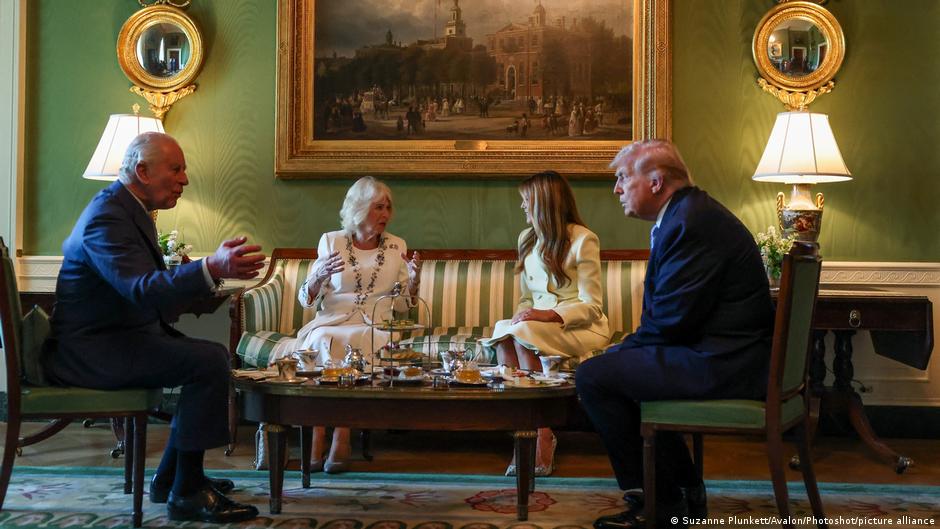
King Charles III and Queen Camilla embarked on an official visit to the United States on April 27, marking the first British monarch’s trip to the US since 2007. Their arrival comes amid strained Anglo-American relations due to ongoing conflicts in the Middle East, with implications for British business interests, the strength of sterling, and the London financial markets.
President Donald Trump and First Lady Melania Trump welcomed the royal couple at the White House, signaling a warm but complex diplomatic engagement. The king is scheduled to deliver a historic speech before both chambers of the US Congress on April 28 — only the second time a British monarch has addressed the US legislature since Queen Elizabeth II’s speech in 1991.
Following the Congressional address, King Charles and Queen Camilla will travel to New York City to participate in commemorations honoring the victims of the September 11, 2001 attacks. The visit is conducted under heightened security measures, following a recent shooting at the Washington Hilton hotel during a White House correspondents’ dinner attended by President Trump.
Diplomatic Context and Economic Implications for the UK and EU
The visit carries a "delicate" diplomatic mission, focused on repairing traditionally close US-UK relations that have been unsettled by diverging policies on the Iran conflict. In March, UK Prime Minister Keir Starmer denied US requests to use British military bases for strikes on Iran and declined to deploy Royal Navy ships to the strategically vital Strait of Hormuz.
This stance contrasts with President Trump’s critical remarks about the UK’s military capabilities, which he described as "too old" to unblock the Strait effectively. Trump also lambasted NATO allies, labeling them "cowards" over their cautious approach to the Iran war and branding the alliance a "paper tiger". He further indicated he is "seriously considering" withdrawing the US from NATO altogether.
"The king’s visit aims to restore the historically strong US-UK partnership, vital for economic stability and security cooperation affecting British and European markets."
Starmer responded firmly, expressing frustration over volatile energy prices driven by actions from global leaders including Trump and Russian President Vladimir Putin. Highlighting the UK’s commitment to energy independence, the Prime Minister emphasized investments to free the country from reliance on external energy suppliers manipulating gas prices. This energy strategy aligns with broader EU interests in reducing dependence on unstable external sources.
From a business perspective, these geopolitical tensions have tangible effects on sterling and London’s status as a global financial hub. Investor uncertainty linked to transatlantic discord and Middle Eastern instability can lead to fluctuations in currency markets and capital flows. The UK's balancing act between supporting NATO commitments and asserting independent foreign policy decisions may influence investor confidence and trade negotiations both within Europe and overseas.
Despite political headwinds, President Trump reassured that the cooling of Washington-London relations would not impact King Charles III’s visit. He noted that the monarch "has nothing to do with NATO" and praised him as a "great guy" and "friend," underscoring the personal goodwill that may help bridge official diplomatic gaps.
London markets are expected to closely monitor the outcomes of King Charles’s US trip, as renewed cooperation or continued tensions will have ripple effects on British economic prospects and sterling’s performance. The visit serves as a barometer for the future direction of UK-US and UK-EU relations amid a shifting global landscape.