Russian Drone Strike on Kharkiv Home Injures Four, Including Child
The overnight attack also caused fires at residential and industrial buildings as further aerial threats were reported across Ukraine.
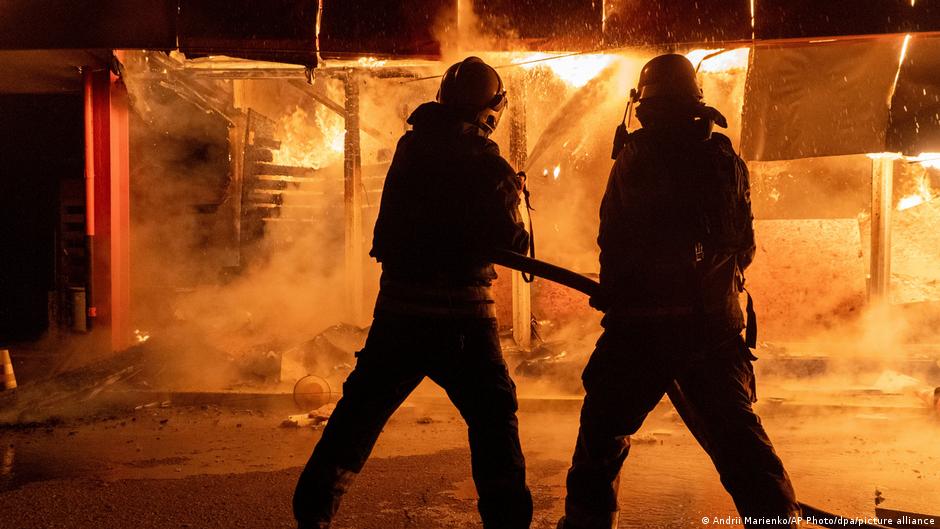
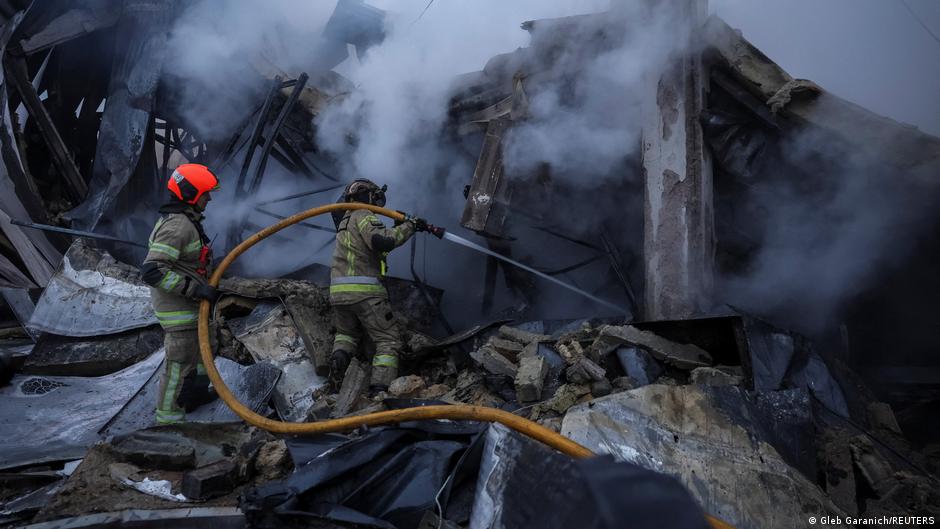
A Russian drone struck a residential building in Kharkiv overnight, injuring four people, including a four-year-old boy, according to Ukrainian local authorities. The attack also caused a fire at a two-storey industrial building and damaged residential properties in the city’s Osnovianskyi district.
Oleh Syniehubov, head of the Kharkiv regional military administration, said Russian forces attacked the city during the night leading into Wednesday, October 28. He reported that a two-storey industrial building, a two-storey apartment block and a single-storey house caught fire as a result of the attack.
Authorities later identified the injured as two women aged 32 and 65, a 56-year-old man and the four-year-old boy. Three of the four required hospital treatment, Syniehubov said.
“A hit on an apartment building. According to available information, people are trapped inside,” Kharkiv Mayor Ihor Terekhov wrote.
Terekhov separately confirmed that a Russian unmanned aerial vehicle had hit a residential property. His initial statement indicated that people were believed to be trapped in the apartment building, adding urgency to the emergency response.
Wider aerial threats reported
At the same time, the Ukrainian Air Force warned of a possible ballistic-weapons threat from the direction of Bryansk towards Kyiv. That warning was subsequently cancelled.
However, messages published through the Ukrainian Air Force’s Telegram channel said attacks involving jet-powered drones and guided aerial bombs continued in the direction of the Kharkiv and Dnipropetrovsk regions, as well as Kyiv and the surrounding region.
The overnight developments therefore extended beyond the single strike in Kharkiv. They included several types of aerial threat and affected areas encompassing residential districts, industrial premises and routes towards Ukraine’s capital. The reports did not provide information about damage to major transport links, energy infrastructure or internationally owned business assets.
Implications for British and European businesses
For UK and European companies monitoring the war, the Kharkiv attack underscores the continuing operational dangers facing commercial activity in Ukraine. The fire at an industrial building is particularly relevant to businesses assessing physical security, staff safety and the resilience of suppliers, even though authorities did not disclose the facility’s owner, function or the scale of commercial losses.
Kharkiv’s proximity to the Russian border and the continuing use of drones, guided bombs and potential ballistic weapons remain important considerations for European companies with employees, contractors or supply-chain exposure in Ukraine. Each renewed attack can complicate logistics, insurance assessments, business continuity planning and decisions about reconstruction-related investment.
The incident also matters to policymakers and corporate leaders in Britain and the European Union because support for Ukraine carries fiscal, industrial and security implications. Defence production, humanitarian assistance and future reconstruction are closely watched by European businesses, while repeated attacks on residential and industrial property highlight the potential scale and duration of those requirements.
No immediate reaction in sterling or London-listed shares was cited in the information released by Ukrainian authorities. The reports also contained no figures for economic damage, production disruption or insurance losses, meaning any direct market assessment would be premature.
For London markets, the most relevant near-term issue is whether individual attacks develop into broader disruption affecting energy supplies, commodity flows, transport infrastructure or European security policy. The Kharkiv strike, as reported, caused casualties and fires but was not accompanied by evidence of such wider economic disruption.
Sterling is generally assessed by investors against a broad range of domestic and international factors. In this case, the available information establishes the human and physical impact of the attack but does not demonstrate a specific effect on the pound. Similarly, no immediate response from UK companies or European institutions was included in the official accounts.
Emergency response remains the immediate focus
The central consequence of the strike was the injury of four civilians and the outbreak of fires across multiple buildings. Three people needed hospitalisation, while the mayor’s statement indicated that residents may initially have been trapped inside the apartment block.
Further details about their conditions, the completion of rescue operations and the extent of structural damage were not provided. Authorities also did not identify the industrial building involved or say whether it was operating when the fire began.
The attack adds to the security risks confronting Kharkiv while aerial threats continue across other parts of Ukraine. For British and European observers, the incident offers no confirmed basis for estimating a sterling or London equity-market move, but it reinforces the persistent geopolitical uncertainty surrounding regional investment, trade and reconstruction planning.