Spain Transport Minister Resigns After Toledo Rail Disaster Kills 69
Oscar Puente stepped down after the Toledo crash as Spain approved new rail safety measures and €30 million in aid for victims.
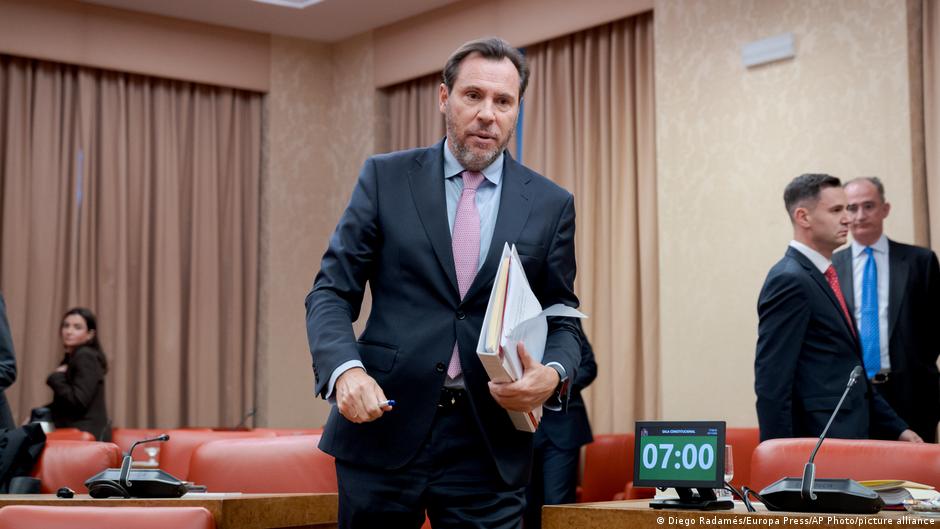
Spanish Transport Minister Oscar Puente has resigned and withdrawn from Spain’s early parliamentary elections following a high-speed rail disaster near Toledo that killed 69 people, placing renewed scrutiny on the safety of one of Europe’s most important passenger railway networks.
Puente announced his decision on Tuesday evening, November 3, while appearing before a parliamentary committee in Madrid. His departure came almost a week after the collision and after sustained demands for his resignation from every opposition party.
“A minister cannot remain in office after two disasters of this magnitude in less than one year. It is a matter of political dignity, responsibility and political sensitivity,” Puente said.
The resignation was unexpected because Puente and Spanish Prime Minister Pedro Sanchez had repeatedly ruled out such a move. His withdrawal from the forthcoming election campaign also adds a political dimension to a transport crisis that was already confronting the government with questions about infrastructure oversight, operational controls and passenger confidence.
Safety measures and €30 million support package
Several hours before Puente addressed the parliamentary committee, Spain’s government approved measures intended to improve railway safety. At its weekly cabinet meeting, it also authorised a €30 million assistance package for people injured in the crash and the families of those killed.
The decisions will be closely watched by transport operators, infrastructure investors and policymakers elsewhere in Europe. Spain’s extensive high-speed network is a major part of the continent’s rail system, while European governments, including the UK, are seeking to encourage greater use of lower-carbon passenger transport and improve cross-border connections.
For British and EU business audiences, the immediate issue is whether Spain’s new safeguards can restore confidence without causing prolonged disruption or sharply increasing operating costs. The source article reported no specific reaction in London markets or movement in sterling connected with Puente’s resignation. Any financial implications are therefore likely to depend on the investigation’s findings, the scope of subsequent infrastructure work and whether the crisis affects operators, suppliers or tourism flows.
Collision on the Madrid-Seville line
The disaster occurred at 8:53 a.m. on October 28 near the town of Urda in Toledo province, on the high-speed railway linking Madrid and Seville. Passenger service AVE 2080 struck the final carriage of Iryo 6076, which was standing on the tracks.
Sixty-nine people were killed and more than 50 were injured. The scale of the casualties has intensified pressure on the Spanish government and transport authorities to explain how two trains came into conflict on a modern high-speed route equipped with automated safety systems.
The Urda collision was the seventh railway disaster in Spain since the beginning of 2026 in which passengers were injured. That record has broadened the political debate beyond a single incident, raising questions about whether the country faces isolated technical failures or more extensive weaknesses in maintenance, traffic management and safety governance.
Second major rail disaster within a year
Another serious accident occurred on January 18 near the town of Adamuz on the Madrid-Malaga high-speed line and involved two trains. Forty-six people were killed in that disaster, while another 150 sustained injuries of varying severity.
Possible damage to the railway track is being considered as one potential cause of the Adamuz crash. Investigators examining the Urda disaster, however, are focusing on the failure of the automatic train-protection system and possible errors in instructions issued by the dispatch control centre.
Those differing lines of inquiry matter commercially as well as politically. A track defect could point toward maintenance, inspection or engineering requirements, while a protection-system failure or dispatching error could bring attention to signalling technology, software, operating procedures and staff training. The source does not identify any company as responsible, and the investigations remain focused on potential causes.
The crisis comes as European railways compete for public investment and seek to attract passengers from short-haul aviation. Spain has been a prominent high-speed rail market, and the involvement of both an AVE service and an Iryo train is likely to sharpen attention on how safety responsibilities are divided among infrastructure managers, dispatch centres and passenger operators.
For the UK, which is outside the EU but economically linked to Spain through trade, investment and tourism, the main near-term considerations are operational reliability and confidence in Spanish transport infrastructure. There is no evidence in the source of a direct sterling impact or a defined London share-price response. Investors will instead look to the technical investigation and the government’s detailed safety programme for indications of potential costs and wider consequences for Europe’s rail sector.