Trump Says US Has Reached Greenland Security Deal With Denmark and Nuuk
The reported arrangement would expand US military reach in Greenland while raising strategic questions for NATO, Europe and London markets.
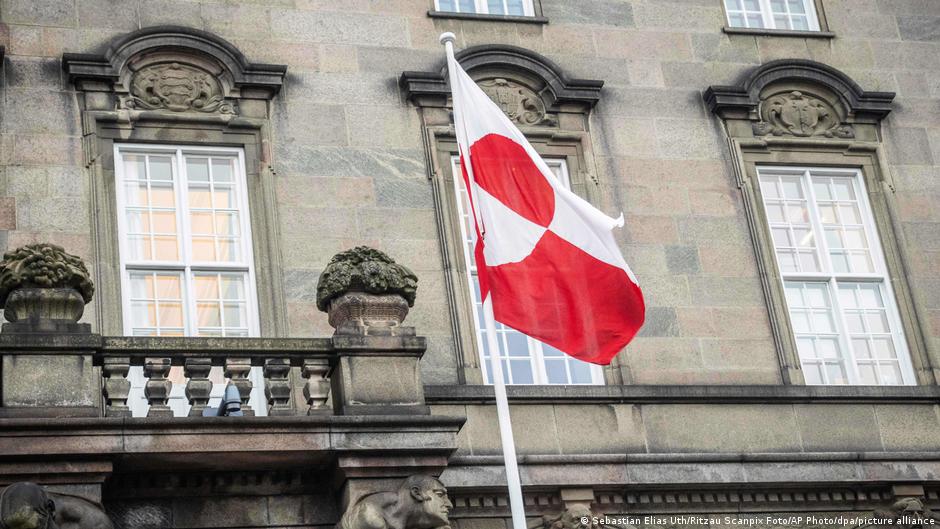
US President Donald Trump has announced that Washington has reached an understanding with Denmark and Greenland to expand the American military presence on the Arctic island, a move with direct implications for NATO security, European strategic autonomy and British business interests exposed to sterling, defence and critical minerals.
Trump said the agreement would give the United States “permanent control over security and all other needs in Greenland,” writing on his Truth Social platform on Friday evening, September 18, that Washington had secured open-ended authority to do what was necessary in Greenland to ensure and protect the security of both the island and the United States.
The governments in Copenhagen and Nuuk confirmed that understandings had been reached with Washington, but described the matter more cautiously. Their statement was issued as a press release about an “expected agreement” with the United States, a formulation that may indicate the final documents have not yet been signed.
For the UK and the European Union, the announcement lands at a sensitive moment. Greenland is part of the Kingdom of Denmark, an EU member state, and sits at the centre of Arctic shipping, defence planning and access to rare earth resources. Any durable increase in US control over Greenland’s security environment would therefore be watched closely in Brussels, Copenhagen and London, where investors have already been assessing the impact of higher defence spending, supply-chain resilience and geopolitical risk on European equities and sterling assets.
Arctic Security Moves Up The Market Agenda
According to Trump, the United States will immediately begin expanding its military presence in several parts of Greenland. He said adversaries of the United States would not be able, without American approval, to establish military bases in Greenland or make “sensitive investments” in the Danish autonomous region.
Trump also said the arrangement would cost the United States nothing. He praised himself for concluding a deal that, in his account, previous US leaders had been unable to complete for 100 years, adding that its results would be highly valued by the American people.
Danish Prime Minister Mette Frederiksen welcomed the understandings, saying they would benefit NATO by strengthening “our common security in the Arctic and in the North Atlantic region.” That framing is significant for Britain, which remains closely tied to North Atlantic defence architecture and whose defence contractors, insurers and shipping interests are sensitive to changes in Arctic security assumptions.
Frederiksen said the arrangement would strengthen “our common security in the Arctic and in the North Atlantic region.”
The joint statement from Copenhagen and Nuuk stressed that the understandings recognise Denmark’s “sovereignty and territorial integrity” and the “right of the people of Greenland to self-determination.” Greenland’s Prime Minister Jens-Frederik Nielsen said the agreement “ensures and strengthens the security of Greenland, the Kingdom of Denmark, the United States and the Western alliance.” He added that it also recognises Greenland’s interests and the autonomous region’s place in international cooperation.
That balancing language is likely to matter in European capitals. The White House has presented the arrangement as a major American security gain, while Denmark and Greenland have emphasised sovereignty, self-determination and alliance cooperation. For EU policymakers, the central question is whether the agreement reinforces NATO deterrence without weakening European control over decisions involving the territory of an EU member state.
Implications For Sterling And London
The immediate market effect will depend on whether the agreement is formally signed and how its terms are presented to allies. London investors are likely to focus on three channels: defence-sector sentiment, Arctic resource exposure and the broader tone of US-European trade relations. Sterling could be sensitive if the development adds to pressure on European governments to raise defence commitments or if it revives concern about tariff threats against Denmark and its allies.
Those risks are not hypothetical in political terms. Trump has for years made claims over Greenland, an island located off the coast of North America but belonging to Denmark. During his first term, he said he wanted to buy Greenland. After returning to the White House, he increased pressure on Denmark and its European allies, even threatening them with large customs duties. He justified his intentions by citing US security, while officials close to him repeatedly noted that the island is rich in rare earth resources.
Rare earths are a point of particular interest for Britain and the EU because they are used in defence systems, clean technologies and advanced manufacturing. Any US-led framework limiting “sensitive investments” by American adversaries in Greenland could be viewed by Western capitals as a supply-chain security measure. But it may also sharpen debate over who controls access to strategic minerals in European-linked territories.
US Secretary of State Marco Rubio told Fox News Digital that the Greenland deal was a “huge victory” for the United States and Americans. He said the agreement would permanently guarantee US security interests in the Arctic at no cost to American taxpayers.
Rubio also suggested that Denmark and Greenland’s understanding of their own defence capabilities helped make the deal possible. “Denmark and Greenland understand that they do not have the necessary financial means to defend Greenland in the event of an attack or threat. The United States has the necessary means for this,” Fox News quoted him as saying.
The cautious wording from Copenhagen and Nuuk leaves room for uncertainty. Negotiations between various countries and Washington under Trump have repeatedly broken down at the last moment, after which the White House was accused of trying to alter deal terms “at the last minute.” Until signed documents are released, European governments and London market participants are likely to treat the announcement as strategically important but not fully settled.
If completed, the arrangement could mark the end of Trump’s long-running push for control over Greenland. It would also confirm the Arctic as a central theatre for Western defence planning, critical minerals policy and investor scrutiny across the UK and Europe.