Zelenskyy Plane Drone Scare in Moldova Raises European Security Concerns
Norway's prime minister said a drone threat delayed the Ukrainian president's flight from Moldova to Oslo on Tuesday evening.
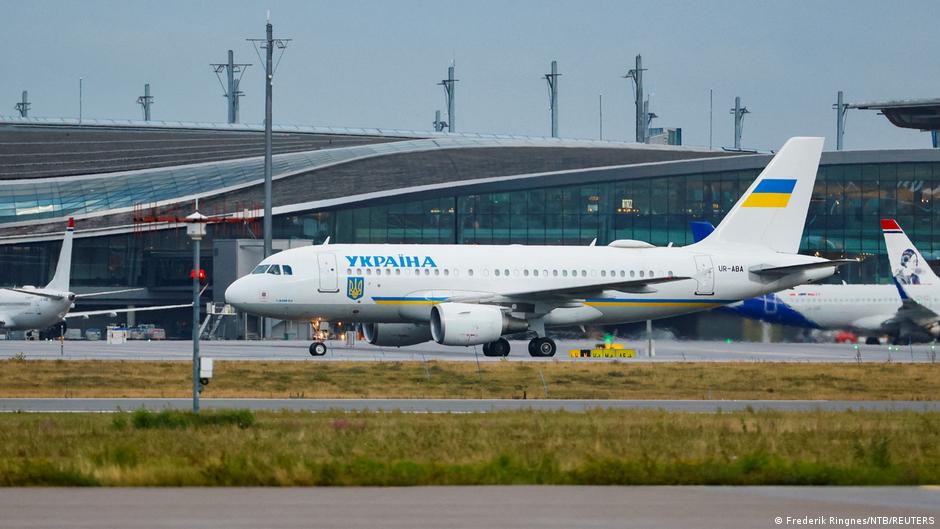
A reported drone threat involving President Volodymyr Zelenskyy's aircraft as it prepared to leave Moldova for Norway has sharpened concerns in London and across Europe about the business risks of an increasingly unstable security environment on the EU's eastern flank.
Norwegian Prime Minister Jonas Gahr Store said on Wednesday, September 9, that the Ukrainian president's plane had narrowly avoided a collision with a drone while departing Moldova for Oslo. Zelenskyy's office had not commented on the incident at the time of the report.
Speaking to Norwegian broadcaster NRK, Store said the aircraft was exposed to a drone threat as it was due to take off from Moldova. He did not say where he had obtained the information, and his remarks did not make clear whether the episode was accidental or a deliberate attempt to target Zelenskyy.
“His plane nearly collided with a drone when it was due to take off from Moldova. This is the reality he lives in,” Store said.
The Norwegian prime minister's office later clarified the statement, saying there had been a drone threat in Moldovan airspace on Tuesday that delayed Zelenskyy's plane on its way to Oslo. It added that it was not known how close the drones had been to the aircraft.
For British and European businesses, the incident underscores how military spillover risks from Russia's war against Ukraine continue to affect transport, insurance, energy expectations and investor confidence well beyond the immediate battlefield. Moldova is not a member of the European Union or NATO, but its airspace and borders sit close to vital trade corridors linking Ukraine, Romania and the wider European market.
Eastern Flank Risk Returns to Market Focus
London investors have repeatedly treated escalations around Ukraine's borders as signals for renewed caution, particularly in sectors exposed to energy costs, defence procurement, aviation risk, shipping and emerging European assets. The reported delay to Zelenskyy's aircraft adds another security flashpoint at a time when sterling-sensitive businesses remain alert to any disruption that could affect gas markets, regional logistics or broader risk appetite.
The source report did not provide data on sterling trading or specific London market moves following the incident. But for UK corporates and investors, the implications are practical: drone incursions and airspace warnings can raise operating costs, complicate diplomatic travel, and deepen the risk premium attached to Central and Eastern Europe.
A senior Ukrainian official told DW that while the Ukrainian president's aircraft was waiting to depart from Chisinau, a Russian jet-powered drone entered Moldovan airspace. Zelenskyy's departure was later postponed, and other flights were suspended, according to the official.
Zelenskyy arrived in Oslo from Moldova on the evening of September 8 to attend the funeral of King Harald V. After the ceremony, he met Store. An official Norwegian government statement on their talks did not mention the drone incident.
The apparent proximity of the threat to presidential travel is likely to be watched closely in European capitals, including London, because it points to the fragility of air operations around Ukraine's neighbouring states. Even when no casualties are reported, such incidents can force temporary shutdowns, rerouting and heightened security protocols that ripple through civilian aviation and government logistics.
Moldova Reports Downed Drone
Moldovan police said on September 9 that they had discovered a fallen drone equipped with a propulsion system. An explosion occurred when it hit the ground, creating a large crater. Inside the drone were damaging elements in the form of metal balls. No injuries were reported.
The discovery came as regional officials in Ukraine said Russian drones had attacked the Starokozache international road crossing in Odesa region overnight on September 9, near the border with Moldova. NRK noted that the airport from which Zelenskyy flew to Oslo is about two hours by road from that border crossing.
The location matters for European policymakers and businesses because Moldova has become a sensitive corridor in the wider regional response to Russia's invasion of Ukraine. Any confirmed drone activity in Moldovan airspace raises questions for EU border management, aviation insurers and companies moving people or goods through nearby routes.
For the UK, the commercial angle is tied to both security commitments and market exposure. Britain has been among Ukraine's most prominent backers, and London-listed defence, energy and infrastructure companies remain sensitive to signs that the conflict is widening geographically or creating new risks for neighbouring countries.
The incident also feeds into a broader European debate about air defence, drone detection and the cost of protecting civilian infrastructure. Governments across the continent are increasing attention on unmanned aerial threats, while businesses are assessing how quickly cross-border disruption can affect supply chains and travel planning.
There was no indication in the source report that Zelenskyy was injured, and no casualties were reported in connection with the drone found in Moldova. The key unanswered questions remain how close the drones were to the Ukrainian president's aircraft and whether the threat was the result of an unintended airspace violation or a deliberate act.
Until those details are clarified, the episode is likely to reinforce caution among European governments and investors. For London markets, the immediate issue is less a single delayed flight than the reminder that geopolitical risk around Ukraine continues to carry real economic consequences for Britain, the EU and the wider region.