Armenian Parliamentary Elections Signal Continued Pro-European Course Amidst Russian Tensions
Prime Minister Pashinyan's Civil Contract party leads as Armenia pursues closer EU ties, sparking concerns in Moscow and reactions in London markets.
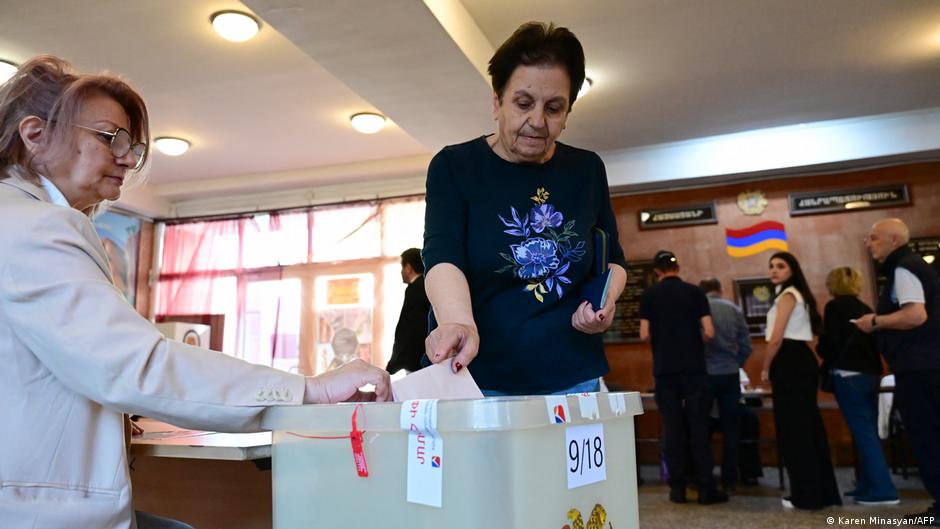
Armenia held pivotal parliamentary elections on June 7, which will determine the country's foreign policy direction for the coming years. Preliminary results indicate a lead for Prime Minister Nikol Pashinyan's "Civil Contract" party, favoring a continued trajectory towards European integration.
Election Results and Political Landscape
According to the Central Electoral Commission, after processing 55.95% of ballots, the Civil Contract party secured 50.86% of votes, positioning it to form a government independently. Opposition forces lagged behind: the "Strong Armenia" alliance, led by Russian-Armenian businessman Samvel Karapetyan, garnered 23.19%, while the "Armenia" bloc headed by former President Robert Kocharyan received 9.6%. Other parties crossing the parliamentary threshold included the "Prosperous Armenia" party with 4.1% and the "Wings of Unity" party with 2.3% support.
The voter turnout stood at 58.97%, exceeding participation levels from the 2018 and 2021 elections, reflecting heightened public engagement amid geopolitical stakes.
Armenia's National Assembly comprises 105 deputies, including four mandates reserved for ethnic minorities such as Yazidis, Russians, Kurds, and Assyrians.
Despite processing less than 20% of ballots at the time, Prime Minister Pashinyan declared victory for his party and asserted that it would form the government alone. This premature claim elicited criticism from opposition groups, accusing Pashinyan of power usurpation and unconstitutional interference in the electoral process.
Implications for UK and EU Interests
Since 2025, under Pashinyan's leadership, Armenia has legislatively committed to a strategic pivot closer to the European Union, challenging its traditionally strong ties with Moscow. This shift has caused friction with Russia, which has responded with trade restrictions on Armenian exports such as alcohol, agricultural products, flowers, and fish.
From a British and European business perspective, Armenia's pro-EU stance could open new avenues for market access and investment opportunities, particularly in sectors affected by Russian sanctions. London's financial markets and sterling investors may view Armenia's alignment as a geo-economic counterbalance to Russian influence in the South Caucasus, potentially increasing regional stability and trade diversification.
"Armenia's move towards the European Union represents a significant geopolitical shift, with implications for regional trade patterns and investor confidence in London and across the EU," said a regional analyst.
However, the ongoing tensions with Moscow and the potential for political instability could pose risks to international business engagements and investment flows. The opposition’s preference to maintain close Russian ties suggests that Armenia’s future foreign policy direction remains contestable.
As Armenia charts its path, the London financial community and European policymakers will likely monitor developments closely, balancing opportunities against geopolitical uncertainties.
Conclusion
Armenia’s recent parliamentary elections reaffirm Prime Minister Pashinyan’s pro-European course, signaling a complex interplay between East and West influences. For the UK and EU, this presents both promising prospects for enhanced economic cooperation and challenges stemming from Moscow’s displeasure. The coming months will be crucial in determining Armenia's political stability and integration within the European economic landscape, with direct implications for sterling markets and regional business strategies.


