Drone Strike Hits Major Russian Refinery as European Markets Assess Risks
The Kirishi facility processes about 7% of Russia’s crude and remains under UK, EU and US sanctions, raising fresh fuel-supply concerns.
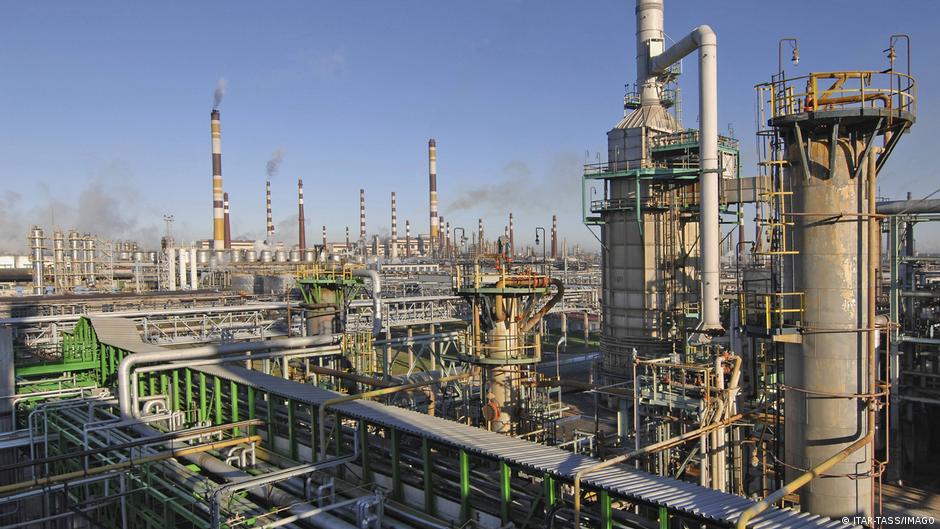
Ukrainian drones attacked the Kirishi oil refinery in Russia’s Leningrad region overnight on Monday, November 9, according to the Russian outlet Astra and Ukrainian monitoring channels on Telegram, which cited eyewitness accounts.
The KINEF refinery, owned by the Surgutneftegas group, is one of Russia’s largest oil-processing facilities and accounts for approximately 7% of the country’s total refining volume. Its scale and location make the incident relevant to European energy markets, where traders are closely monitoring repeated disruption to Russian refining capacity and the potential consequences for regional fuel supplies.
Alexander Drozdenko, governor of the Leningrad region, confirmed what he described as a drone impact in the industrial zone of Kirishi, although he did not identify the facility involved. He claimed that Russian air defences had shot down 113 drones over the region during the night.
Videos published on social media showed a fire on the territory of the refinery following reports of explosions in the area.
Astra reported that Kirishi residents heard air-defence activity and powerful explosions near the KINEF complex. Residents also reported the evacuation of an apartment building. Ukraine had not officially commented on the strike.
European fuel exposure under scrutiny
The refinery is located in Kirishi, approximately 100 kilometres southeast of St Petersburg. It plays a significant role in supplying fuel to northwestern Russia and provides aviation kerosene to Pulkovo Airport, the principal airport serving St Petersburg.
KINEF has a stated processing capacity of between 20 million and 21 million tonnes of crude oil annually. In recent years, it has processed about 18 million tonnes a year, equivalent to roughly 7% of Russia’s overall refining output.
For British and European businesses, the immediate issue is less direct access to Russian crude than the broader effect of refinery outages on internationally traded petroleum products. Restrictions affecting Russian processing can alter flows of diesel, aviation fuel and other products, potentially tightening supply in markets that have already had to reorganise trade routes since the expansion of Western sanctions.
The latest attack therefore adds another operational risk for energy-intensive companies, airlines and transport operators across Europe. However, the source material provided no confirmed assessment of damage from Monday’s strike, no indication that production had stopped and no verified estimate of the fire’s effect on output. Any market impact would depend on the extent and duration of disruption.
The incident also places renewed attention on sterling-sensitive assets in London. A sustained rise in wholesale energy costs can increase expenses for UK transport, manufacturing and aviation companies while complicating the inflation outlook. Conversely, higher oil-product margins can support some energy-sector earnings. No specific movement in sterling or London-listed shares was reported in connection with the attack, leaving investors to assess the operational evidence as it emerges.
Sanctions and repeated attacks
Surgutneftegas was placed under sanctions by the United States, the United Kingdom and the European Union in 2025. KINEF was also named in sanctions documentation. The refinery’s inclusion underlines its importance to Russia’s energy system and means that British and EU companies already face substantial restrictions when dealing with the group or associated assets.
The Kirishi refinery has been targeted repeatedly by Ukrainian drones in recent years. Following an attack in late August 2026, the facility completely halted crude processing after two primary refining units were damaged.
That earlier shutdown provides important context for European market participants because repeated damage can have a cumulative effect even when individual attacks do not produce prolonged closures. Repairs, precautionary stoppages and pressure on spare refining capacity may influence the availability of exportable fuels and encourage Russia to redirect crude or products through alternative routes.
The refinery’s role in supplying northwestern Russia also gives the event a regional logistical dimension. Any prolonged interruption could affect domestic fuel distribution around St Petersburg, including aviation operations linked to Pulkovo Airport, before producing wider consequences for external markets.
London investors are likely to focus on confirmation of damage, the status of KINEF’s processing units and any change in Russian fuel exports. The reports so far establish that a drone reached the Kirishi industrial area and that a fire was recorded at the refinery, but they do not establish the scale of production losses.
For the UK and the EU, the attack highlights the continuing intersection between security, sanctions and energy pricing. With a facility responsible for around one-fourteenth of Russian refining again under pressure, even an initially local incident has the potential to influence expectations across European fuel and financial markets.