Trump Orders Democrat Probe as US Political Risk Tests UK and EU
The president accepted the midterm results but accused Democrats of coercion, raising fresh uncertainty for Britain and the European Union.
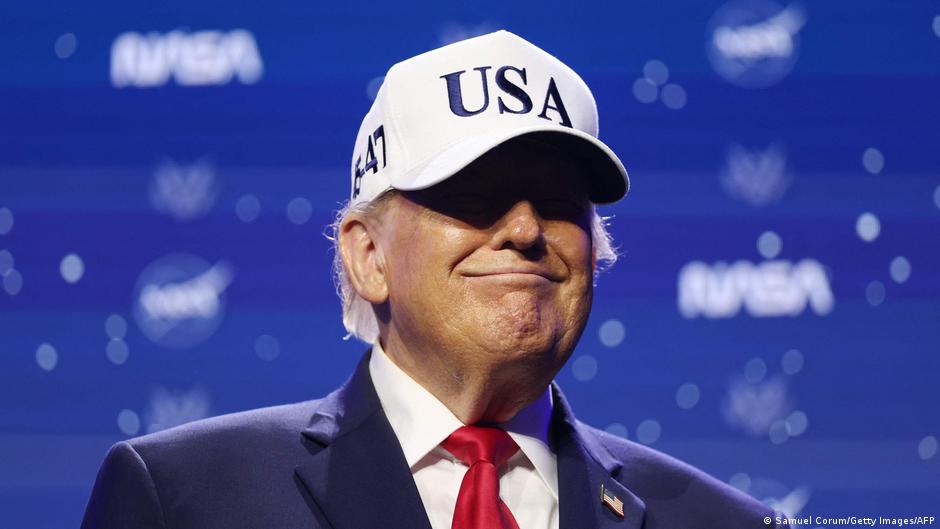
US President Donald Trump has ordered the Justice Department to investigate Democratic Party members, accusing them of using threats of impeachment and other sanctions to pressure the attorney general and other officials after winning the congressional midterm elections.
Trump announced the move on Saturday, November 7, in a post on his Truth Social platform. He alleged that Democrats were threatening the US attorney general and other officials despite lacking grounds for punitive action.
“This is extortion at the highest level, and they should be punished,” Trump said.
The decision adds another layer of political uncertainty in Washington after Republicans suffered defeat at the polls. For British and European businesses, the central concern is whether intensifying conflict between the White House and a Democratic-controlled Congress will disrupt US policymaking on trade, taxation, defence and foreign affairs.
No specific reaction in sterling or London-listed shares was reported in the source material. Even so, investors in the City of London are likely to scrutinise the dispute for signs of prolonged institutional confrontation. Political instability in the United States can influence demand for the dollar, indirectly affecting sterling, while changes in US policy can quickly reach UK and EU companies with substantial American revenues.
Divided Washington raises policy uncertainty
Reuters reported that tensions inside the White House intensified after the Republican election defeat. Republican Representative Thomas Massie of Kentucky, a critic of Trump, said he wanted to bring the impeachment of Defence Secretary Pete Hegseth to a vote.
Some Democrats have separately said they intend to launch congressional investigations into alleged abuses of power by officials appointed by Trump, including members of the president’s family. Such inquiries could consume political attention and complicate efforts to pass legislation through Congress.
Trump also claimed that Democratic lawmakers were threatening Republican donors with prison sentences because of their political views. In addition, he accused Michigan Senator Elissa Slotkin of planning to prosecute young Americans for supporting the Republican Party. The source article provided no independent substantiation for either allegation.
The confrontation matters beyond the United States because Washington remains a critical commercial and security partner for both the United Kingdom and the European Union. British banks, pharmaceutical groups, energy companies and consumer businesses have extensive exposure to the US economy, while European manufacturers depend on predictable transatlantic trade and regulatory conditions.
A legislative stalemate would not automatically produce a negative economic outcome, but it could make the direction of US policy less predictable. For London markets, the practical questions include whether political conflict affects federal spending, business regulation or the administration’s ability to negotiate with overseas partners. Sterling could also become sensitive to shifts in global risk appetite and expectations for the dollar, although the article reported no immediate currency move.
Trump accepts result and offers cooperation
Despite earlier concerns, Trump publicly said he recognised the election results following the Democrats’ convincing midterm victory. Some Democrats had feared that the president would challenge the outcome and seek to overturn it, as he did after losing the 2020 presidential election, according to Reuters.
Trump also said he was prepared to work with Democrats, who secured majorities in both the House of Representatives and the Senate. That statement offered the possibility of cross-party cooperation, but his demand for a Justice Department investigation points to a more confrontational political environment.
The contrast between those two messages will be important for businesses assessing the outlook. Cooperation could reduce the risk of fiscal disruption and support continuity in US engagement with Britain and the EU. Escalating investigations, impeachment threats and internal Republican divisions could instead delay decisions and increase headline-driven volatility.
Trump’s personnel choices have reinforced questions about the administration’s direction. On the eve of his announcement, he appointed Stephen Miller as White House chief of staff. Miller is an advocate of restrictive immigration policies and a hard-line national-conservative agenda. Reuters said the appointment was perceived as a challenge to Democrats.
For European governments, Miller’s elevation may sharpen attention on US migration policy and the broader tone of the administration’s international agenda. For companies, tighter immigration rules could affect labour availability and cross-border recruitment in the United States, including for British and EU employers operating there.
Markets will ultimately distinguish between political rhetoric and actions that alter economic policy. The immediate development is that Trump has accepted the electoral outcome while directing the Justice Department to investigate members of the party that will control both chambers of Congress. That combination leaves UK and European businesses facing a US administration offering cooperation and confrontation at the same time.