Russian Optoelectronics Plant Reportedly Hit in Mass Missile Attack
The reported strike in Oryol targets a supplier linked by Ukrainian analysts to Russian missile systems, raising risks for European security.
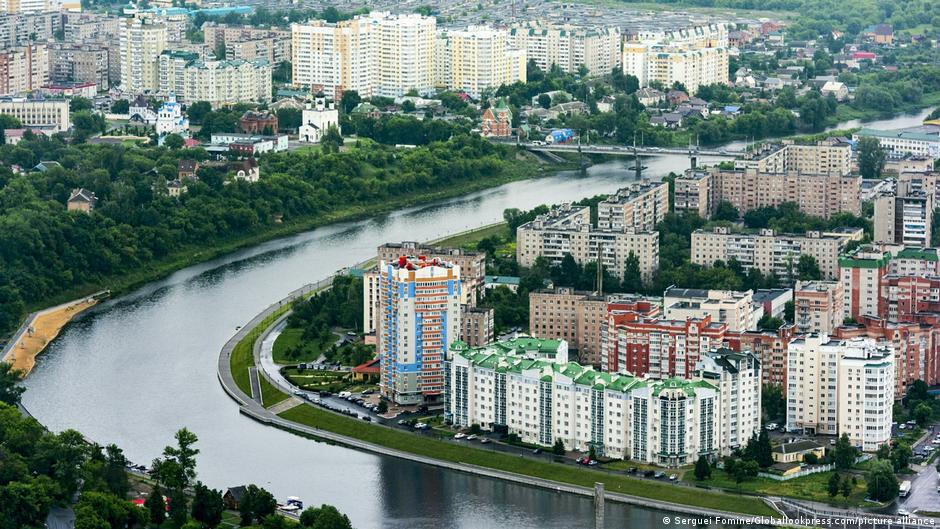
A major overnight missile attack struck the Russian city of Oryol, with open-source analysts reporting a large fire at the Proton plant, one of Russia’s most important producers of optoelectronic equipment.
Andrei Klychkov, governor of the Oryol region, said the city came under a mass missile attack during the night before Saturday, 7 January. He confirmed that production facilities at an enterprise in Oryol’s Sovetsky district had been partially damaged, but did not identify the company.
“The production premises of an enterprise in the Sovetsky district were partially damaged,” Klychkov said.
The governor did not provide information about casualties. Emergency services were working at the scene, he added. The extent of the damage and its potential effect on production had not been established in the information available from the regional authorities.
Proton plant identified by open-source analysis
ASTRA, citing its own open-source intelligence analysis, reported that the strike caused a large fire at the Proton plant. The facility is located in the Sovetsky district of Oryol, corresponding with the area identified by the governor, although Klychkov did not publicly name the affected enterprise.
Proton is described as one of Russia’s leading manufacturers of optoelectronic products. Such equipment has potential strategic importance because optical and electronic components can form part of the guidance, targeting and control systems used in advanced military hardware.
Ukrainian OSINT channels Exile+ and Supernova+ have said Proton products are used in several Russian weapons systems. They identified the S-71 Kover air-launched cruise missile, the 9M723 Iskander-M ballistic missile and the Pantsir-S1 surface-to-air missile and gun system.
Those claims were attributed to open-source researchers and were not confirmed in the governor’s statement. The available reports also did not specify which production areas, equipment or inventories may have been affected by the fire.
The plant has previously been subjected to Ukrainian attacks on multiple occasions, according to the source report. No further details about those earlier incidents were provided.
European security relevance
For Britain and the European Union, the reported attack is principally significant through its possible implications for Russia’s defence-industrial capacity and the wider security environment in Europe. Any sustained disruption at a producer supplying components for cruise missiles, ballistic missiles or air-defence systems could attract close scrutiny from European governments supporting Ukraine.
The presence of Proton products in the weapons systems named by the Ukrainian OSINT channels makes the condition of the plant relevant to assessments of Russian military supply chains. However, the available evidence does not establish whether the reported damage was sufficient to interrupt output, whether production could be transferred elsewhere or how quickly affected premises might be repaired.
The attack also highlights the continuing exposure of industrial facilities inside Russia to long-range strikes. Oryol is a regional city with manufacturing infrastructure, and the reported damage demonstrates the risks faced by enterprises that analysts associate with military production.
No confirmed sterling or London market reaction
There was no information in the source material showing an immediate reaction in sterling or on the London stock market. Without confirmed evidence of casualties, prolonged production disruption or a broader escalation, it is not possible to attribute any movement in UK assets to the reported strike.
British and European investors typically assess developments of this kind through their possible effects on geopolitical risk, defence expenditure, energy markets and regional security. The report may therefore be monitored by London-listed defence companies and investors exposed to European security trends, but no specific share-price movement or currency response was provided.
The central uncertainty remains the scale of the physical damage. Regional officials acknowledged partial damage to industrial premises, while ASTRA’s analysis pointed to a major fire at Proton. Independent confirmation of the plant’s operating status, the precise facilities affected and any impact on deliveries was not included in the available reporting.
Until those details emerge, the incident represents a potentially significant strike against an enterprise linked by Ukrainian open-source analysts to Russian missile and air-defence production, rather than confirmed evidence of a lasting interruption to Russia’s weapons manufacturing capacity.