Meloni Challenges EU Disunity Over Ukraine Peace Negotiations
Italy’s prime minister wants the bloc to appoint a single representative, raising questions for Britain and Europe over diplomatic coordination.
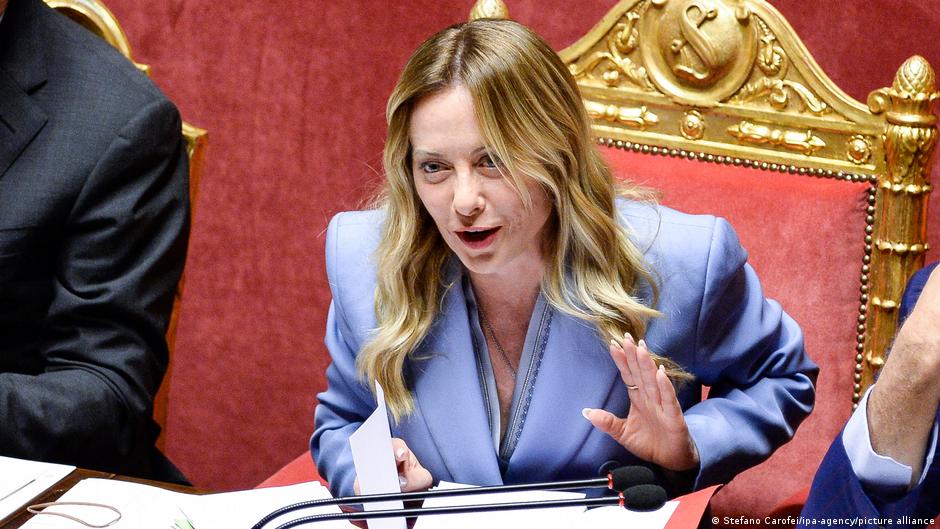
Italian Prime Minister Giorgia Meloni has urged European Union leaders to decide who should represent the bloc in negotiations aimed at ending the war in Ukraine, criticising what she described as the “uncoordinated behaviour” of EU governments.
Her intervention highlights a central challenge for Europe as diplomatic activity intensifies: whether the EU can speak with a clearly defined mandate while individual national leaders continue to pursue their own initiatives. For Britain and European businesses, the dispute adds another layer of political uncertainty around a conflict that has influenced energy costs, defence spending, trade flows and investor confidence across the region.
In a letter to European Council President António Costa, Meloni demanded clarity over both the identity and authority of any EU representative taking part in future peace discussions.
“I continue to insist that it be decided once and for all who exactly will sit at the negotiating table on behalf of the European Union and with what mandate,” Meloni wrote.
The letter was quoted on Thursday, November 5. Meloni argued that inconsistent conduct within the EU would be useful neither in dealings with allies nor in efforts to persuade those who must be convinced to end what she called the “senseless aggression”.
She also warned that the appearance of a Europe acting in a disorderly fashion benefited parties seeking to prolong the war. Her comments reflect concern in Rome that separate diplomatic moves by European leaders could weaken the bloc’s common position on Russia’s war in Ukraine.
Diplomatic uncertainty matters for Britain and European markets
Although the United Kingdom is no longer an EU member, London retains a direct interest in the coherence of Europe’s Ukraine policy. Britain is a major European security actor, and any negotiating structure developed by the EU would have implications for coordination with the UK, the United States and other allies.
For companies and investors, the immediate significance lies less in the identity of a future negotiator than in whether Europe can establish a credible and unified process. The course of the war and the terms of any eventual settlement could shape regional energy security, reconstruction opportunities, sanctions policy and government borrowing requirements.
Those issues are closely watched in London, where internationally exposed companies reflect developments across the continent. They are also relevant to sterling because Britain’s economic outlook remains connected to European trade, energy conditions and broader risk sentiment. The letter did not report any specific movement in the pound or London-listed shares, but it placed European political coordination back among the factors facing markets as a new round of talks approaches.
Meloni proposed that the question of EU representation be discussed at an informal European Council meeting in Dublin on November 13. That discussion, she said, could allow the European Council formally to decide who represents the bloc in Ukraine peace negotiations at its Brussels summit on December 17 and 18.
The timetable would give EU leaders just over a month between the Dublin meeting and the Brussels summit to settle the issue. A formal mandate could help define how the bloc’s institutions and national governments divide responsibility in dealings with Kyiv, Moscow, Washington and other participants.
Rome objects to separate initiatives
Meloni has previously criticised individual initiatives by EU leaders that she believes dilute the Union’s common position on Russia’s war in Ukraine. Rome specifically criticised a telephone conversation involving Finnish President Alexander Stubb, Norwegian Prime Minister Jonas Gahr Støre and Russian President Vladimir Putin.
Norway is not an EU member, but the episode underlined the wider question of how European governments coordinate contacts with Moscow. Meloni’s position is that a fragmented approach risks weakening Europe’s leverage with both allies and adversaries at a critical stage of diplomacy.
Her call comes before a new round of negotiations between Russia and Ukraine, mediated by the United States, scheduled for November 10 and 11 in Abu Dhabi. US presidential special envoy Steve Witkoff said the meeting would address “post-war security, de-escalation, humanitarian initiatives and next steps towards peace”.
The Abu Dhabi agenda covers several areas with potentially significant consequences for Europe. Post-war security arrangements could affect future defence commitments, while de-escalation and humanitarian measures may influence expectations about the conflict’s duration. Any progress towards peace would also raise questions about sanctions, reconstruction financing and the future commercial relationship between Europe, Ukraine and Russia.
Meloni’s letter does not resolve those questions, but it increases pressure on EU leaders to clarify who has the authority to speak for the bloc. For Britain, the EU and their business communities, a coherent European negotiating position could prove important in reducing political uncertainty and ensuring that the continent’s security and economic interests are represented alongside those of the United States and the direct parties to the conflict.