German EV Demand Surges as Chinese Brands Gain Ground on Local Carmakers
Germany’s electric vehicle registrations rose sharply in October, intensifying competitive pressure on domestic producers and their European peers.
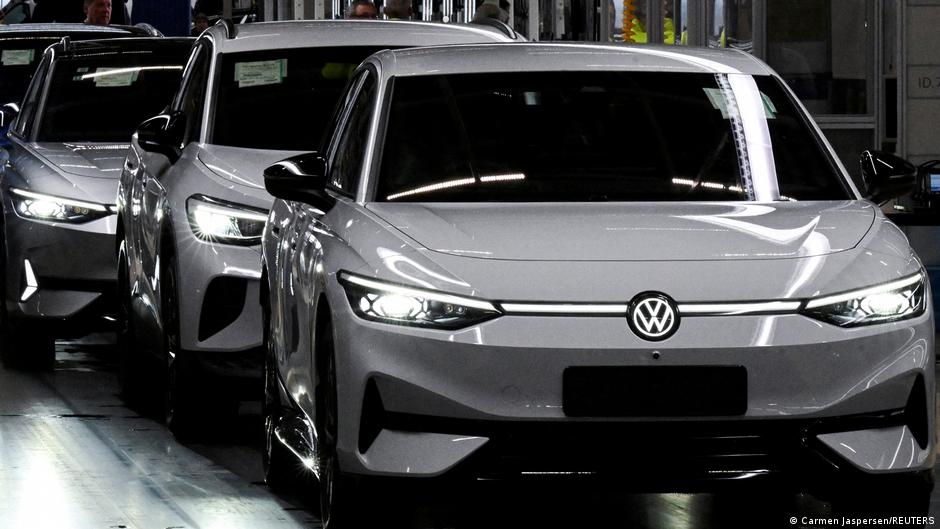
Germany’s electric vehicle market accelerated sharply in October 2026, but the expansion is delivering its strongest gains to foreign manufacturers rather than the country’s established automotive groups.
Figures from Germany’s Federal Motor Transport Authority, the Kraftfahrt-Bundesamt, showed that approximately 94,000 of the roughly 254,500 new passenger cars registered during the month were fully electric. The electric total was about 80% higher than in October 2025, demonstrating the scale of the shift taking place in Europe’s largest car market.
The figures carry significance well beyond Germany. British and European businesses are closely tied to the German automotive industry through component manufacturing, vehicle financing, logistics, dealerships and energy infrastructure. A rapid change in the mix of vehicles sold in Germany can therefore affect investment decisions and supply chains across the continent, including companies followed by investors in London.
Subsidies and fuel costs reshape demand
High fuel prices and a government subsidy programme for electric vehicle purchases are helping to drive the increase. The support scheme was introduced in May 2026, offering motorists a financial incentive to move away from petrol and diesel vehicles during an energy crisis.
Registrations of vehicles with internal combustion engines, a category that also includes hybrid cars in the reported figures, moved in the opposite direction. They fell sharply compared with October 2025 and accounted for approximately 62,400 new registrations during October 2026, according to the KBA.
Approximately 94,000 fully electric cars were registered in Germany in October, around 80% more than a year earlier.
The divergence illustrates how government support and elevated running costs can quickly alter consumer behaviour. It also presents policymakers in the European Union and Britain with a familiar trade-off: subsidies can speed up electrification, but they do not necessarily guarantee that domestic manufacturers will capture the resulting demand.
For the UK, Germany’s experience is especially relevant because Britain is pursuing its own transition away from combustion-engine vehicles while remaining commercially connected to the European automotive market. British suppliers and service companies stand to benefit from greater demand for batteries, charging systems and specialised components. At the same time, stronger Chinese sales in Germany could increase competitive pressure throughout Europe, including in the UK market.
Chinese manufacturers take a larger share
Foreign automotive groups have emerged as the principal beneficiaries of Germany’s EV expansion, with Chinese manufacturers recording the strongest growth. Their combined market share increased from 5.2% to 8.4%, according to consultancy EY.
German manufacturers, by contrast, have continued to lose electric vehicle market share month after month. That erosion is notable because the country’s leading carmakers have invested heavily in electrification while also managing the costs of maintaining established combustion-engine operations.
The shift raises broader industrial questions for the EU. Strong consumer demand supports the bloc’s decarbonisation goals, but rising imports and market-share gains by overseas producers may intensify debate over manufacturing capacity, technological competitiveness and the future of automotive employment in Europe.
For London markets, the registration data provide a sector signal rather than a direct measure of share-price performance. Investors in European carmakers, parts suppliers, commodity groups and charging businesses will be assessing which companies are positioned to benefit from Germany’s expanding EV market and which remain exposed to declining demand for combustion technology.
The potential effect on sterling is similarly indirect. The German figures alone do not establish a move in the British currency, but the competitive balance in European vehicle manufacturing matters for UK trade and investment. Greater penetration by Chinese brands could alter import patterns, while faster adoption of electric vehicles may affect demand for British-made components and services. Those forces could influence the UK’s external trade position over time, although no sterling market reaction was specified in the registration data.
Germany’s October figures ultimately reveal two parallel trends: consumers are adopting fully electric cars at a much faster pace, while domestic manufacturers are surrendering part of that growth to foreign competitors. For British and EU businesses, the commercial opportunity created by electrification is expanding, but so is the challenge of ensuring that European industry retains a meaningful share of it.