Russian Conscript Death Toll Raises Risks for UK and European Businesses
A verified toll of at least 350 Russian conscripts highlights the continuing human and political risks surrounding the war in Ukraine.
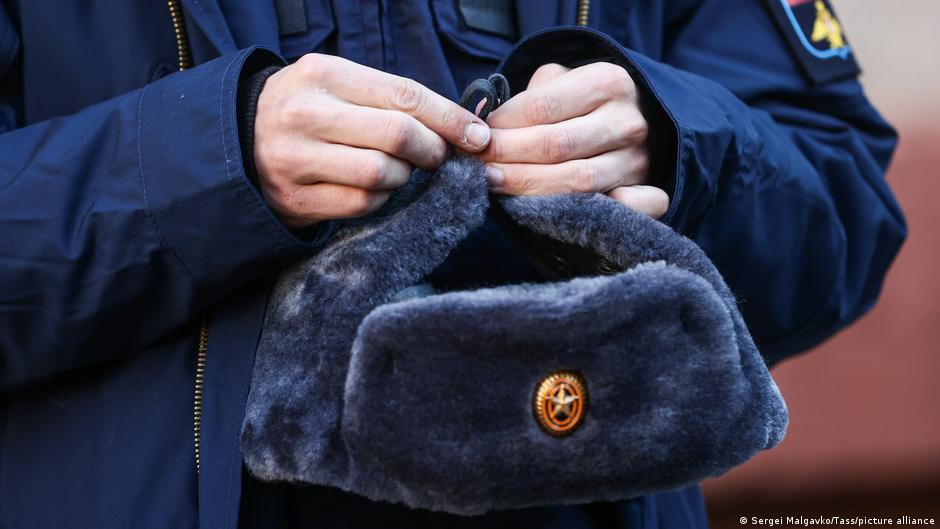
At least 350 Russian soldiers serving under compulsory military service have been killed during Russia’s full-scale invasion of Ukraine, according to an investigation by Mediazona, the BBC Russian Service and a team of volunteers.
The finding challenges the Russian authorities’ official position that conscripts are not being sent to fight in the war. For British and European businesses, the discrepancy adds another layer of uncertainty to a conflict that continues to shape sanctions policy, corporate compliance and investor assessments of geopolitical risk.
The investigators said on Friday, 6 November, that at least 60 conscripts were killed during the Ukrainian armed forces’ incursion into Russia’s Kursk region in August 2024. The figure represents confirmed deaths rather than an estimate of the full number of conscripts who may have died.
Official position challenged by verified cases
Russian officials formally deny deploying conscripted personnel to the war. However, Russia’s Ministry of Defence acknowledged several cases involving the presence of conscripts as early as February and March 2022, during the opening phase of the full-scale invasion.
Mediazona stressed that its total applies specifically to service members who still held conscript status when they died. The publication also identified pressure to sign professional military contracts as a separate source of risk for soldiers completing compulsory service.
“The 350 people on our list are those who had ‘conscript’ status at the time of death. A separate risk is pressure to sign a contract. They are often imposed through deception or violence,” Mediazona said.
The journalists established the identities of almost 700 people who signed contracts with the Russian Ministry of Defence while performing compulsory military service. It is not known whether those decisions were voluntary.
Mediazona said it does not currently place those soldiers in a separate category and, for the purposes of this count, includes only personnel formally classified as conscripts. The researchers added that their methodology could change in the future as further evidence becomes available.
Implications for European risk assessments
The findings do not provide direct evidence of an immediate effect on sterling or London-listed shares. They nevertheless reinforce the broader political risks that UK and European companies must consider when assessing exposure to Russia, Ukraine and markets affected by the war.
For businesses operating under British or European Union sanctions regimes, uncertainty about Russian mobilisation practices can complicate judgments about the likely duration and domestic consequences of the conflict. The issue is also relevant to companies monitoring possible changes in defence spending, trade restrictions and the enforcement of measures targeting Russian entities.
Investors in London and across Europe have repeatedly had to evaluate war-related developments alongside energy costs, supply-chain security and government policy. The newly documented conscript deaths add evidence about the human resources committed to the conflict, but the investigation does not quantify any resulting economic cost or forecast a policy response from London, Brussels or Moscow.
Any sterling or equity-market reaction would therefore depend on whether the findings contribute to a material shift in the war, sanctions policy or perceptions of political stability. The report itself contains no market data, and it does not establish a direct connection between the confirmed deaths and movements in British currency or European assets.
Broader confirmed Russian military losses
The updated list assembled by journalists and volunteers puts the confirmed number of Russian military personnel killed in Ukraine at 285,881. As with the conscript figure, that total is based on individually confirmed cases compiled by the investigation.
The conscript count represents a distinct subset of those documented losses. Its significance lies in the contrast between the verified identities and the Russian government’s official denial that soldiers serving under conscription are being sent to the war.
The separate identification of almost 700 soldiers who moved from conscript service to Ministry of Defence contracts also raises an unresolved question about consent. The investigators did not determine how many signed voluntarily and how many may have faced deception or force.
For European policymakers and corporate risk teams, the report offers no immediate change in the legal framework governing business with Russia. It does, however, provide additional evidence for evaluating the conflict’s trajectory and the gap between official statements and documented military losses. That gap remains relevant to long-term assessments of sanctions, security and commercial exposure across the UK and the EU.